
A recent shift in enterprise AI is easy to miss. The conversation is no longer only about better models, larger context windows, or more capable tool calling.
The real work is moving into customer systems.
As companies try to deploy agents inside real products, they are discovering that an agent cannot work reliably with documents and API descriptions alone. It needs to understand live business state, customer relationships, permissions, policies, exceptions, and past actions.
That is why the SaaS database is starting to play a new role. It is becoming part of the agent runtime.
1. SaaS data is moving from record-keeping to decision context
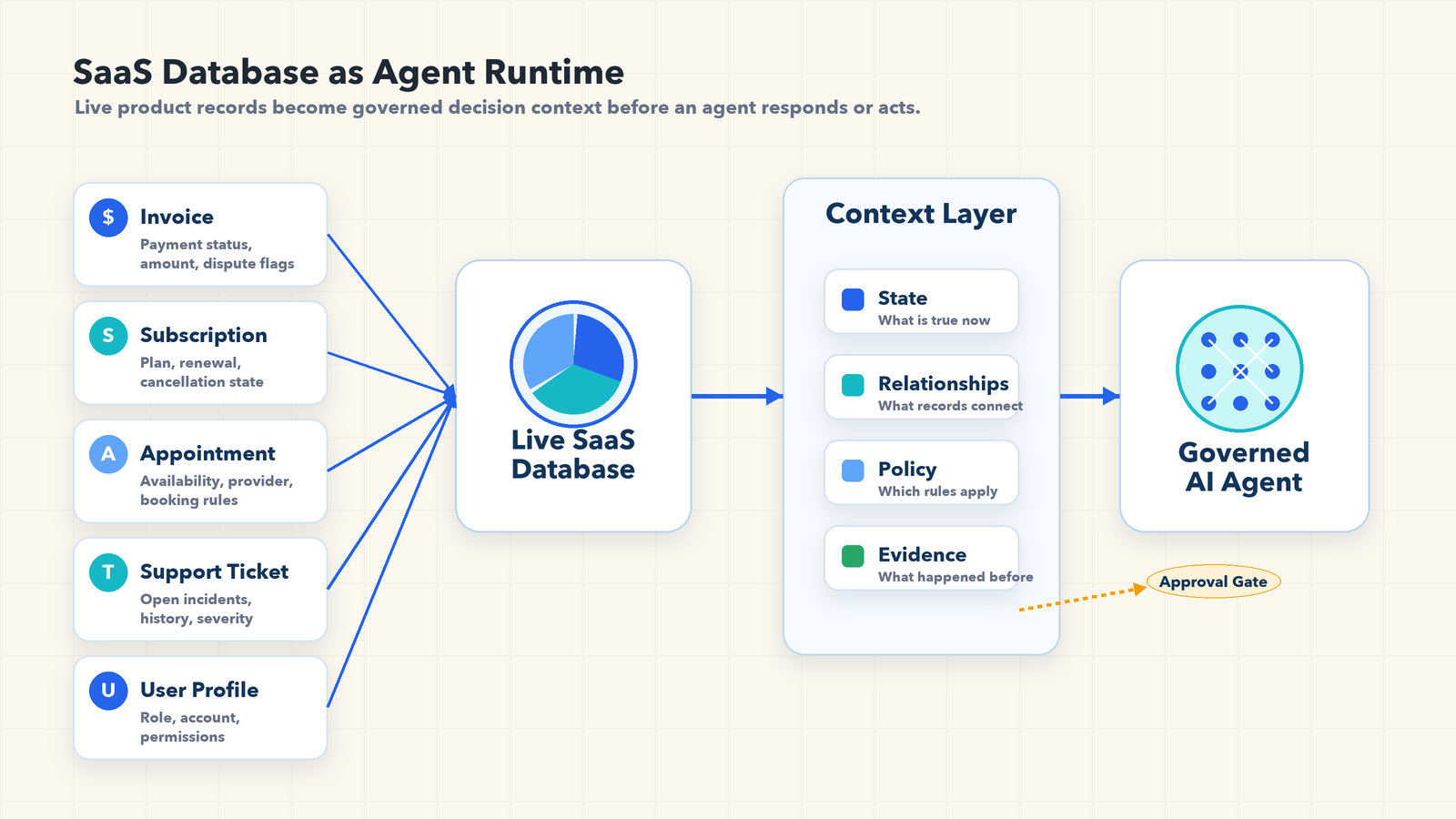
A traditional SaaS database is designed to store facts. It holds customer records, subscriptions, invoices, appointments, tickets, permissions, and product activity.
An agent needs more than stored facts. It needs the current situation around those facts.
Consider a customer asking for a refund. A useful agent cannot rely only on a refund policy document. It needs to know whether the payment was completed, whether the customer used the product, whether an exception already exists, whether there is an open dispute, and whether the agent is allowed to take action.
Calling a database an agent runtime does not mean running a language model inside SQL. It means treating business data as a live, governed context layer that helps an agent understand what is happening before it responds or acts.
2. RAG can retrieve knowledge, but it cannot see operational state
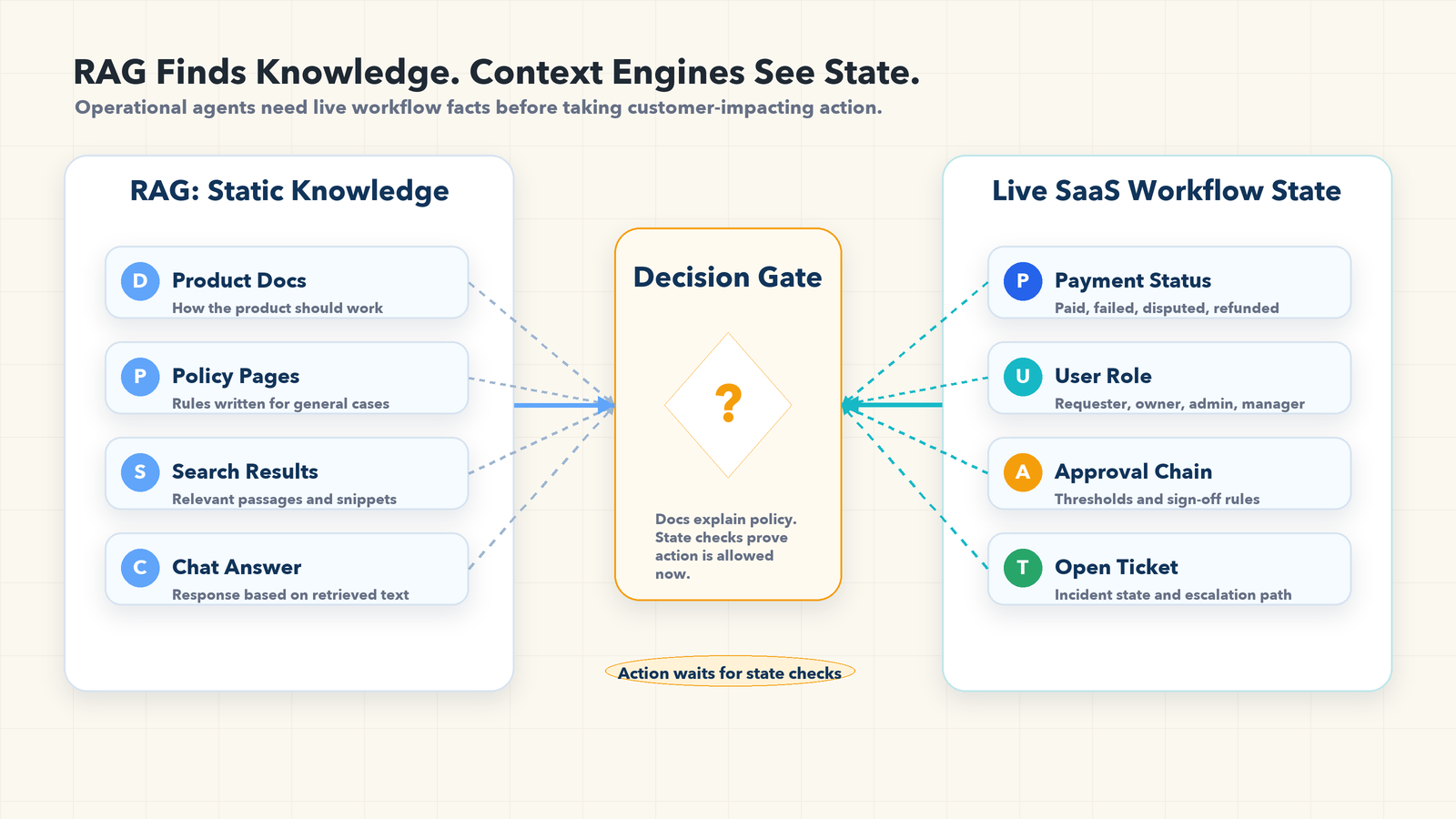
Retrieval is useful when an agent needs product documentation, policy guidance, or help-centre content. It becomes insufficient when the agent must work inside an active workflow.
A policy document may say that refunds are allowed within 30 days. It does not show whether this customer has already received a refund, has an unpaid invoice, belongs to an enterprise contract, or has an account manager approval requirement.
The same gap appears across SaaS products:
- A healthcare agent may know appointment rules but not see the provider’s current availability.
- A finance agent may know an expense policy but not see the payment status or approval chain.
- A support agent may know escalation guidance but not see whether a critical incident is already open.
RAG helps an agent find knowledge. A context engine helps it understand the present state of the business.
3. An agent-ready context engine has four parts
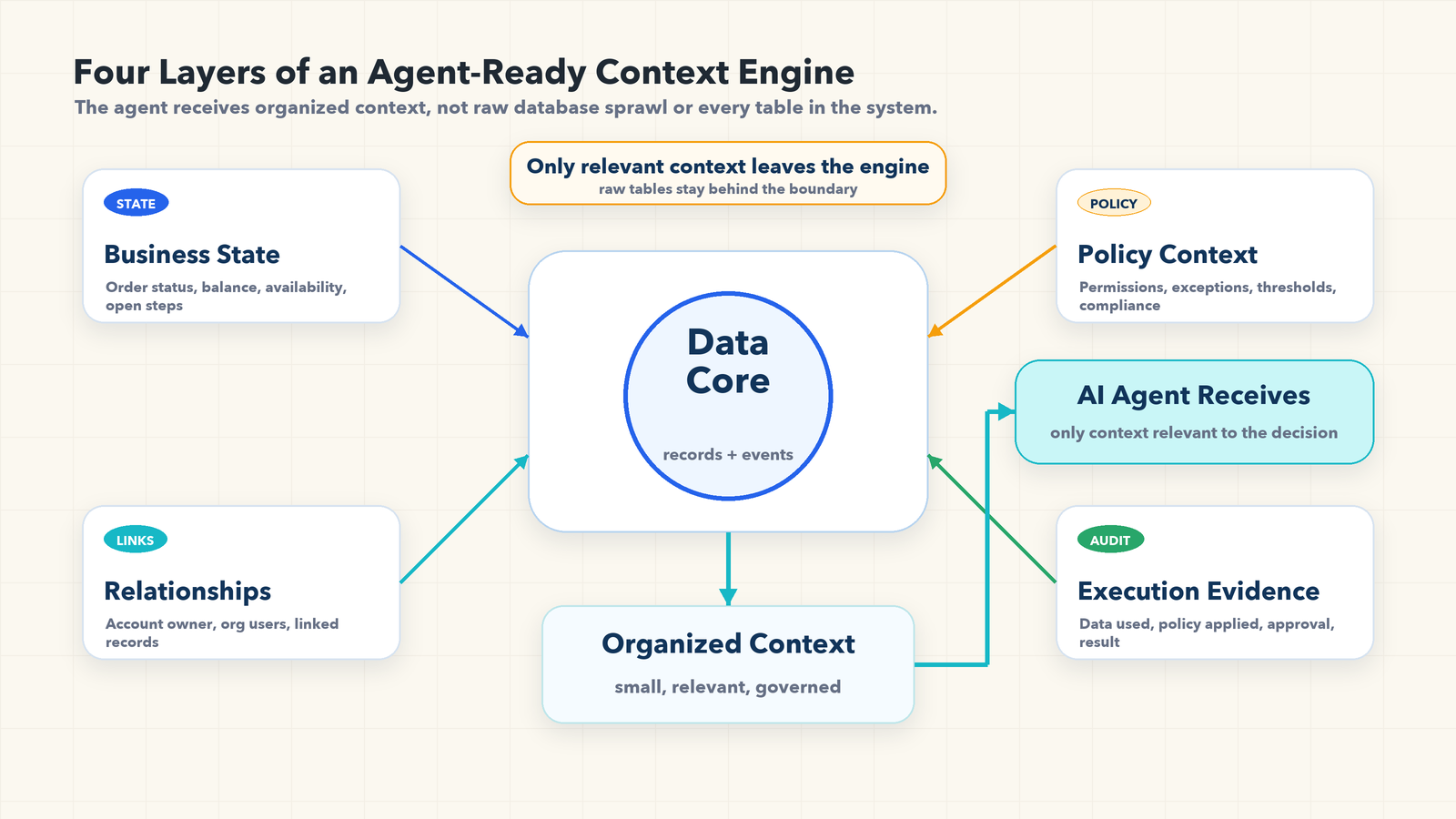
A useful context engine does not need to expose every database table to an agent. It needs to supply the right information for the decision at hand.
Business state tells the agent what is true now. This includes order status, account status, current balance, appointment availability, and open workflow steps.
Relationships tell the agent what is connected. This includes who owns an account, which users belong to an organisation, what plan applies, and which records affect each other.
Policy context tells the agent which rules matter. This includes permission levels, commercial exceptions, compliance requirements, approval thresholds, and product-specific conditions.
Execution evidence tells teams what happened. This includes the data the agent relied on, the policy it applied, the action it requested, the approval received, and the result returned by the system.
Together, these layers give the agent enough context to work with the product instead of merely talking about it.
4. Context should inform action, but it should not authorise action
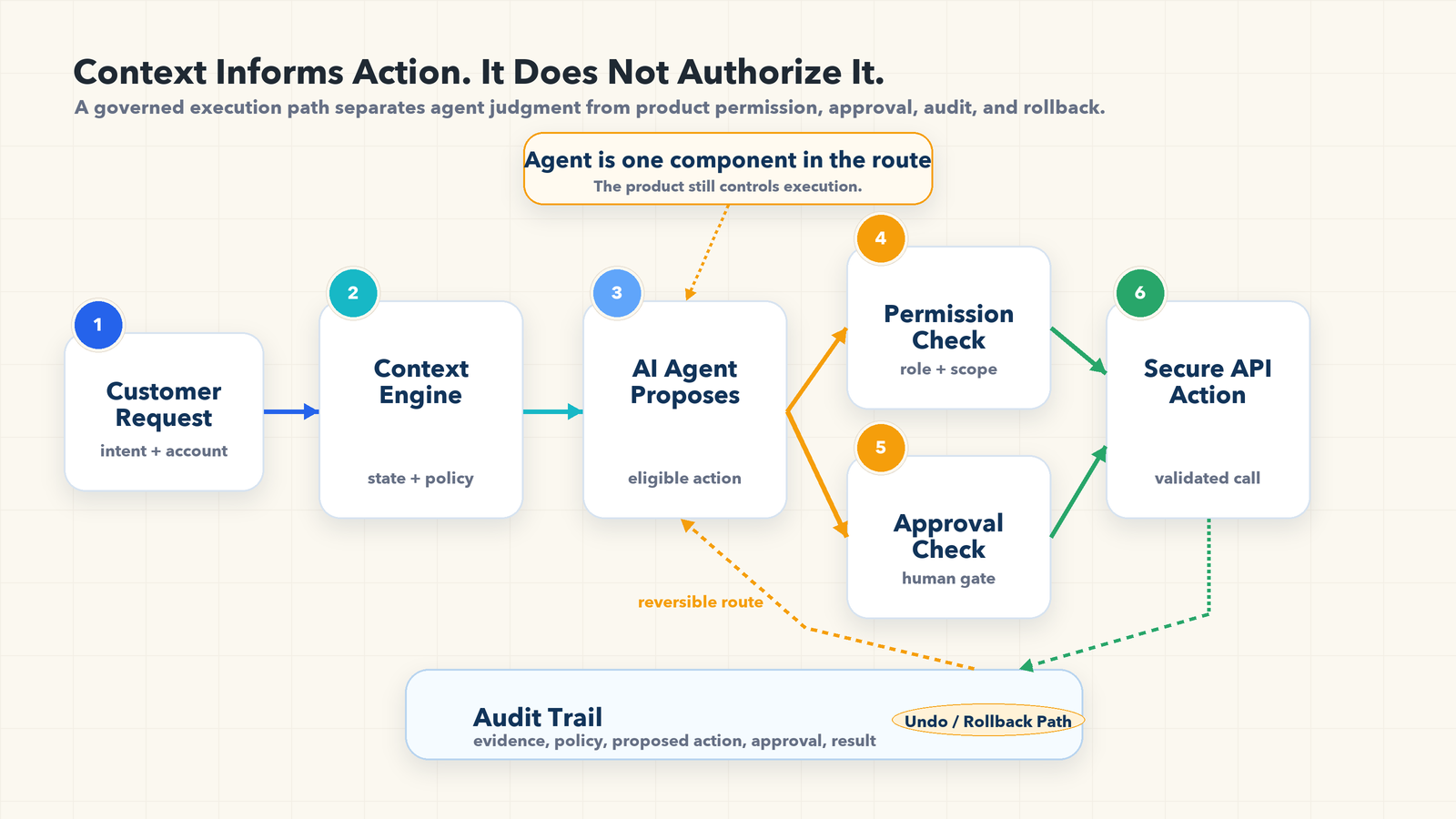
The most important boundary is simple: knowing the right context does not automatically give an agent permission to act.
An agent may correctly identify that a refund is eligible. The product still needs to decide whether the agent can issue it, whether a manager must approve it, whether a human needs to review it, and whether the action can be reversed.
This is where a SaaS product needs an execution layer around the agent. The system should route actions through permissions, approvals, validation checks, audit logs, and recovery paths.
At SaaSToAgent, we pay close attention to this shift because useful agents need more than fluent responses. They need the right context, controlled action paths, workflow memory, and a trace that product and operations teams can trust.
The SaaS database is not becoming an agent by itself. It is becoming the foundation that helps an agent act with the right understanding, at the right time, within the right boundaries.
The shift: retrieval helps agents read policies, but governed context helps them understand live business conditions before they act.