
Tool calling can produce a good demo. It does not automatically produce a safe production workflow. A support lead knows when a refund should be approved. An ops manager knows when a subscription should be paused instead of cancelled. A trained operator sees the business meaning behind a button press. An agent does not inherit that judgment from an API spec.
The core problem: existing SaaS products expose surfaces - endpoints, tables, dashboards, docs - while the operating model lives across business rules, permissions, exceptions, customer history, and human review habits.
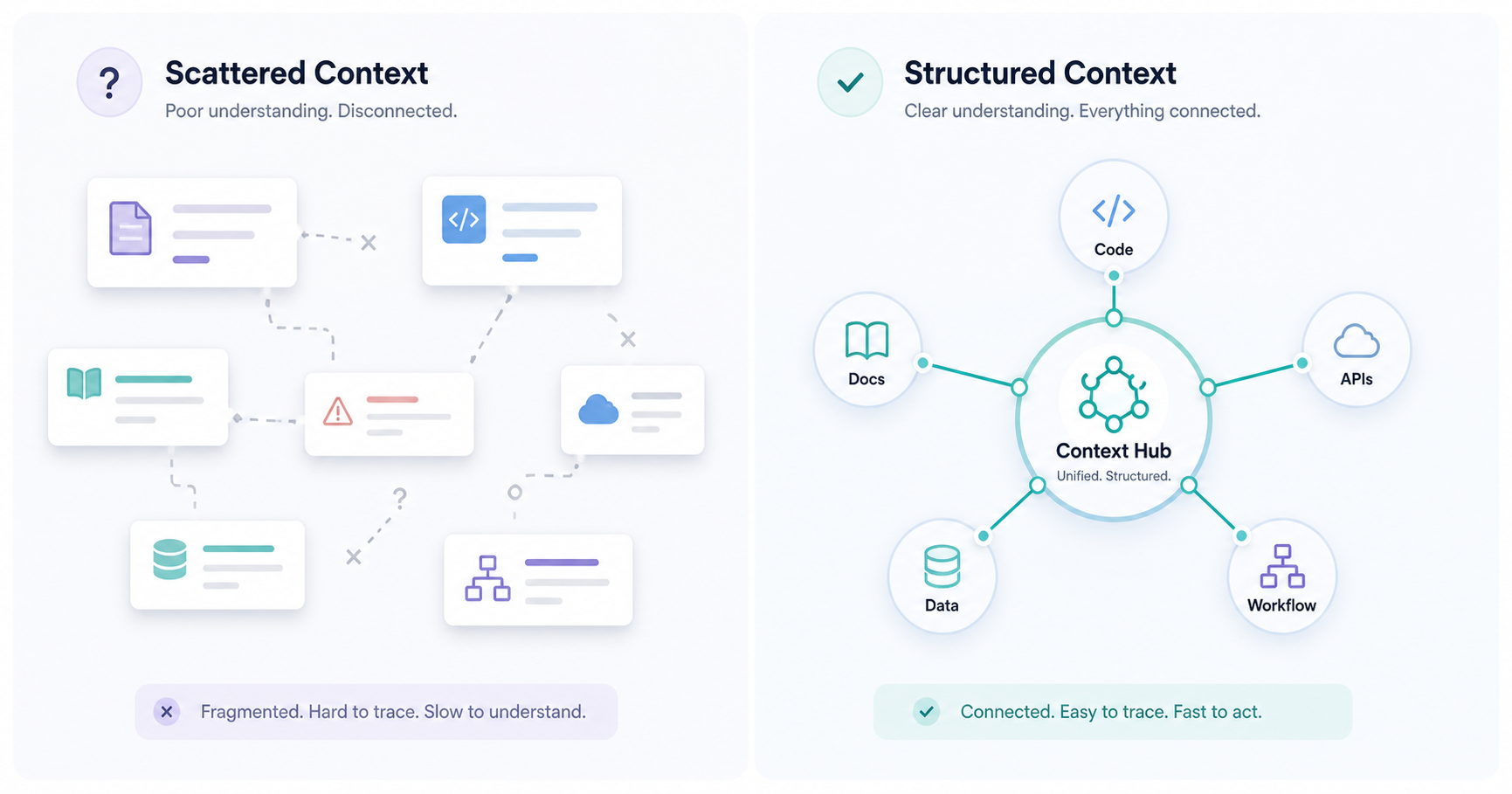
Where the hidden business logic actually lives
Most teams already know the rules that matter. The problem is that those rules are not stored in one neat file the model can read. They are distributed across code branches, admin conventions, workflow docs, support playbooks, policy thresholds, dashboards, and the memory of the people who handle exceptions every week.
- Source code explains what can be called, but not always when a call should be allowed.
- Database state explains what exists, but not what an action means for downstream systems.
- Permission models describe access, but not the escalation path when a case crosses risk thresholds.
- Human operators carry edge-case knowledge that never made it into product copy or API docs.
Why API access is not enough
An endpoint such as POST /payments/{id}/refund tells you a refund can be created. It does not fully tell you whether the payment is disputed, whether a human review is required for large amounts, whether a customer falls into an enterprise exception path, or whether the action is reversible.
A table such as subscriptions.status tells you the current state. It does not fully tell you when a pause is safer than a cancellation, which state change triggers proration, or whether a revocation creates a compliance obligation.
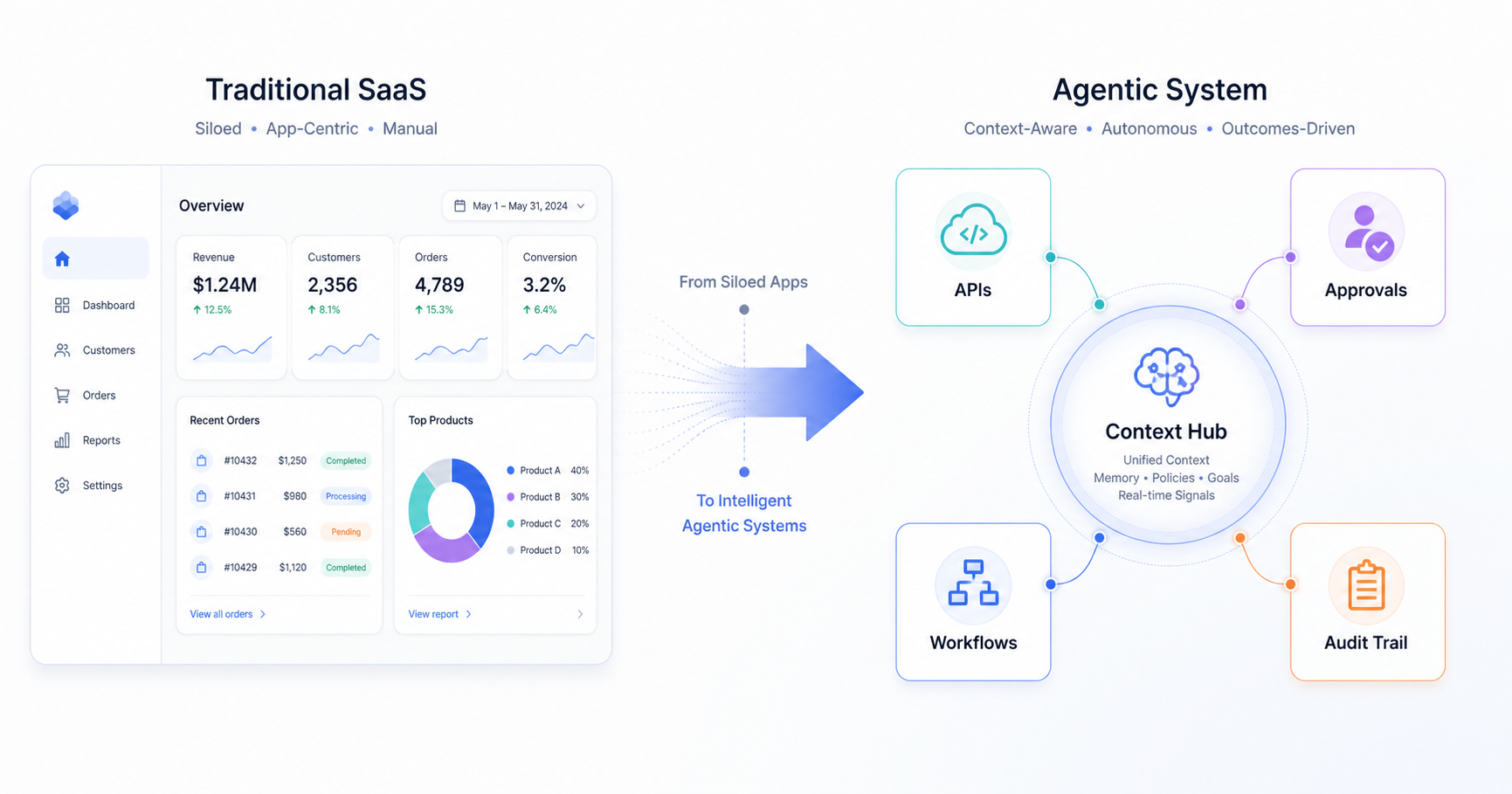
What agents need before they act
A useful operational agent needs more than tool metadata. It needs an explicit model of resources, actions, valid states, required inputs, preconditions, side effects, permissions, approval gates, risk levels, and fallback behavior. That is what turns a raw system surface into an action the agent can execute inside boundaries.
- Resources: which entities matter in the workflow and how they relate.
- Actions: what can be done, by whom, and in which states.
- Controls: approval thresholds, review gates, audit fields, and escalation rules.
- Recovery: what the agent should do when information is missing or the action is risky.
The resource graph and action model approach
A practical SaaS-to-agent system connects product surfaces into an operating model. The resource graph describes what exists and how it relates. The action model describes what can be done, under which conditions, with which effects and controls. Tool contracts sit on top of that model so the agent never guesses its way through business logic.
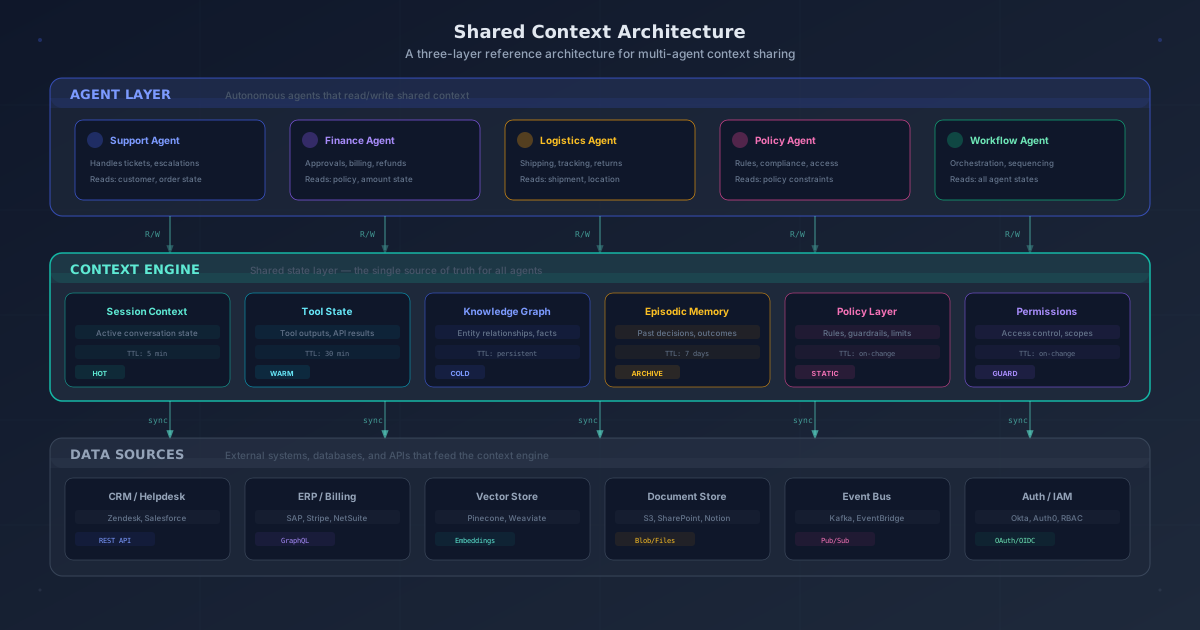
Why one workflow first is the right starting point
The first safe workflow is usually valuable, repeated, narrow enough to control, and testable under realistic scenarios. It has accessible data, a clear failure mode, and an obvious human escalation path. That first workflow is where you recover the business logic, define the action contracts, and learn what the agent should never do without evidence or approval.
Trying to make the whole product autonomous up front usually means the team skips the modeling work and asks the model to guess. That is where brittle production behavior starts.
The practical path
SaaS-to-agent deployment is not about adding a chat layer to software. It is about making the product's operating model explicit enough for an agent to act within boundaries.
- Start with one workflow.
- Map the hidden logic, state rules, and permissions.
- Build tool contracts and guardrails.
- Test behavior under realistic cases.
- Release under supervision and expand from evidence.