
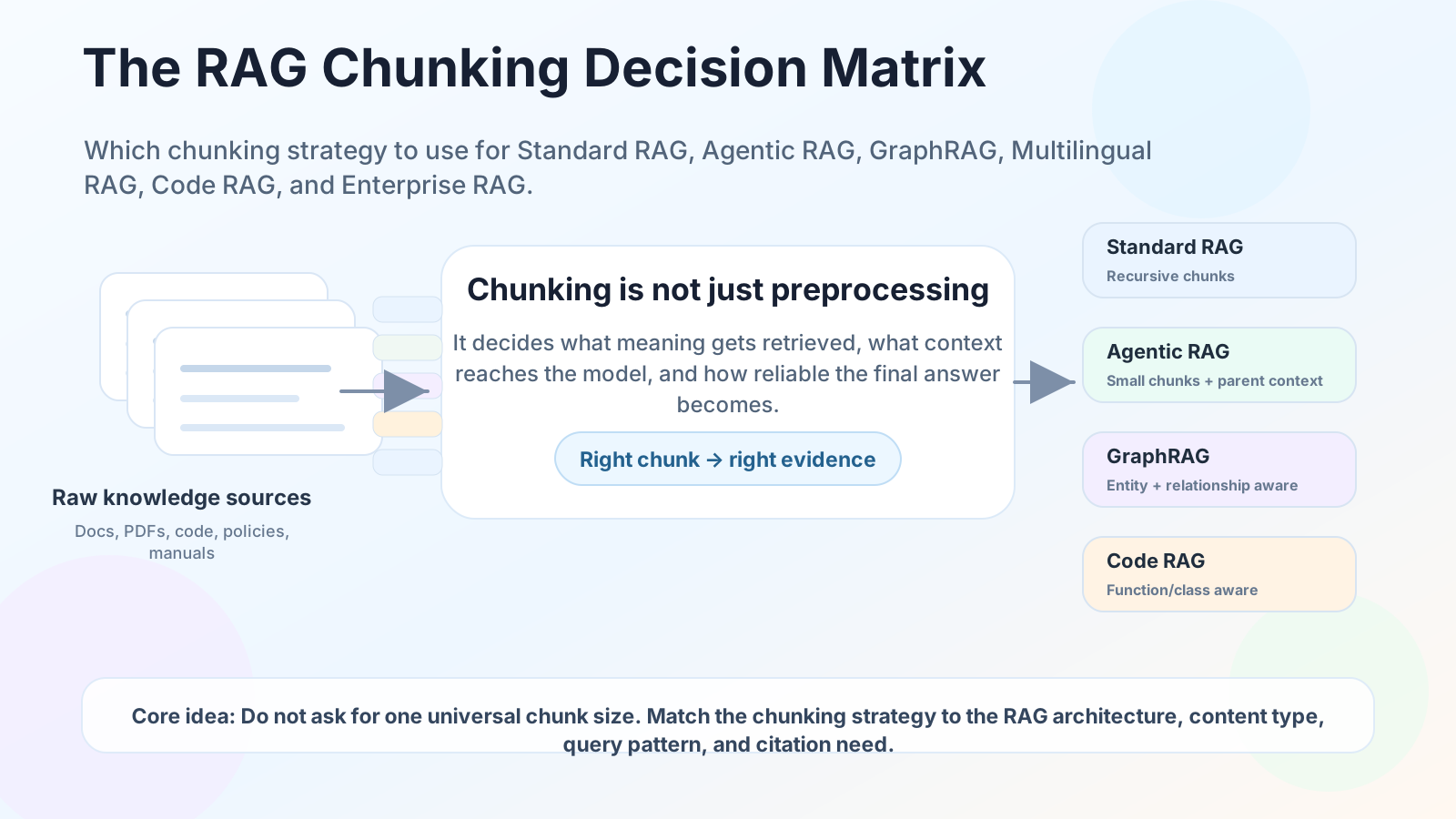
Retrieval-Augmented Generation, or RAG, has become one of the most practical ways to make AI systems work with real business knowledge. Instead of depending only on what a model already knows, a RAG system retrieves relevant information from documents, databases, websites, codebases, tickets, product manuals, policies, or knowledge bases before generating an answer.
But there is one technical decision that quietly affects the quality of almost every RAG system: chunking.
Chunking is the process of breaking large documents or data sources into smaller pieces so they can be embedded, indexed, searched, and retrieved. It sounds like a preprocessing step, but in reality, it is an architectural decision. A poor chunking strategy can make even the best embedding model or vector database perform badly. A good chunking strategy can improve retrieval accuracy, reduce hallucinations, preserve context, improve citations, and make the final answer more useful.
The mistake many teams make is assuming there is one best chunking strategy for all RAG systems. There is not. Standard RAG, Agentic RAG, GraphRAG, multilingual RAG, code RAG, and enterprise document RAG all need different chunking choices.
The real question is not "What is the best chunking strategy?" The better question is "Which chunking strategy works best for this type of RAG system?"
Why Chunking Matters in RAG
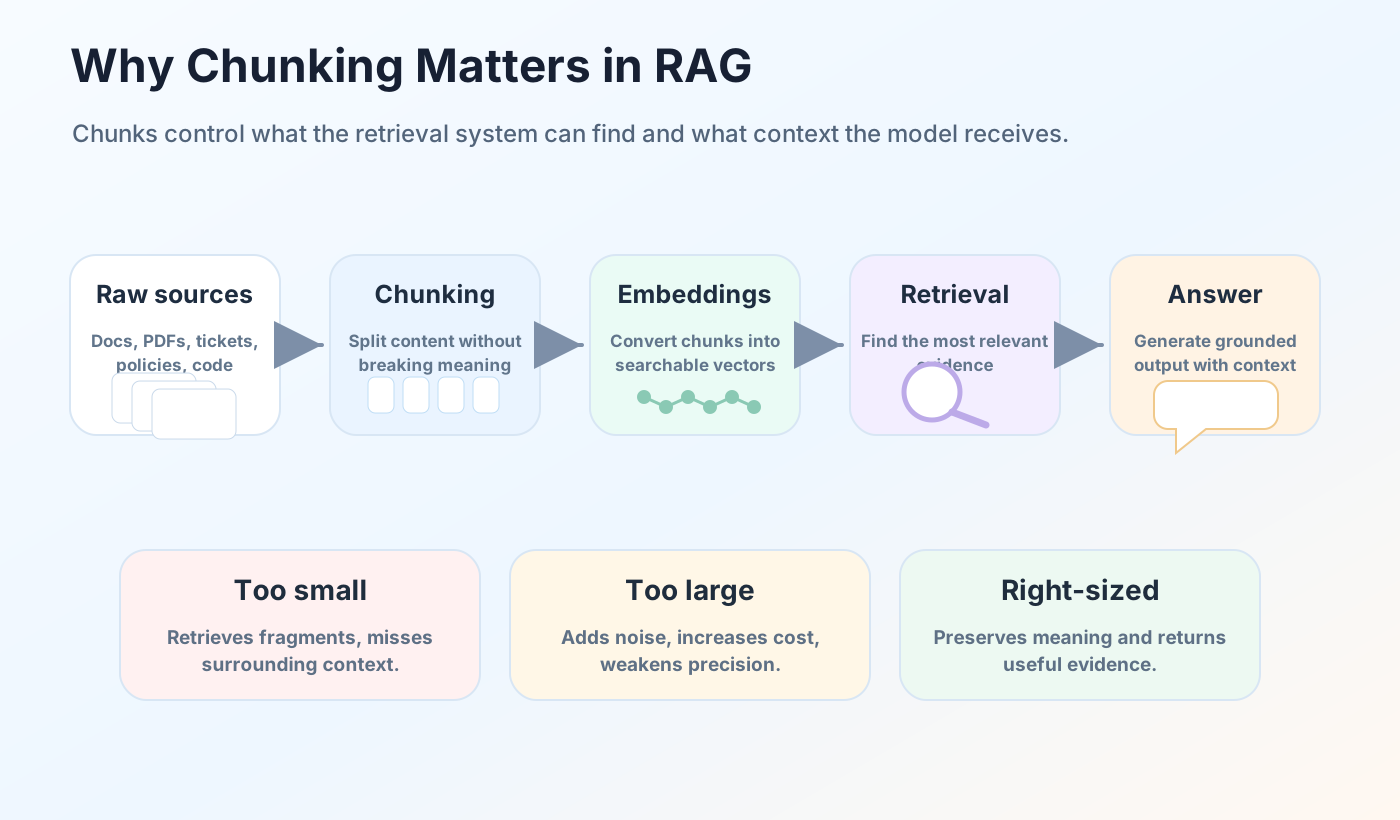
A RAG system usually follows a simple flow. First, documents are split into chunks. Then those chunks are converted into embeddings and stored in a vector database or retrieval system. When a user asks a question, the system retrieves the most relevant chunks and sends them to the language model as context.
If the chunks are too small, the system may retrieve pieces that are technically relevant but incomplete. The model may not get enough surrounding context to understand the answer properly.
If the chunks are too large, the system may retrieve too much irrelevant information. This increases cost, reduces precision, and may confuse the model.
If chunks break in the middle of a paragraph, table, function, clause, or process description, the system may lose the actual meaning of the content.
This is why chunking is not just about token size. It is about preserving meaning.
There Is No Universal Best Chunking Strategy
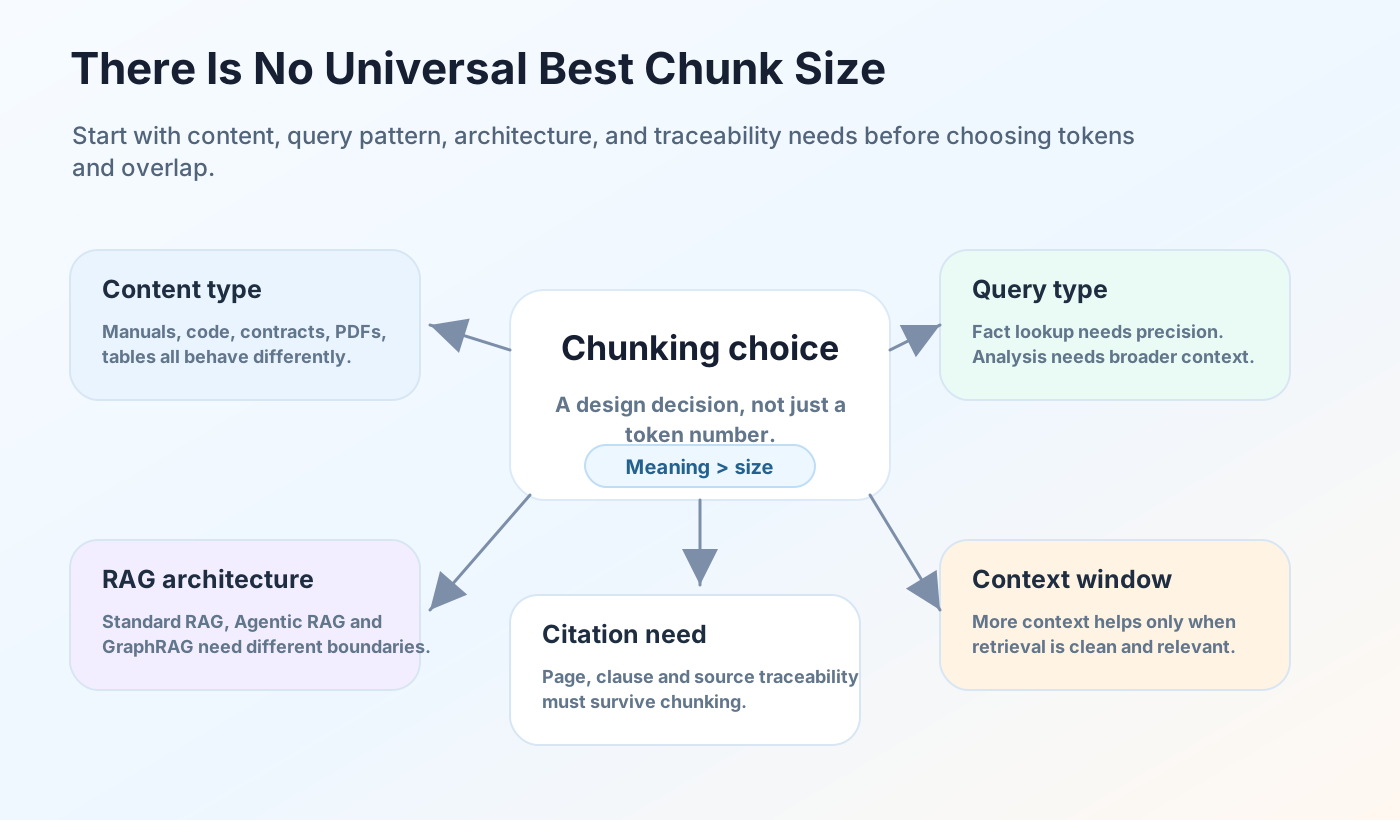
Many RAG tutorials recommend a default chunk size, often somewhere between 300 and 800 tokens with some overlap. That can be a useful starting point, but it should not be treated as a rule.
The right chunking strategy depends on several factors:
The type of content matters. A product manual, legal contract, source code file, support ticket, research paper, table, and multilingual document should not be chunked in the same way.
The type of query matters. If users ask short factual questions, smaller precise chunks may work better. If users ask broad analytical questions, larger or hierarchical chunks may be needed.
The type of RAG system matters. A simple RAG system may only need good semantic retrieval. An Agentic RAG system may need retrievable atomic chunks plus surrounding context. A GraphRAG system may need entity-aware chunks that support relationship extraction.
The model context window matters. If the model can handle more context, larger retrieved sections may be possible. But bigger context does not automatically mean better answers. Retrieval still needs precision.
The answer format matters. If the system must provide citations, page references, source links, or audit trails, chunking must preserve traceability.
So instead of choosing chunking once, teams should treat it as a design choice that changes with the RAG architecture.
The Main Chunking Strategies
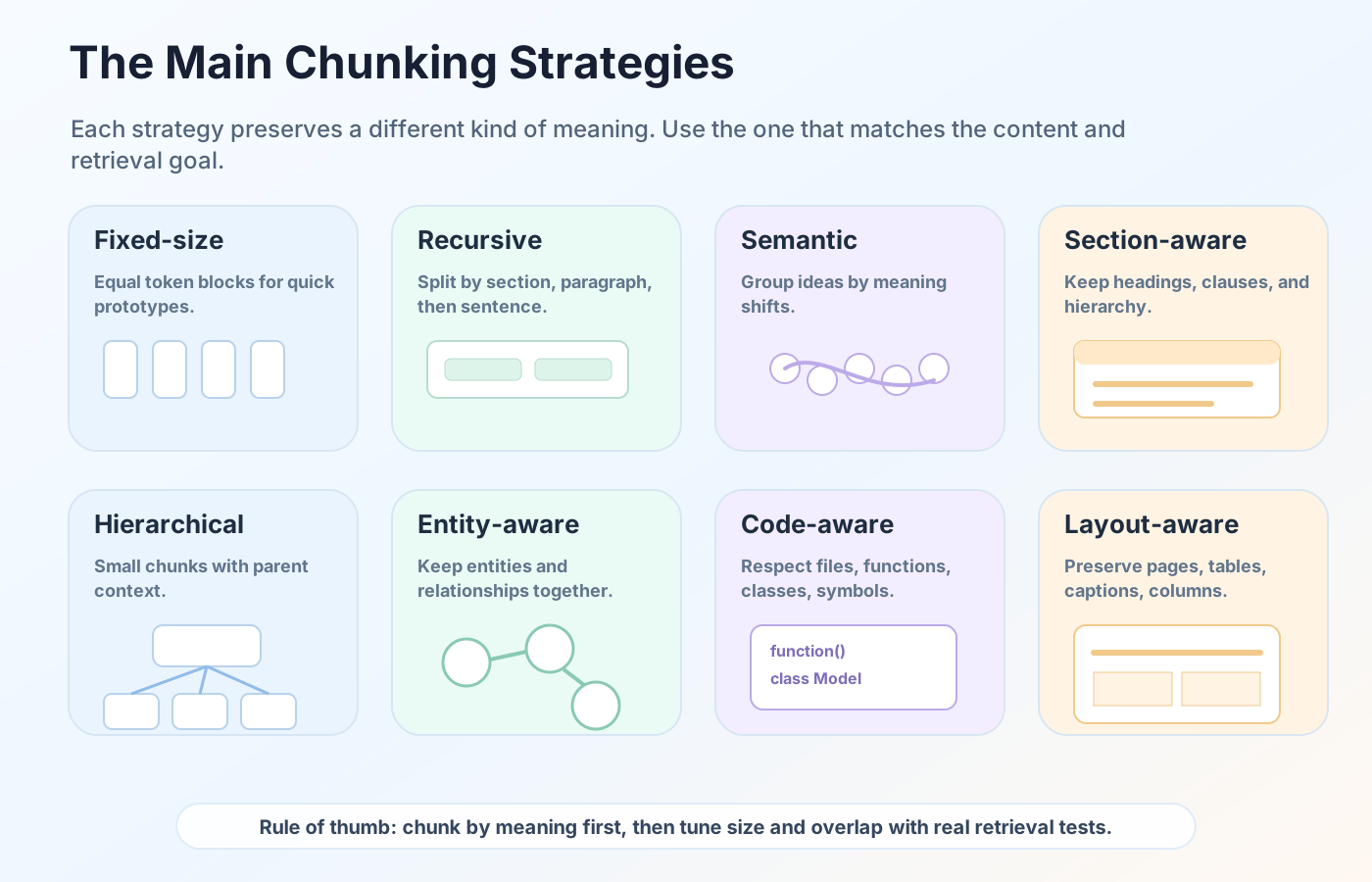
Before choosing the right strategy for each RAG type, it helps to understand the main options.
Fixed-Size Chunking
Fixed-size chunking splits text into equal-sized pieces, usually by character count or token count. It is simple and easy to implement, but it can break important meaning across chunk boundaries.
It works for quick prototypes, generic documents, and early experiments. It is not ideal for complex business workflows, legal documents, code, or structured content.
Recursive Chunking
Recursive chunking tries to split content using natural boundaries first, such as sections, paragraphs, sentences, and then smaller units if needed. This is often better than fixed-size chunking because it respects the structure of the document.
For most standard RAG systems, recursive chunking is one of the best starting points.
Semantic Chunking
Semantic chunking groups content based on meaning rather than only size. It tries to keep related ideas together and separate unrelated ideas.
This works well for knowledge bases, articles, reports, and documents where the meaning shifts across sections. However, it can be more expensive and harder to control.
Section-Aware Chunking
Section-aware chunking uses headings, subheadings, clauses, page titles, document hierarchy, or HTML structure to decide chunk boundaries.
This is valuable for policies, legal documents, manuals, long reports, and enterprise documentation because the parent section often gives meaning to the smaller text.
Hierarchical Chunking
Hierarchical chunking creates multiple levels of chunks. For example, a document may have small chunks for retrieval, larger parent chunks for context, and document-level summaries for broad understanding.
This is especially useful when users ask both narrow and broad questions.
Entity-Aware Chunking
Entity-aware chunking keeps important entities and their relationships together. Entities can include people, companies, products, systems, locations, APIs, modules, policies, or medical terms.
This is useful for GraphRAG because graph construction depends on clean entity and relationship extraction.
Code-Aware Chunking
Code-aware chunking splits code based on functions, classes, imports, modules, files, and symbols instead of plain text length.
This is necessary for code RAG because code meaning depends heavily on structure and dependencies.
Layout-Aware Chunking
Layout-aware chunking preserves page layout, tables, figures, columns, captions, and visual structure.
This matters for PDFs, invoices, financial statements, research papers, regulatory filings, and multimodal documents.
Which Chunking Strategy to Use for Each RAG System
1. Standard RAG
For standard RAG, the best starting strategy is usually recursive chunking with moderate chunk size and controlled overlap.
A practical starting point is 400 to 800 tokens per chunk with 10 to 20 percent overlap. This gives the retrieval system enough content to understand each chunk while keeping results focused.
Standard RAG is often used for FAQs, help centers, documentation, blogs, product pages, and internal knowledge bases. These sources usually have paragraphs, headings, and sections, so recursive chunking works better than fixed-size splitting.
Best strategy: Recursive chunking Use when: Documentation, FAQs, knowledge bases, product content Avoid: Very small chunks with no context
2. Agentic RAG
Agentic RAG is different because the AI agent does not just retrieve once and answer. It may reason, search multiple sources, use tools, validate information, ask follow-up questions, or decide whether it has enough evidence.
For Agentic RAG, the best strategy is small retrievable chunks combined with parent context expansion.
The agent needs precise chunks so it can find the right evidence. But once it finds a relevant chunk, it often needs surrounding context to understand the full workflow, rule, policy, or dependency.
For example, if an agent retrieves one sentence from a refund policy, it may also need the parent section that explains eligibility, exclusions, approval rules, and time limits.
Best strategy: Small semantic or recursive chunks plus parent document expansion Use when: Autonomous agents, tool-using agents, workflow assistants, enterprise copilots Avoid: Large chunks that make the agent retrieve too much noise
3. GraphRAG
GraphRAG works by using entities, relationships, communities, and graph structures to improve retrieval and reasoning. Because of this, normal chunking is often not enough.
GraphRAG works better with entity-aware and section-aware chunking. The goal is to preserve meaningful relationships inside each chunk. If the chunk separates an entity from its description or breaks a relationship across two chunks, graph extraction becomes weaker.
For example, in a company knowledge base, a chunk should ideally keep a product, its features, its owner, its dependencies, and its related workflow together.
Best strategy: Entity-aware, relationship-aware, and section-aware chunking Use when: Knowledge graphs, enterprise intelligence, relationship-heavy data Avoid: Random fixed-size chunks that break entities and relationships
4. Multilingual RAG
Multilingual RAG needs language-aware chunking. Different languages have different sentence structures, token densities, punctuation rules, and writing patterns. A chunk size that works well in English may not work well in Arabic, Hindi, Japanese, or German.
For multilingual RAG, the system should detect language first and then apply chunking rules that respect that language. Sentence-based and paragraph-based chunking are usually safer than raw token-based chunking.
If the same content exists in multiple languages, metadata should clearly identify the language, region, translation version, and source.
Best strategy: Language-aware sentence and paragraph chunking Use when: Multilingual support, global documentation, translated policies Avoid: Using the same chunking rule for every language
5. Code RAG
Code RAG should not use normal text chunking as the primary strategy. Code has structure. It has files, functions, classes, imports, dependencies, comments, tests, and execution flow.
The best strategy is code-aware chunking based on functions, classes, files, and symbols. For larger systems, chunking should also preserve relationships between files and modules.
For example, splitting a function in half just because it crosses a token limit can destroy meaning. Similarly, retrieving a function without its imports, type definitions, or related tests can produce incomplete answers.
Best strategy: AST-aware, function-aware, class-aware, and file-aware chunking Use when: Coding agents, code search, repository assistants, technical documentation Avoid: Plain fixed-size chunking across source code
6. Enterprise Document RAG
Enterprise documents often include PDFs, policies, contracts, reports, presentations, spreadsheets, invoices, and scanned documents. These files usually have structure that should not be lost.
For enterprise document RAG, layout-aware and section-aware chunking are usually better than basic text splitting. Page numbers, headings, tables, clauses, captions, and document metadata should be preserved.
This is especially important when answers need citations. If users ask "Where did this answer come from?", the system should point to the page, section, clause, or source document.
Best strategy: Layout-aware, page-aware, and section-aware chunking Use when: PDFs, contracts, reports, policies, manuals, compliance documents Avoid: Extracting all text and splitting it blindly
The RAG Chunking Decision Matrix
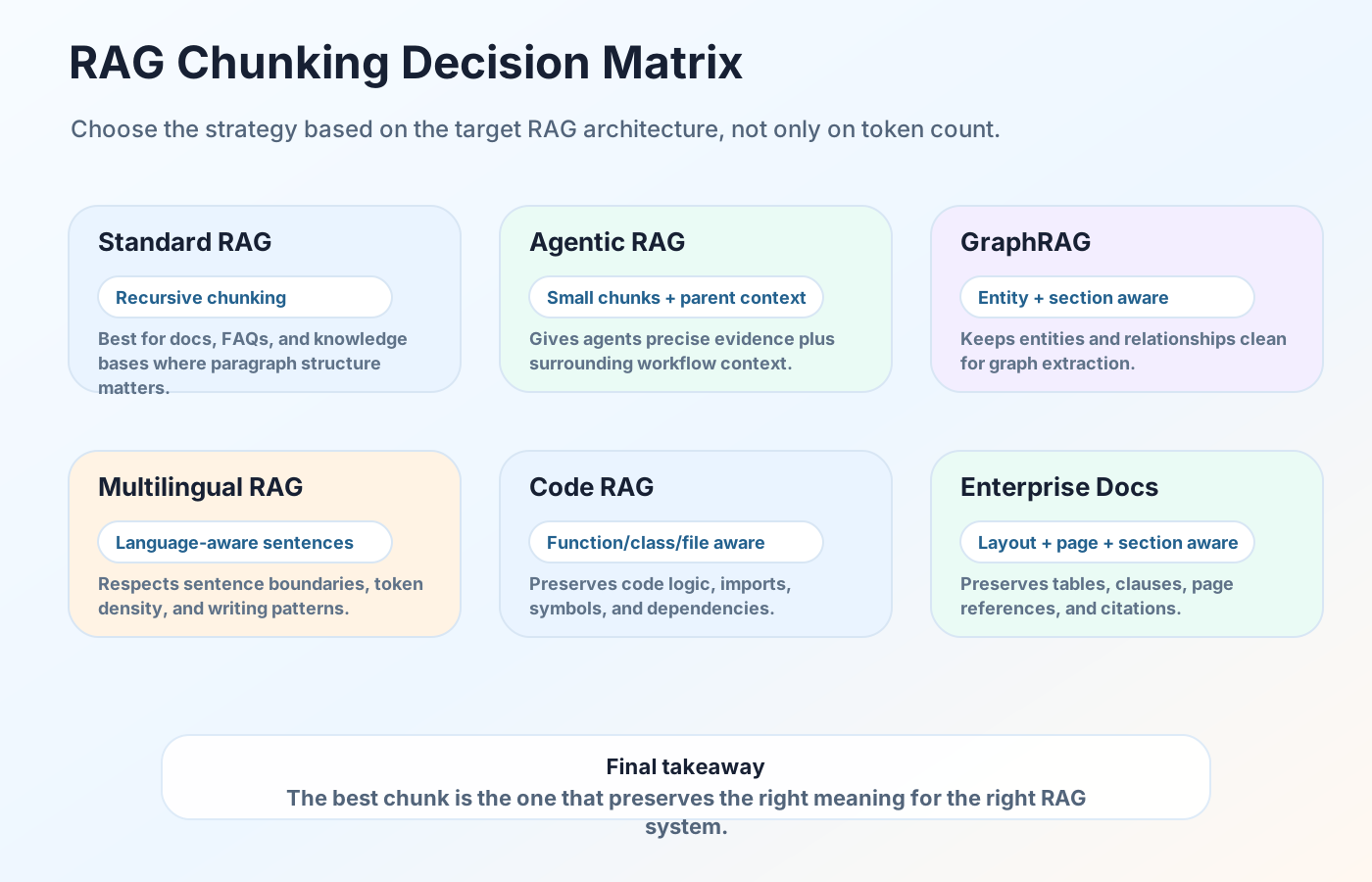
| RAG Type | Best Starting Chunking Strategy | Why It Works |
|---|---|---|
| Standard RAG | Recursive chunking | Preserves paragraphs and sections while keeping retrieval simple |
| Agentic RAG | Small chunks plus parent context | Gives agents precision and enough surrounding evidence |
| GraphRAG | Entity-aware and section-aware chunking | Helps preserve relationships for graph extraction |
| Multilingual RAG | Language-aware sentence and paragraph chunking | Respects language-specific structure |
| Code RAG | Function-aware, class-aware, and file-aware chunking | Preserves code logic and dependencies |
| Enterprise Document RAG | Layout-aware and section-aware chunking | Preserves pages, tables, clauses, and citations |
| Legal or Policy RAG | Hierarchical and section-aware chunking | Keeps clauses connected to parent sections |
| Tabular RAG | Table-aware chunking | Prevents rows and columns from losing meaning |
| Multimodal RAG | Layout-aware and region-aware chunking | Keeps text, images, charts, and captions connected |
Common Chunking Mistakes
The first mistake is choosing chunk size before understanding the content. Teams often start with a token number instead of analyzing document structure.
The second mistake is using the same chunking strategy for every data source. A support article, legal clause, API document, and source code file need different handling.
The third mistake is ignoring metadata. Chunks should carry useful metadata such as title, section, page number, language, source URL, document type, creation date, and access permissions.
The fourth mistake is optimizing only for retrieval and not for answer quality. A chunk may retrieve well but still fail to provide enough context for the model to generate a complete answer.
The fifth mistake is not evaluating chunking. Teams should test multiple chunking strategies against real user questions and compare retrieval precision, answer quality, citation accuracy, latency, and cost.
A Practical Way to Choose Chunking Strategy
Start by asking five questions.
- What kind of content are we indexing?
- What kind of questions will users ask?
- Does the answer require exact citations?
- Does the system need narrow facts or broader reasoning?
- Is this a simple RAG system or an agentic workflow?
If the content is simple documentation, start with recursive chunking. If the system is agentic, use small chunks with parent expansion. If the system uses a graph, use entity-aware chunking. If the content is multilingual, use language-aware chunking. If the content is code, use code-aware chunking. If the content is enterprise PDFs, use layout-aware chunking.
Then evaluate with real queries. The best chunking strategy is not the one that looks clean in theory. It is the one that retrieves the right evidence and helps the model produce the most accurate, grounded, and useful answer.
Final Thought
Chunking is not a small preprocessing detail. It is one of the most important design choices in a RAG system.
As RAG systems evolve into Agentic RAG, GraphRAG, multilingual RAG, code RAG, and enterprise AI assistants, chunking needs to evolve too.
The future of RAG will not be built on one universal chunk size. It will be built on context-aware chunking strategies that understand the structure, meaning, language, and use case of the content.
The best chunking strategy is not the biggest chunk, the smallest chunk, or the most advanced chunk.
The best chunking strategy is the one that preserves the right meaning for the right RAG system.