
Every SaaS product team is hearing a version of the same request: “Where is the AI?” The first response is usually familiar: add a chat box, generate summaries, improve search, draft messages, or suggest the next step. These are useful improvements. They save time and make software feel easier to use. But they do not change the core experience of work.
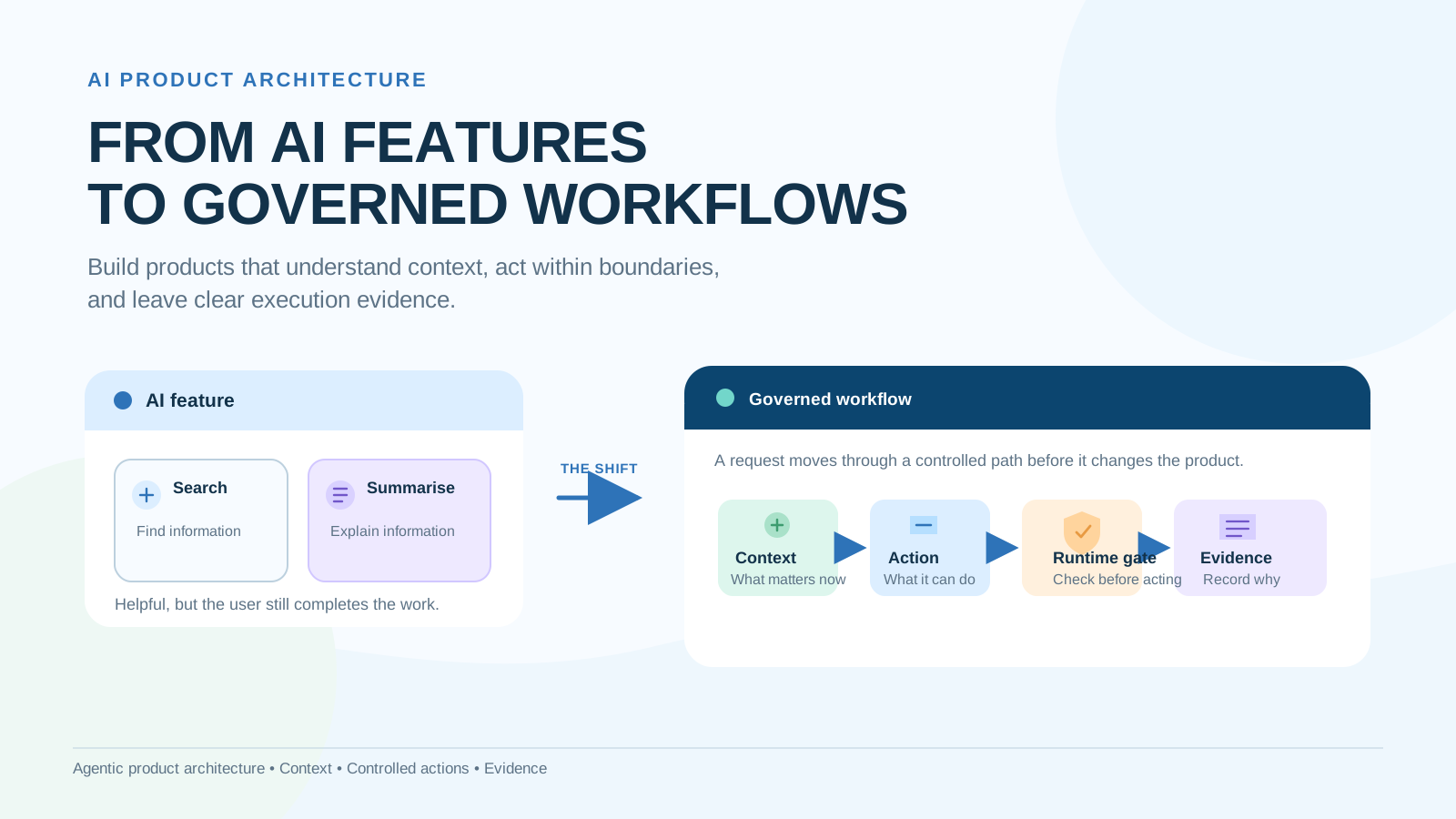
The bigger shift begins when a user stops asking a product for information and starts asking it to help complete an outcome. Instead of opening multiple screens to investigate an account issue, a user may say: “Find customers whose onboarding has stalled, prepare the right follow-ups, and show me anything that needs review.” Completing that request safely requires the product to understand current state, past interactions, workflow rules, risk thresholds, and the moments when a person needs to step in.
This is where AI in SaaS becomes more than a feature. The question is no longer, “How do we add AI to the product?” It becomes, “How do we harness AI so it can help real work move forward without guessing, overreaching, or creating risk?”
1. AI Adoption Is Moving Fast. Reliable Execution Is Still Early.
The message is clear. Teams can access AI models quickly, but making them dependable inside real workflows takes more than model access. The hard part is context, control, workflow design, and evidence.
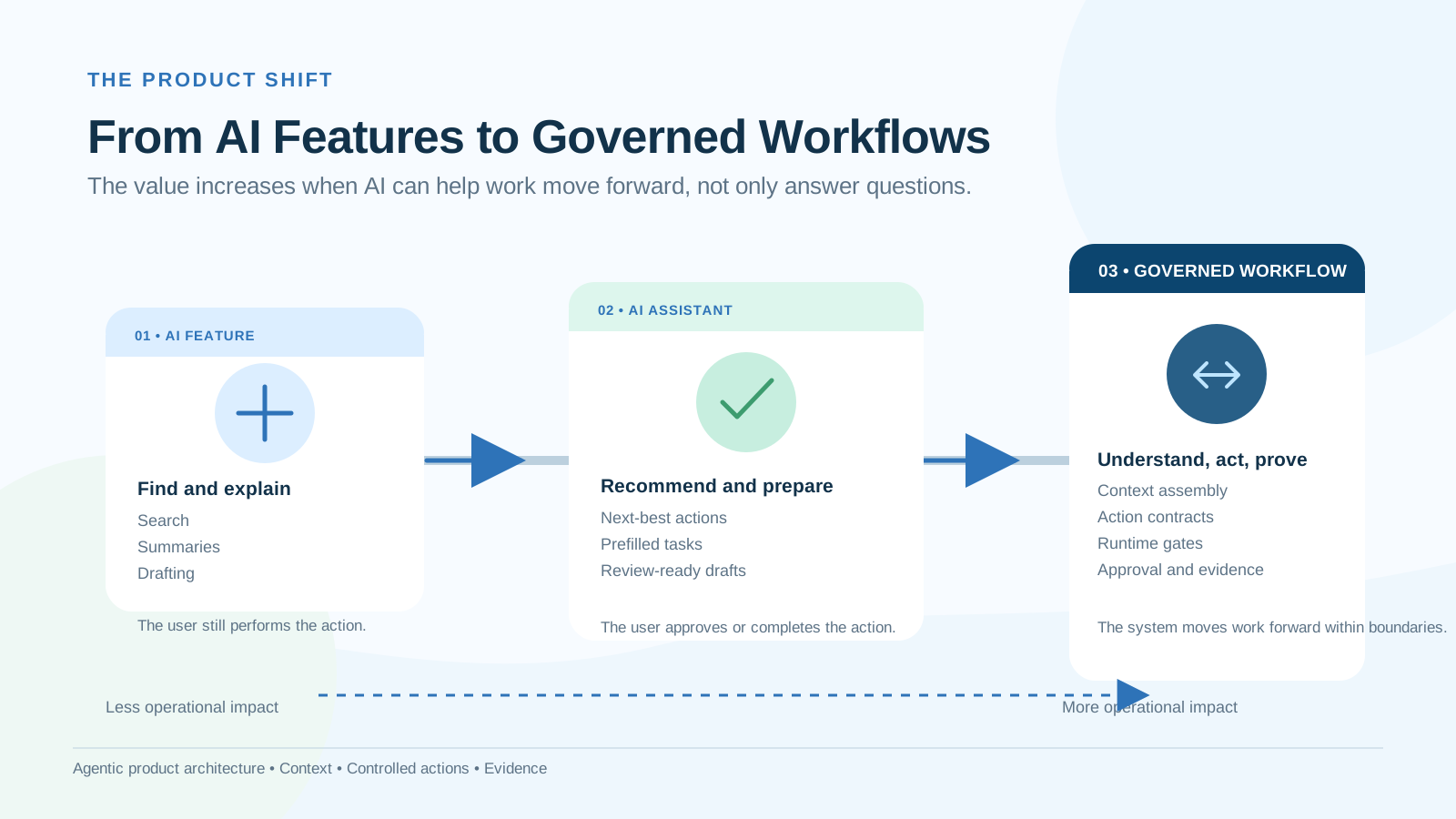
2. An AI Feature Is Not an Agent-Ready Product.
An AI feature might answer: “Why is this customer’s payment still pending?” An agent-ready product can help with a more useful request: “Check the payment, identify the cause of the delay, prepare the next action, and route it for review if there is an exception.”
The difference is not just better language. The second request requires the system to understand what is happening now, which rules apply, what action is valid, and whether that action can proceed without review. A model may know how to call an action, but an action alone does not tell it whether that action is appropriate.
A product action may allow a refund, an account change, or an appointment reschedule. But the real decision may depend on account history, policy thresholds, contract terms, unresolved cases, and the current workflow stage. That knowledge often sits across product logic, team processes, internal rules, and the experience of people who handle exceptions every day.
Simply connecting AI to APIs does not create an agent-ready product. It creates access. Reliable execution needs a harness.
3. Transforming SaaS Products into Governed Agentic Systems.
A governed agentic system does more than answer questions. It helps move work forward using live context, clear action paths, review points, and operational boundaries. The aim is not to remove people from important decisions. It is to reduce repetitive work while keeping control where it matters.
The Execution Harness
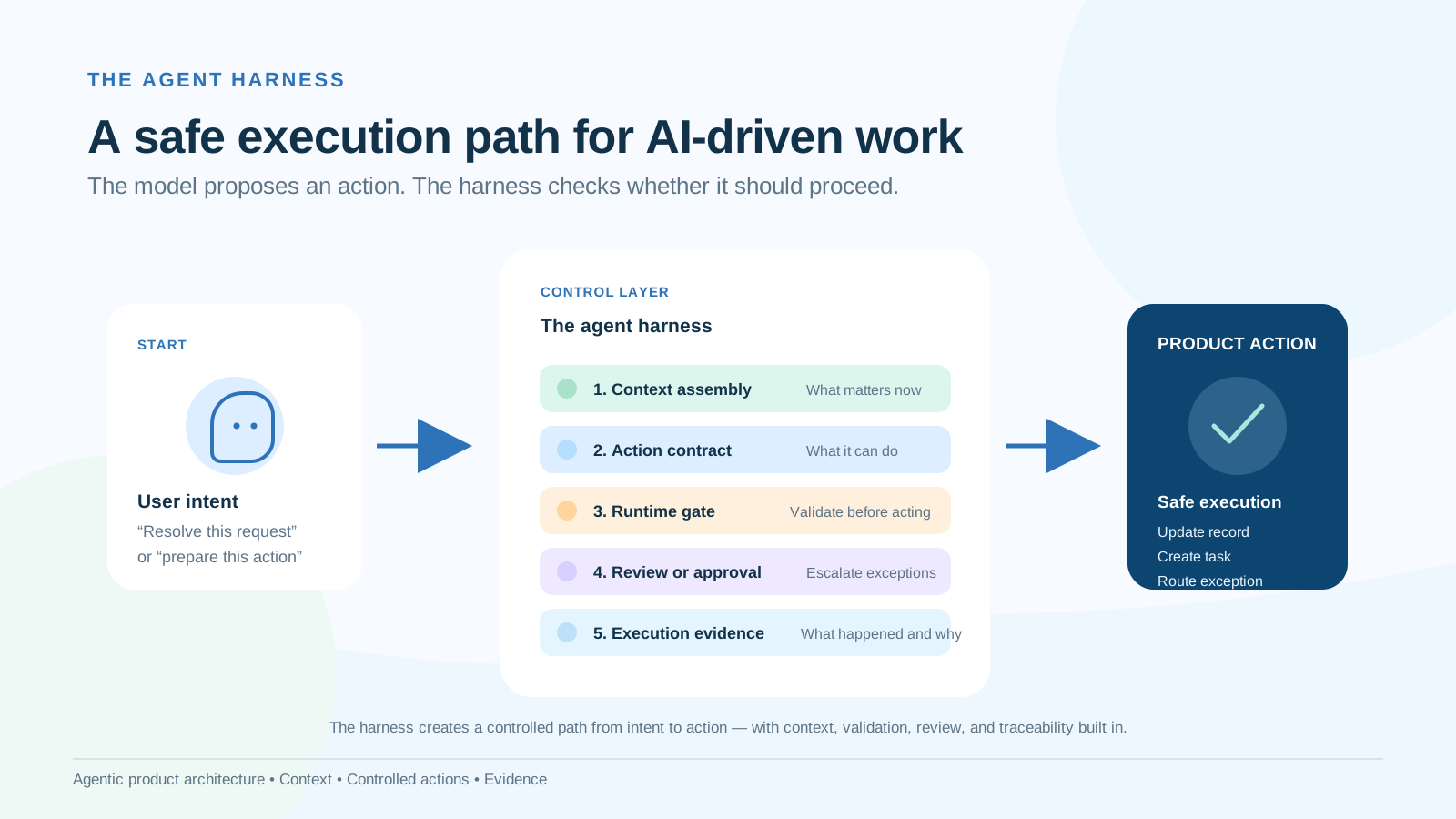
An execution harness is the product layer that helps AI operate within real business conditions. The AI can interpret a request, identify patterns, and suggest a next step. The harness ensures that the next step is grounded in current context and follows the right path.
- Context that reflects the current situation. An agent should not receive every piece of data the product has collected. It should receive the information needed for the task in front of it. For a support workflow, that may include account status, recent activity, open cases, plan details, and relevant policy. For a finance workflow, it may include invoice status, payment history, approval thresholds, and known exceptions. Good context is not more data; it is the right data for one decision.
- Clear action contracts. Business actions should be explicit. “Pause subscription,” “assign ticket,” “prepare refund,” “schedule appointment,” or “escalate issue” should each have a clear purpose, valid inputs, expected result, and known failure path. The agent should not have to infer what a database field, button, or endpoint means.
- Authority boundaries. Not every action should be fully automated. An agent may prepare an email but not send it, draft an account adjustment but require review before applying it, or resolve a routine request while escalating a sensitive case. This is how AI remains useful without gaining unrestricted control.
- Runtime gates. A prompt can ask an AI system to be careful. A runtime gate can stop an unsafe action before it reaches the product. Before an action proceeds, the system should check whether the information is complete, the action is valid for the current workflow state, the case crosses a review threshold, or the request falls outside the agent’s allowed scope.
- Durable workflow state. Real work rarely ends in one interaction. A request may wait for a document, customer reply, manager review, payment update, or external system event. The product needs to preserve what has happened, what is pending, and what should happen next. Without this, an agent may repeat work, lose track of earlier decisions, or restart a process incorrectly.
- Execution evidence and recovery. When AI takes a meaningful action, the team should be able to inspect what happened: what the system saw, what action it proposed, which rule shaped the decision, whether review was required, what changed, and whether the action can be reversed. This evidence helps teams improve workflows, investigate edge cases, and build trust over time.
4. Build the Product for an Agentic Future Before Building the Agent.
A product does not need to become fully autonomous to become agent-ready. But it should make a few decisions early, because they become harder to fix later.
- Treat business actions as first-class capabilities. Agents need clear actions, not just screens and buttons. Actions such as assigning a ticket, pausing a subscription, preparing a refund, or escalating an issue should have defined inputs, valid conditions, and known outcomes. This makes the product easier to integrate, test, monitor, and use safely with AI.
- Make workflow state visible. Business work often pauses for approvals, customer replies, payment updates, or external events. The product should clearly show what has happened, what is pending, and what comes next. When workflow state is hidden across notes, inboxes, and undocumented processes, AI is forced to make assumptions. That is where unreliable behaviour begins.
- Keep policy close to execution. Rules such as approval limits, eligibility conditions, and exception handling should be visible and reusable, not hidden in a single interface or known only by the team. When policies stay close to execution, people, systems, and AI agents can apply the same rules consistently.
- Design around reversibility. Not all actions carry the same risk. Drafting a message is easy to undo, while sending an email, changing a contract, issuing a refund, or deleting data may have lasting consequences. Give AI more freedom with low-risk, reversible actions. Keep review steps and recovery paths for actions that create meaningful impact.
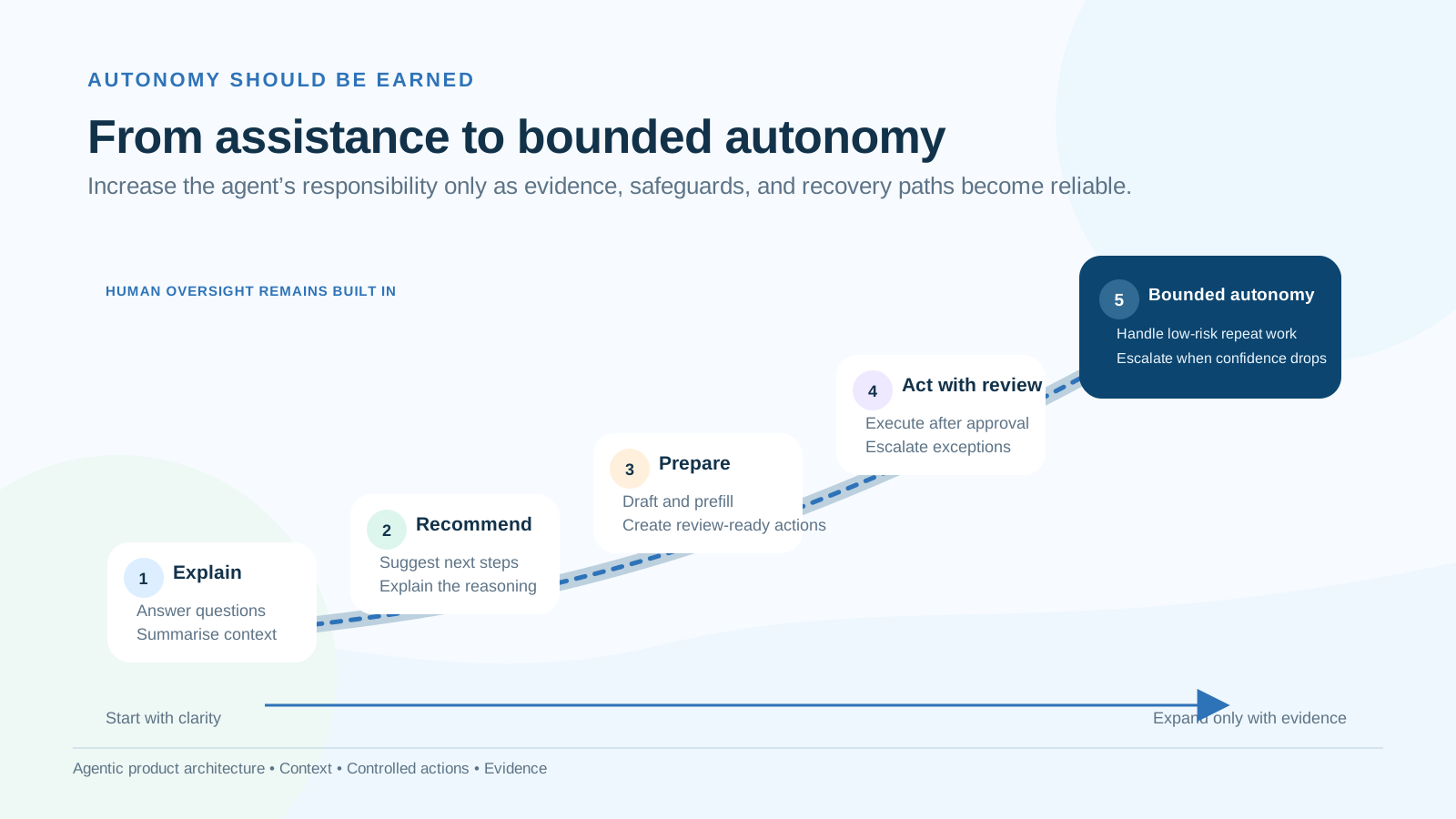
5. Autonomy Should Be Earned, Not Assumed.
The most practical path is gradual.
- Explain. AI answers questions and retrieves useful information.
- Recommend. AI identifies a likely next step and explains why.
- Prepare. AI drafts messages, fills forms, creates tasks, and proposes actions.
- Act with review. AI executes defined actions only after the right person confirms them.
- Operate within boundaries. AI handles low-risk, repeatable work automatically and escalates exceptions.
This approach gives teams a way to learn from real use before expanding autonomy. It also gives users confidence because they can review the system’s actions before giving it more responsibility.
6. Start with One Workflow That Matters.
The best first agentic workflow is not the broadest one. It is valuable, repeated, narrow enough to understand, connected to reliable data, and supported by a clear escalation path.
A strong first use case may be: “Help the support team prepare responses for routine account requests, while routing sensitive, high-value, or unclear cases for review.” That workflow can be mapped, tested with real examples, measured, and improved.
A weak starting point is: “Make the whole product agentic.” That creates undefined scope, unclear authority, and too many hidden failure paths. Start with one workflow, make the action model clear, assemble the right context, add review where it matters, and capture evidence from every outcome.
7. The Real Product Shift Is Operational Intelligence.
SaaS products will continue to need dashboards, records, reports, and specialised interfaces. But users will increasingly expect to describe an outcome instead of navigating multiple screens to complete it.
The products that stand out will be those that harness AI to make meaningful work simpler, safer, and easier to complete. The shift is not from SaaS to chat. It is from software that only stores and displays information to software that understands context and helps work move forward.