
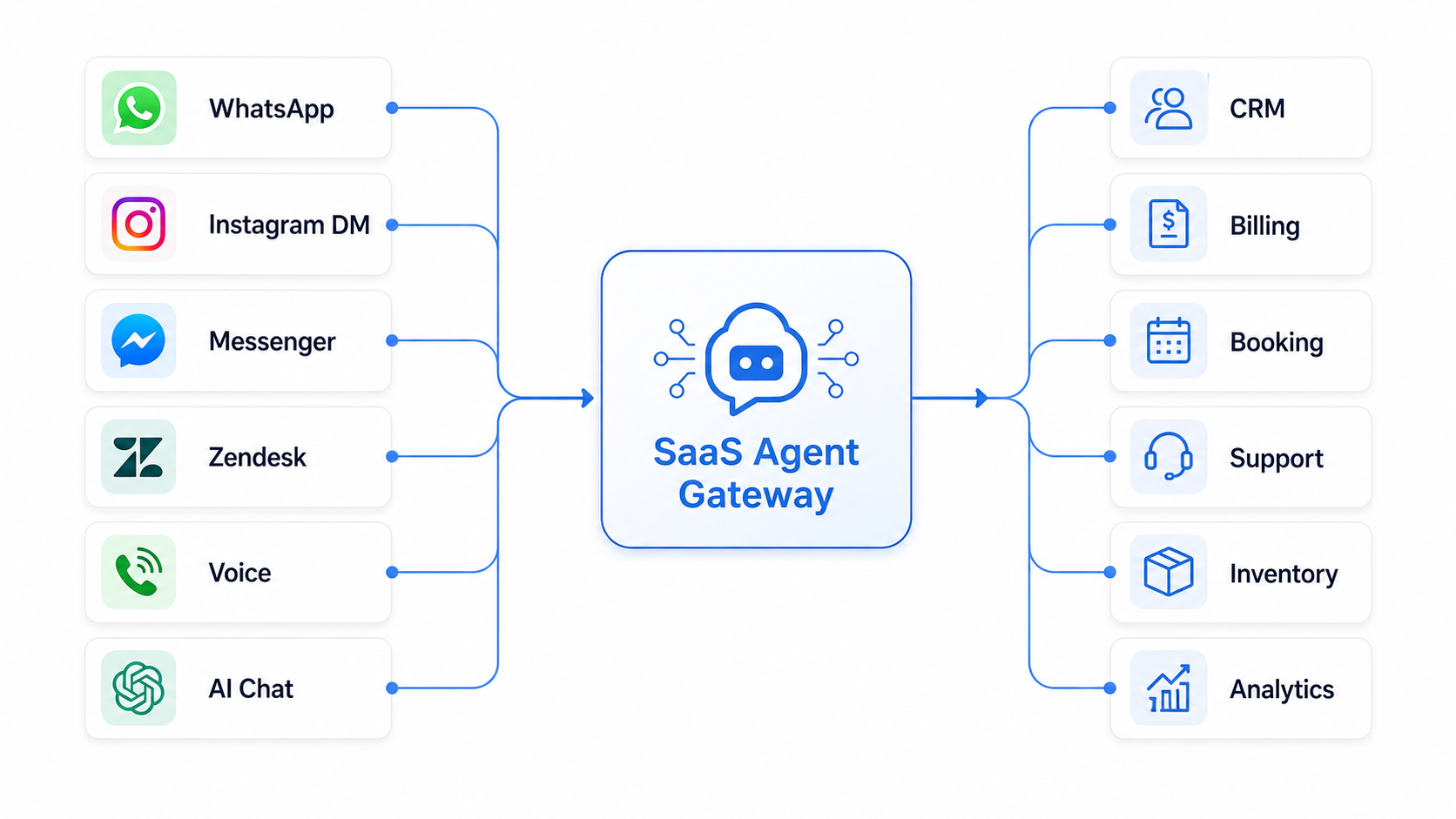
SaaS products are no longer limited to dashboards, forms, and internal admin panels. A growing part of software interaction is moving into channels where customers already talk, ask, complain, compare, and buy. WhatsApp, Instagram DMs, Messenger, Zendesk, voice assistants, and AI platforms are becoming the first touchpoints for real business workflows.
This shift is bigger than adding a chatbot to customer support. A channel-native agent does not only answer questions. It identifies the customer, understands the account context, checks what action is allowed, calls the right backend system, updates workflow state, and knows when a human should take over. The real challenge is not the chat interface. The challenge is building a safe execution layer behind it.
Why SaaS Interfaces Are Moving Outside the Product
Traditional SaaS assumes the user will log in, navigate menus, find the right screen, understand the workflow, and complete the action manually. That model works for trained internal users, but it does not always fit customers who expect fast answers and direct outcomes.
A customer asking about an order inside WhatsApp does not want to open a portal. A patient trying to reschedule an appointment may not want to search through a booking dashboard. A support user asking for a refund status does not care which internal system stores the payment record. They want the work completed through the channel they are already using.
This is where SaaS agents become useful. They can turn a message into a structured workflow request. They can connect the conversation to product data, policy rules, and operational systems. They can also reduce the gap between customer intent and backend execution.
The risk is that many teams will treat this as a messaging problem. It is not. It is an architecture problem.
The Agent Gateway Becomes the Control Layer
A channel-native SaaS agent needs a gateway between external conversations and internal systems. Without this layer, every channel integration becomes its own fragile automation path. WhatsApp may call one workflow, Zendesk may call another, and an Instagram DM may behave differently even when the user intent is the same.
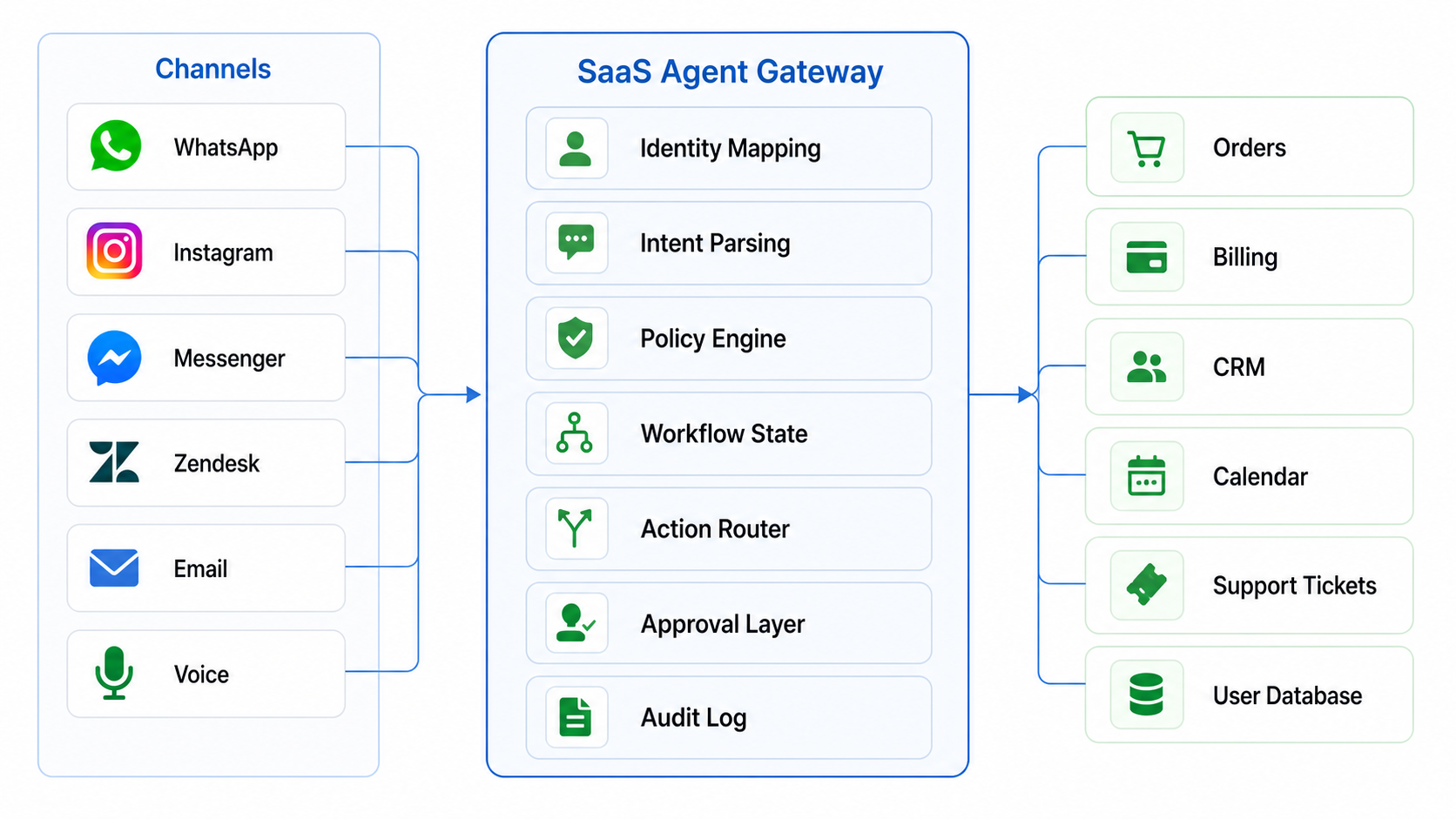
The agent gateway creates one controlled path for intent, identity, permissions, actions, approvals, and audit logs. It allows multiple channels to connect to the same governed execution model instead of duplicating business logic across messaging platforms.
This layer should not be treated as a simple API proxy. A proxy passes requests forward. An agent gateway decides whether the request is valid, safe, complete, authorized, and executable. It checks the workflow state before action. It also records why a decision was made, which tool was used, and what evidence supported the response.
Identity Mapping Is the First Hard Problem
A message from a customer channel is not enough to execute a SaaS workflow. The agent needs to know who the person is, which account they belong to, what role they have, and what data they are allowed to access.
This becomes complicated when the same user appears across multiple channels. A customer may start on Instagram, continue on WhatsApp, and later open a Zendesk ticket. The agent cannot rely only on the visible username or phone number. It needs a reliable mapping between channel identity and product identity.
For SaaS teams, this means the agent gateway must connect channel identifiers to internal user records, customer accounts, tenant boundaries, and permission models. Without that mapping, the agent may answer too generally, expose the wrong information, or attempt an action for the wrong account.
This is why channel-native agents need strict identity resolution before they need more creativity.
Every Action Needs a Risk Level
Not every SaaS action should be handled the same way. Reading an order status is different from changing a subscription. Drafting a refund response is different from processing the refund. Booking an appointment is different from canceling a paid session.
A useful agent gateway separates actions by risk. Low-risk read actions can usually happen directly when identity and permissions are clear. Medium-risk actions may require confirmation from the user. High-risk actions may require human approval, internal review, or complete blocking.
This classification should live outside the prompt. The model can interpret intent, but the gateway should decide what action is allowed. A reliable SaaS agent should not depend on the model remembering policy rules from a long instruction. It should call tools that already contain permissions, preconditions, side effects, and approval requirements.
The safest design is simple: the model proposes, the gateway verifies, and the system executes only when the action contract allows it.
Workflow State Cannot Live Inside the Chat
A chat transcript is not a workflow engine. It can show conversation history, but it should not be the source of truth for process state.
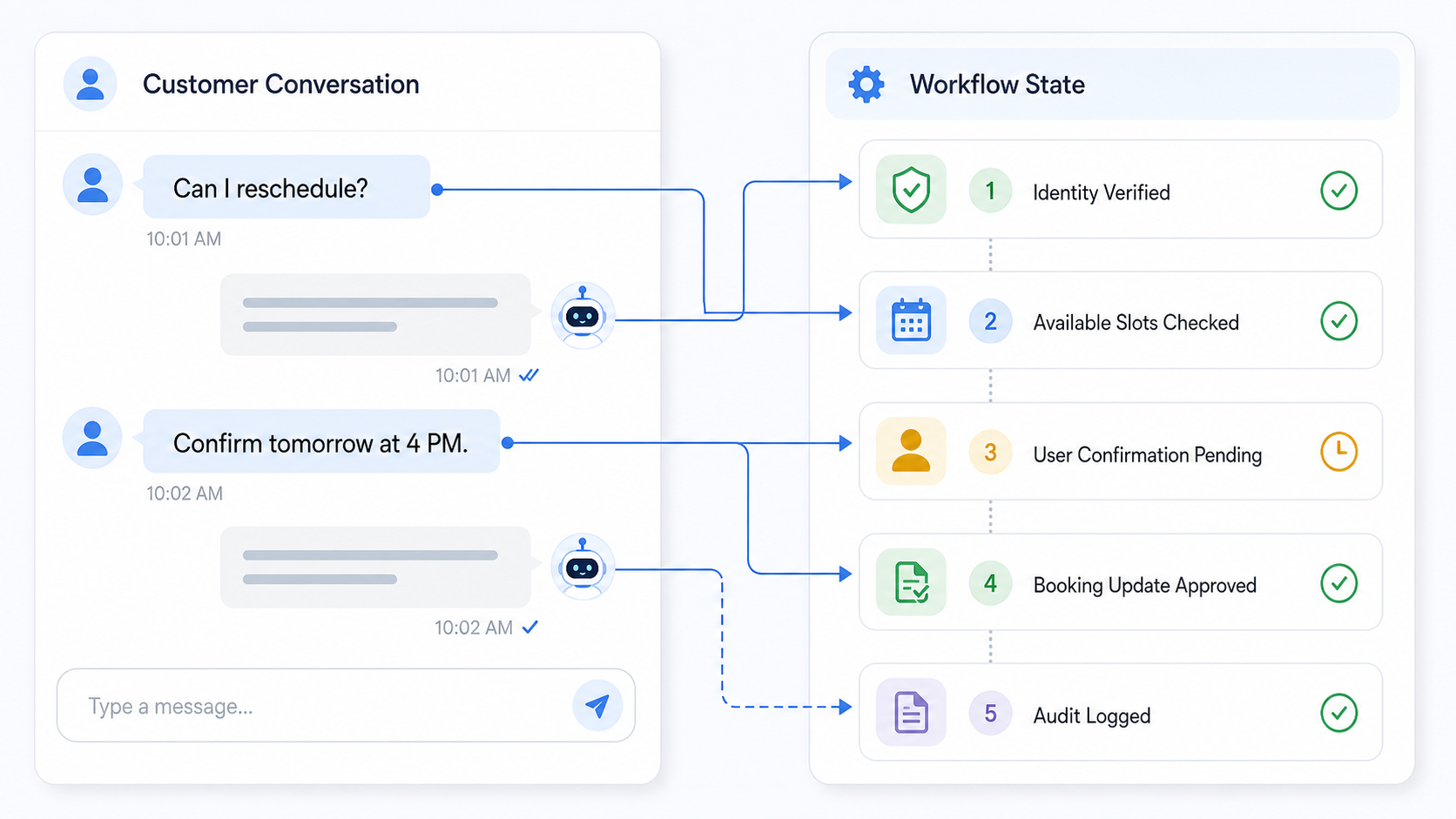
A customer may ask to reschedule an appointment and reply six hours later. A support agent may take over midway. A payment check may depend on an external system delay. A refund request may need internal approval before the customer receives a final answer.
If the workflow state only exists inside the conversation, the agent becomes unreliable as soon as the process pauses. The correct approach is to store workflow state separately. The chat can remain the interface, while the backend tracks the actual step, required input, pending approval, tool result, and next valid action.
This distinction matters because channel-native agents often operate across delayed, messy, real-world conversations. They must continue work without guessing what happened earlier.
Human Handoff Should Be Designed Early
Human handoff is often added after the agent fails. That is too late.
A production SaaS agent should know when to stop. It should escalate when identity is unclear, user frustration is detected, policy confidence is low, data is missing, or the requested action falls outside the approved scope. The handoff should include the user's intent, verified identity, gathered context, attempted actions, tool outputs, and suggested next step.
This prevents the human operator from restarting the conversation. It also makes the agent useful even when it cannot complete the task. A well-designed handoff turns failure into continuity.
For many SaaS workflows, the best first version of an agent is not full autonomy. It is a supervised system that handles discovery, context gathering, safe reads, draft preparation, and escalation. Autonomy can increase only after the team has enough evidence that the workflow behaves safely.
Evaluation Must Match Real Customer Channels
Testing a SaaS agent only inside a developer console gives a false sense of readiness. Channel-native agents need tests that reflect actual customer behavior.
Users send incomplete messages. They switch topics. They reply late. They use screenshots. They ask for exceptions. They mix support, sales, billing, and account questions in the same conversation. They also expect the agent to remember what happened across previous interactions.
Evaluation should include realistic channel scenarios. A good test set should cover identity ambiguity, repeated questions, unsupported requests, sensitive account actions, delayed replies, handoff cases, tool failures, and policy conflicts.
The goal is not to prove that the agent can answer nicely. The goal is to prove that it can act correctly, refuse safely, escalate clearly, and preserve workflow state across messy conversations.
What SaaS Teams Should Build First
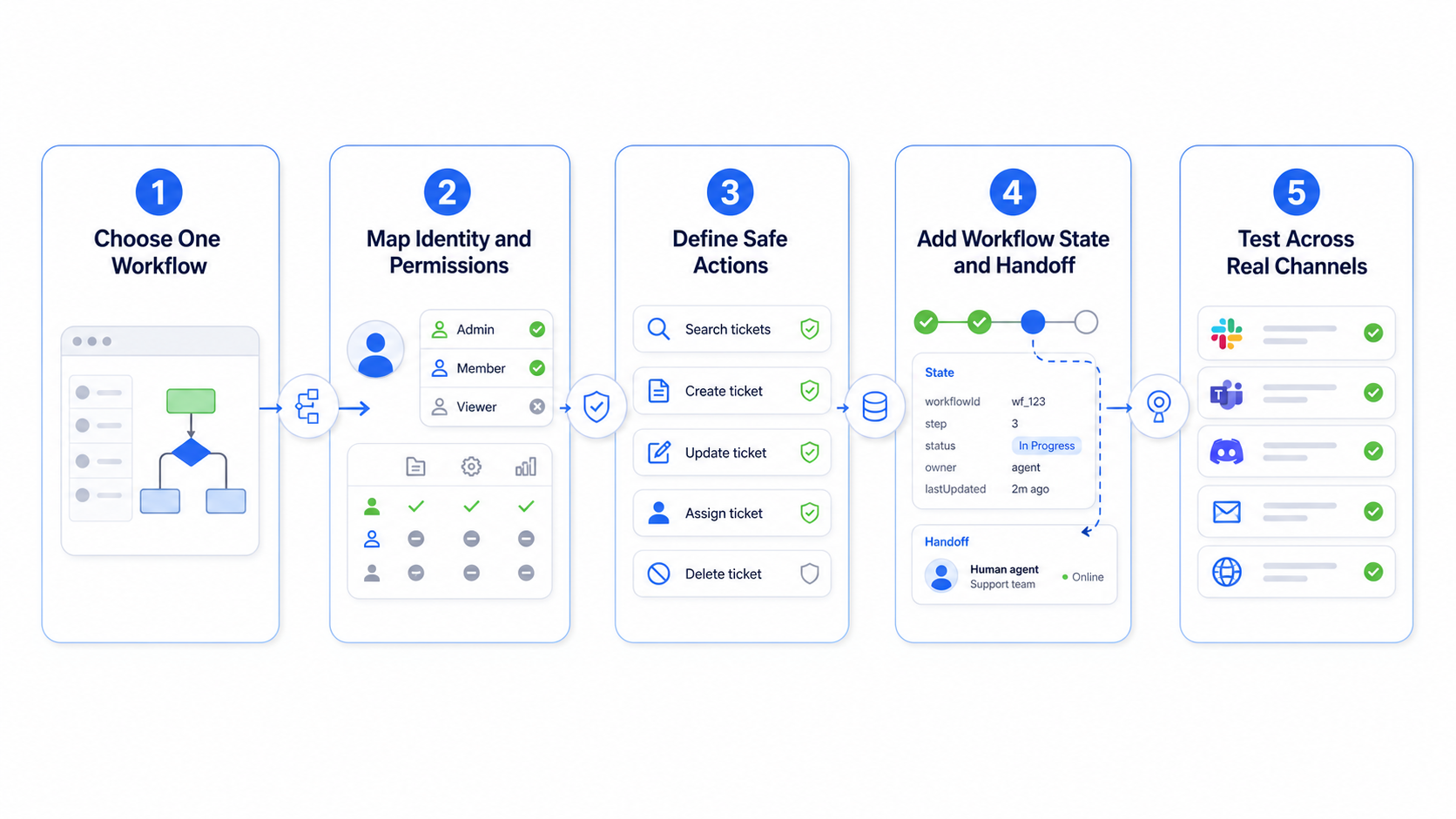
The first channel-native agent should not cover the entire product. It should start with one narrow workflow that has clear value, available data, defined actions, and manageable risk.
A good starting workflow could be order status lookup, appointment rescheduling, support ticket triage, lead qualification, invoice retrieval, onboarding checklist guidance, or subscription plan explanation. These workflows are common enough to create value, but controlled enough to test properly.
The technical foundation should include a channel adapter, identity mapping, action contracts, policy checks, state storage, audit logs, fallback behavior, and handoff routing. Once this foundation works for one workflow, more channels and actions can be added without rebuilding the system each time.
This is the difference between a chatbot launch and a SaaS-to-agent transition. The chatbot answers from the edge. The agent gateway connects the edge to the operating model of the business.
The Bigger Shift
SaaS products used to compete on dashboards, feature depth, and workflow coverage. The next layer of competition will include how safely those workflows can be exposed through agents across customer channels.
The companies that win will not simply place AI in front of their product. They will rebuild the execution path behind the conversation. They will make identity, permissions, state, approvals, evidence, and auditability part of the agent architecture from the beginning.
Channel-native agents are not the end of SaaS interfaces. They are a new access layer for SaaS workflows. The product still needs a system of record, admin controls, configuration screens, analytics, and human review surfaces. What changes is where the user begins the work.
For SaaS teams, the message is clear. Do not build a separate bot for every channel. Build one governed agent gateway that can serve many channels safely.
That is how SaaS moves from conversational support to real agentic execution.