
AI agents are moving from experiments into real business workflows.
That creates a different question for SaaS CEOs. The question is no longer only, "Can we add AI to our product?" The better question is, "Can we let AI take part in our workflows without losing control?"
Recent market signals point in this direction. ServiceNow leadership recently framed governance as the new moat in the AI era, while fresh discussion around workplace AI and the EU AI Act shows that companies need stronger control around systems that influence real decisions.
For SaaS companies, this is not just a compliance topic. It is a product strategy topic.
1. AI Agents Need an Operating Model, Not Only a Feature Roadmap
Most SaaS companies begin AI adoption by looking for features to add.
That usually leads to a familiar path: chatbot, document search, support assistant, workflow assistant, or analytics copilot. These can be useful, but they do not automatically make the product agent-ready.
A real agent works differently from a normal feature. It may read customer data, interpret workflow state, recommend next steps, call tools, update records, notify users, or trigger approvals.
That means CEOs need to think beyond the user interface. They need to define where the agent fits inside the operating model of the product.
The important shift is simple: AI agents are not just another product module. They become participants in the workflow.
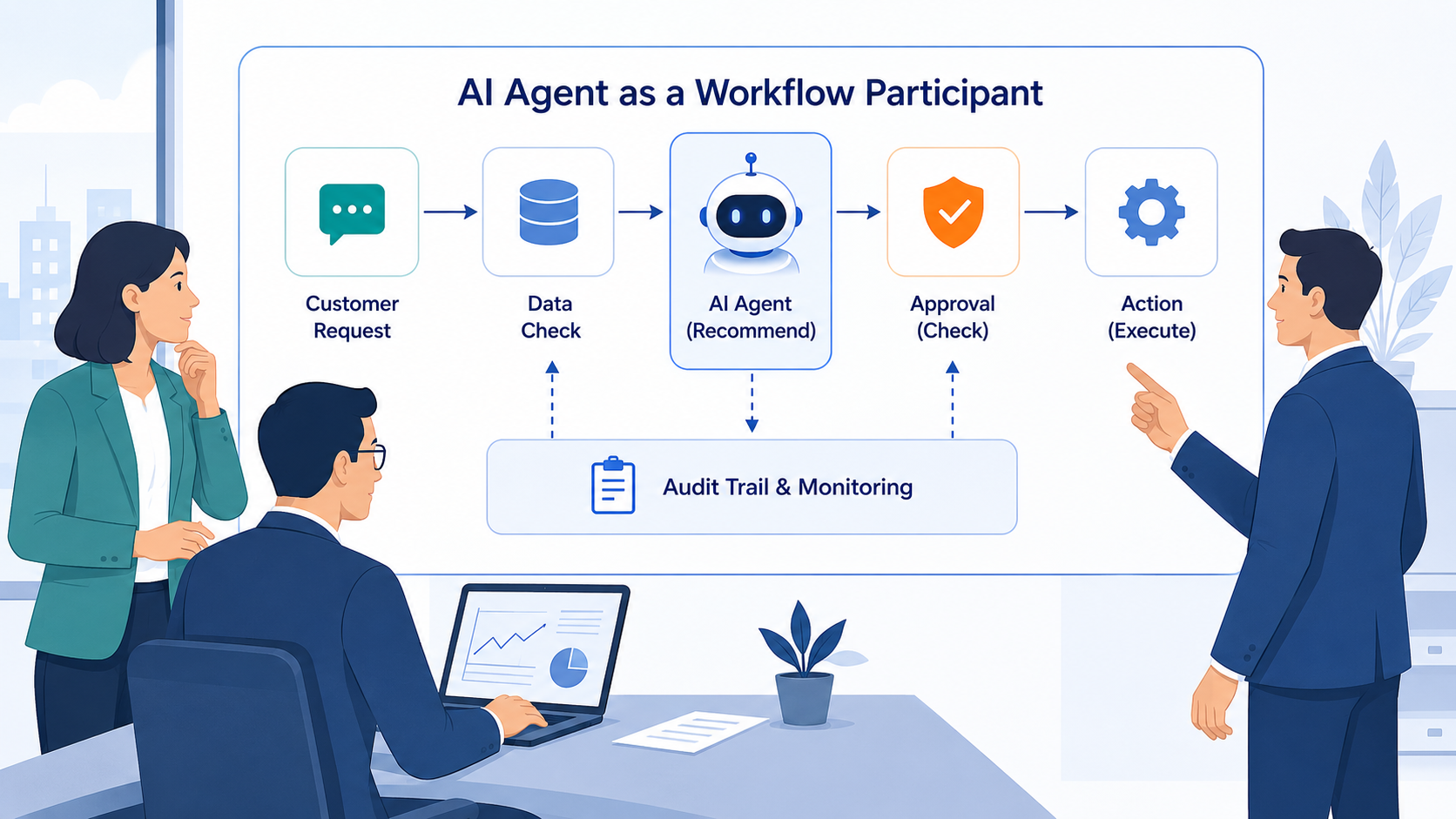
2. Start With One Workflow That Already Matters
A CEO does not need to rebuild the entire SaaS product before starting agentic transformation.
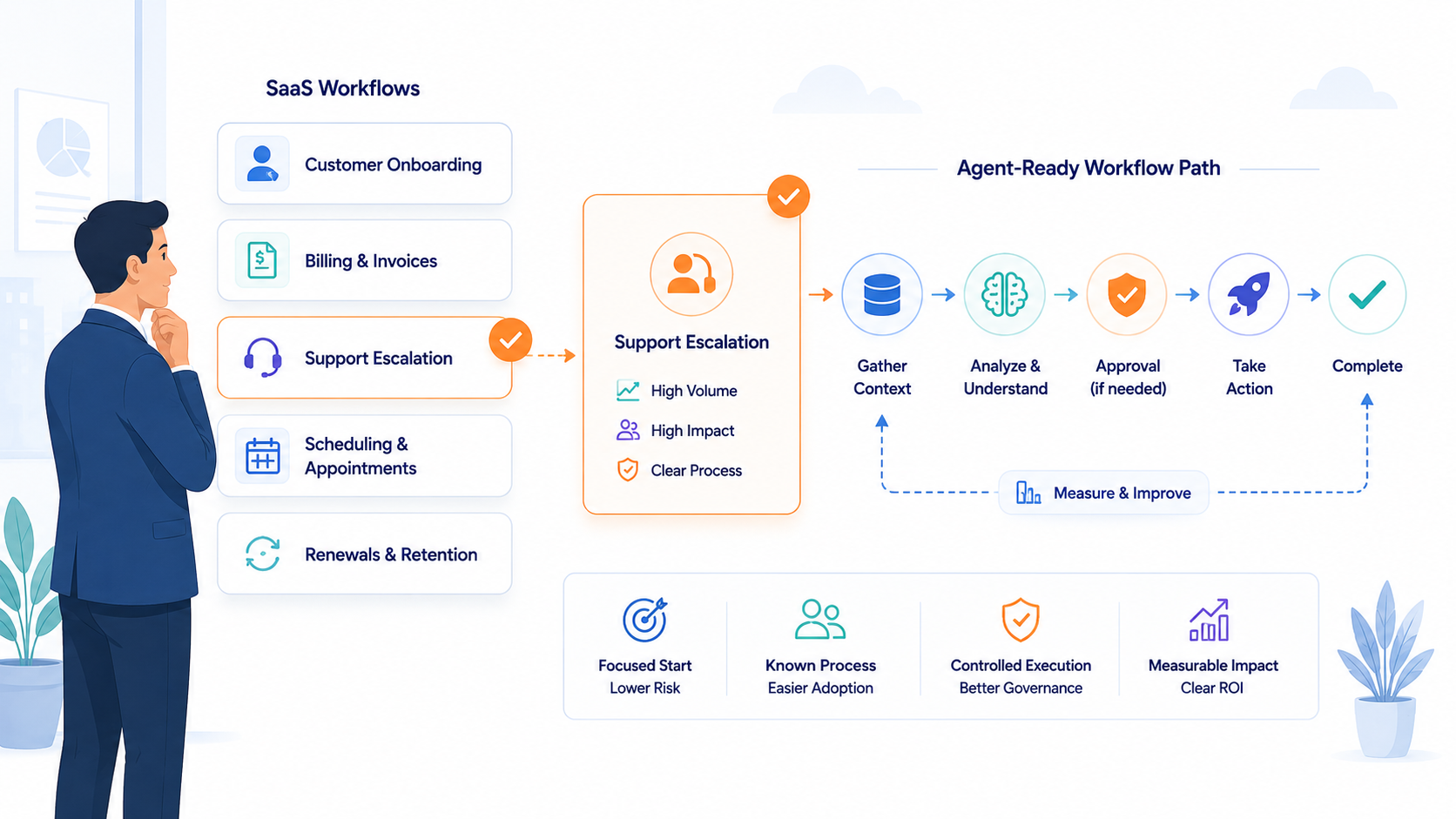
The better starting point is one workflow that already happens often, creates operational load, and has clear business value. Good examples include customer onboarding, support escalation, invoice correction, appointment rescheduling, renewal follow-up, internal approval, or account review.
The workflow should not be chosen only because it looks impressive in a demo. It should be chosen because the business already understands the process, the risks, the data, and the people involved.
Before adding an agent, the team should answer a few practical questions:
- What information does this workflow require?
- What decisions are repeated often?
- Which steps can the agent recommend?
- Which actions can the agent execute?
- Which steps still need human approval?
- What should happen when the agent is unsure?
This turns the first agent from a broad experiment into a controlled business implementation.
3. Define What the Agent Can Read, Recommend, and Execute
The CEO-level governance question is not only about risk policies. It is about practical action boundaries.
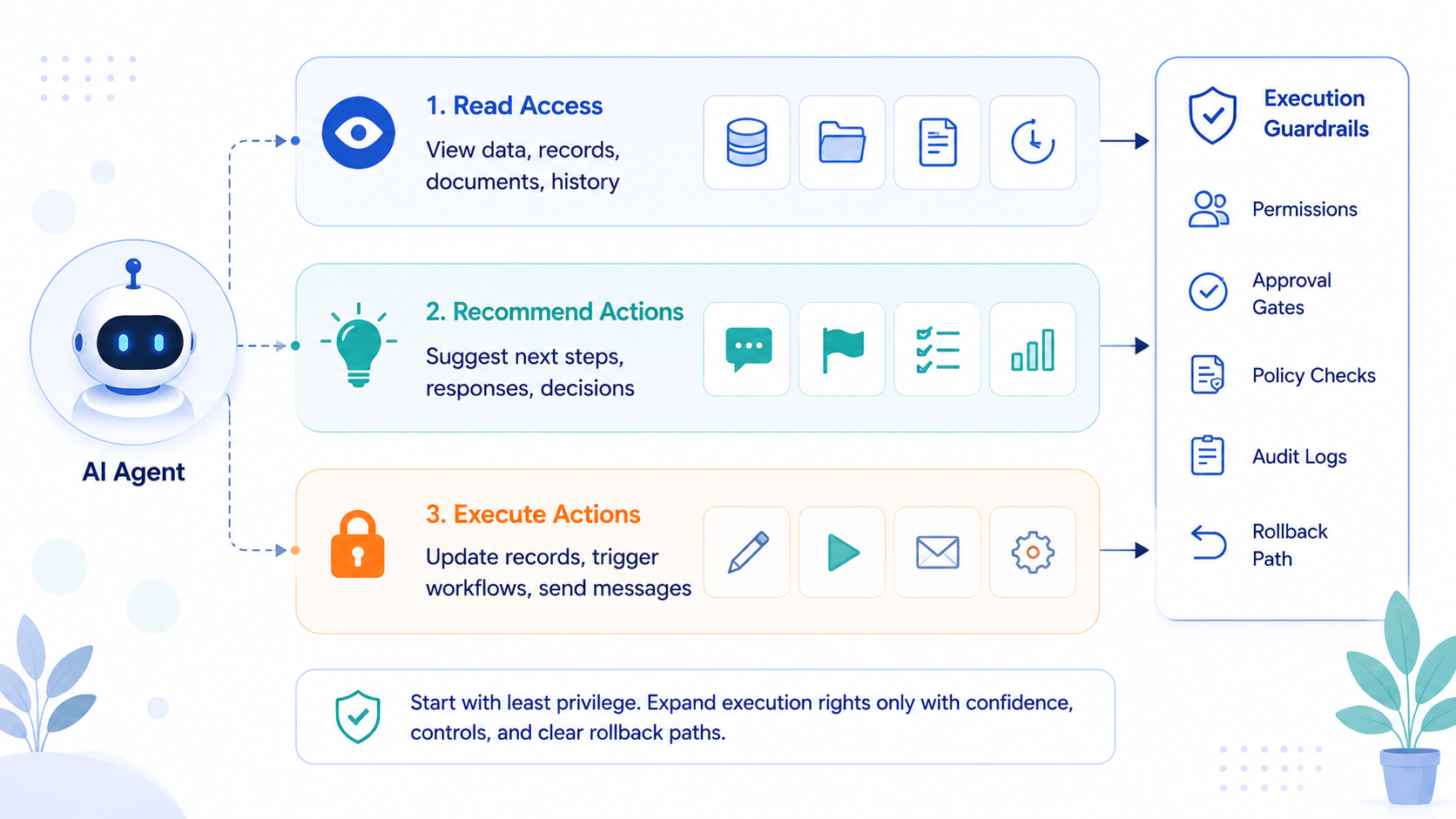
Every agentic workflow should be divided into three levels.
The first level is read access. This defines what the agent can see: customer records, ticket history, invoices, usage data, calendar availability, policy documents, or approval history.
The second level is recommendation authority. This defines what the agent can suggest: next response, account action, refund eligibility, escalation reason, renewal risk, or operational priority.
The third level is execution authority. This defines what the agent can actually do: update a field, send a message, create a task, trigger a workflow, request approval, or call an internal tool.
Many companies jump from read access to execution too quickly. That is where risk increases.
A safer approach is to let the first agent read context and recommend actions. Then allow limited execution only where the rules, permissions, and rollback path are clear.
4. Build Governance Into the Workflow, Not Around It Later
Governance cannot be a document that sits outside the product.
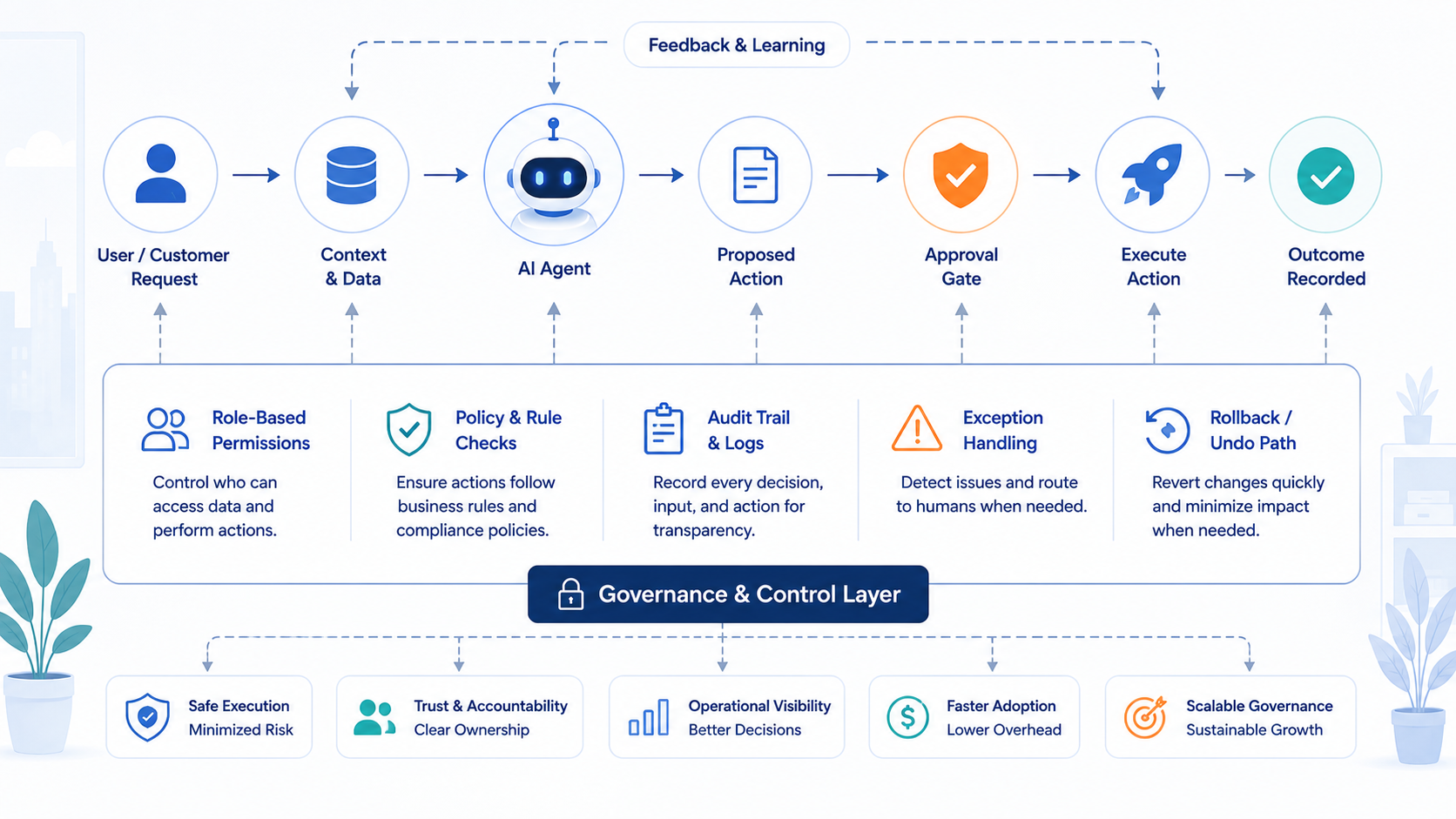
For agentic SaaS, governance has to be built into the workflow itself. The system should know who approved an action, which data the agent used, what rule was applied, what changed, and how the action can be reviewed or reversed.
This matters because agents can create a new kind of operational risk. They may act across tools, combine different sources of data, or make decisions that are hard to reconstruct later. ServiceNow recently raised the same explainability question: when an autonomous agent makes a call, can the organisation reconstruct why it happened?
That is why the control layer matters.
A governed SaaS agent should have:
- Role-based permissions
- Approval gates
- Policy checks
- Audit trails
- Exception handling
- Rollback or undo paths
- Monitoring for unusual behaviour
This is where governance becomes a moat. It allows the company to move faster because the agent is not operating blindly.
5. The CEO Playbook for the First 90 Days
The first 90 days should not be used to chase every possible AI use case.
They should be used to prove that one workflow can become agent-ready in a controlled way.
A practical CEO playbook can look like this:
- Days 1-15: Choose one high-value workflow and map the current process.
- Days 16-30: Identify the data, tools, roles, permissions, exceptions, and approval points involved.
- Days 31-45: Define what the agent can read, recommend, and execute.
- Days 46-60: Build the control layer around approvals, audit trails, rollback, and human review.
- Days 61-90: Run the agent in a limited pilot, measure quality, review failures, and expand only after evidence.
This creates a disciplined path from AI interest to agentic implementation.
At SaaStoAgent, we pay close attention to shifts like this because agentic transformation is not just about adding AI to an existing product. The real work is helping SaaS companies convert selected workflows into governed agentic systems.
The challenge is no longer only whether an agent can understand a request or call a tool. The real test is whether it can use the right context, choose the right action path, respect permissions, preserve workflow state, request approval when needed, and leave behind a trace that product and operations teams can trust.