Key Takeaways
- 2026 pushed agents from prompt loops toward durable runtimes with persistence, recovery, and long-running execution.
- The right unit is no longer a chat session. It is a stateful worker with identity, memory boundaries, tools, and checkpoints.
- Governance is moving into the runtime, where every action can be checked before execution.
- Near future agent systems will likely standardize around persistent sessions, policy enforcement, sub-agents, and event-driven orchestration.
1. What changed in 2026
The biggest change in 2026 is that serious agent builders started treating agents as runtime systems, not as "LLM + tools." Microsoft's Durable Task for AI agents positions production agents as long-running, stateful, tool-dependent workflows that need automatic persistence, recovery, and distributed coordination. Cloudflare's new agent direction says the same in a different way: durable execution, persistent sessions, sub-agents, checkpointing, and recovery are now core primitives rather than advanced add-ons.
That shift matters because most real agent failures are not about raw intelligence. They happen when an agent loses state, repeats side effects, breaks after a tool failure, or cannot resume after a pause. Durable runtimes exist to solve exactly those production problems.
2. Build a worker, not a session
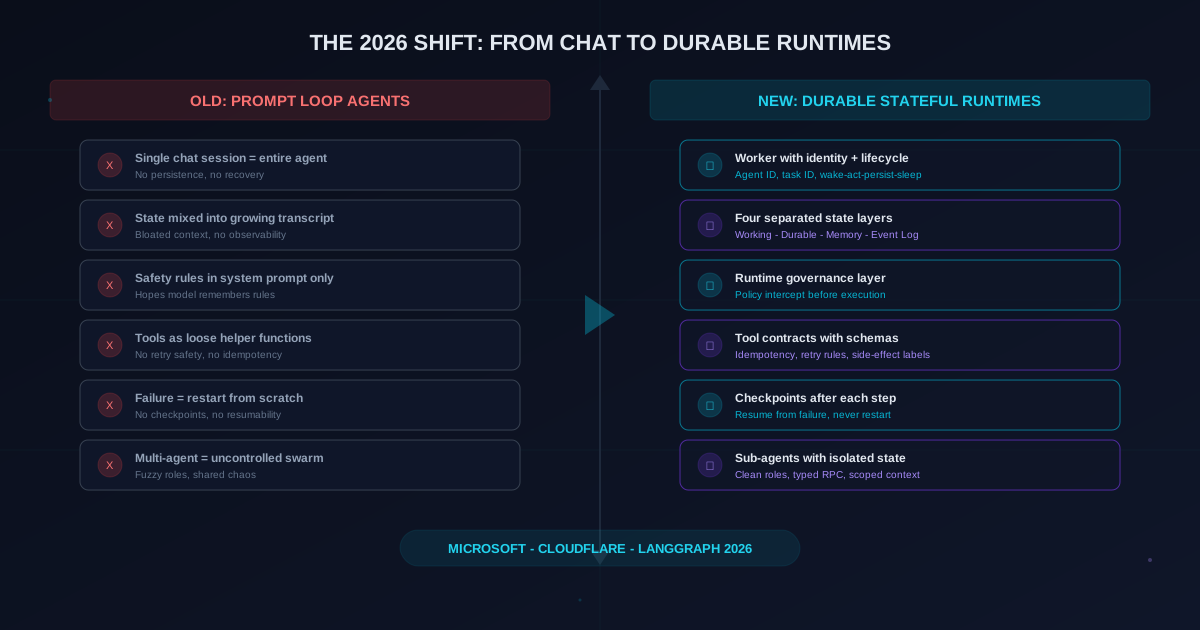
A production agent should be designed as a worker with identity. It should have an agent ID, a task ID, a state object, an inbox for events, a list of allowed tools, and a wake-act-persist-sleep lifecycle. This is now aligned with how both Azure durable agents and Cloudflare's long-running agent primitives are being described.
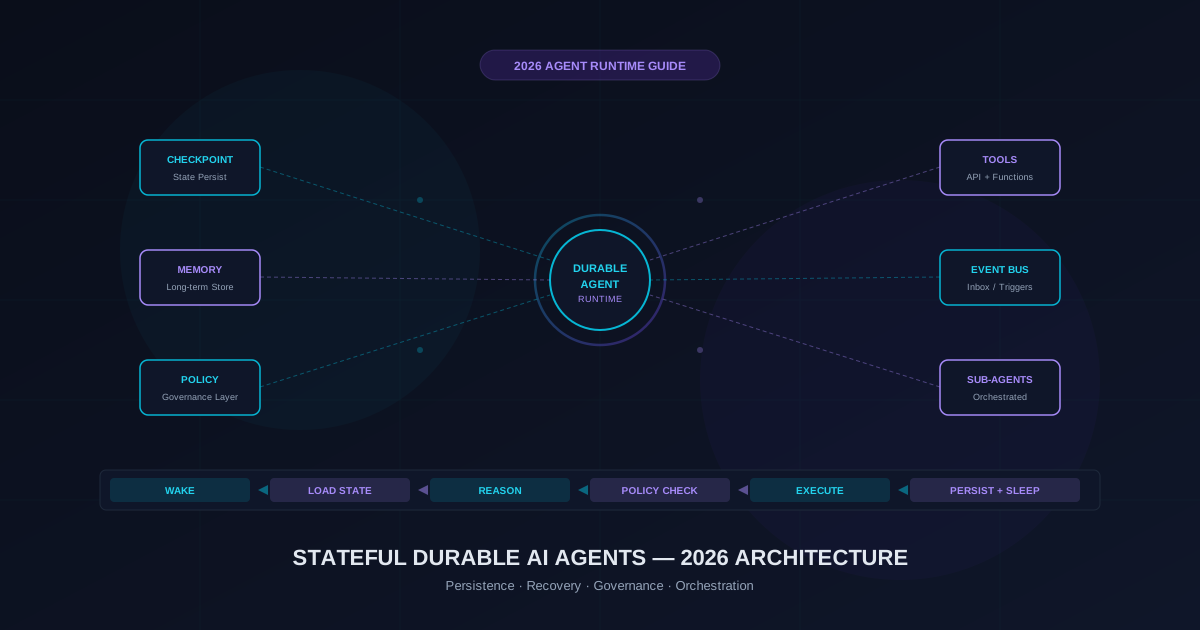
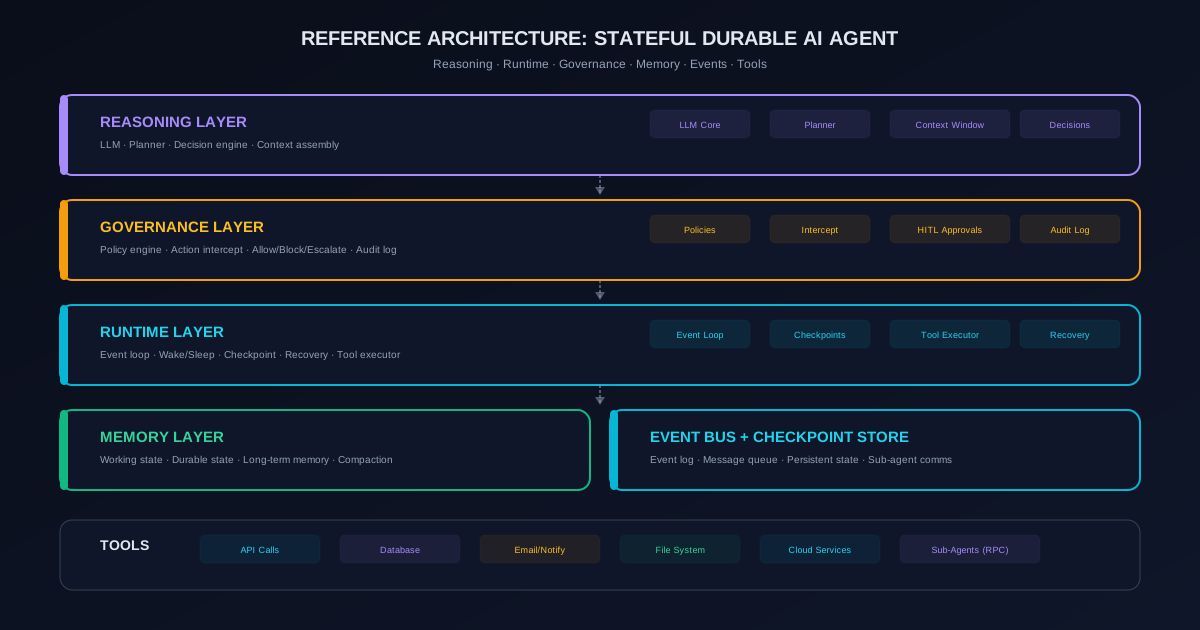
That means the core loop should look like this: an event arrives, the agent loads state, decides the next action, runs policy checks, executes or waits for approval, persists the new state, and then sleeps until the next event. This architecture is more reliable than a single monolithic prompt thread because it can survive long delays, human interruptions, and infrastructure failures.

3. Separate state into four layers
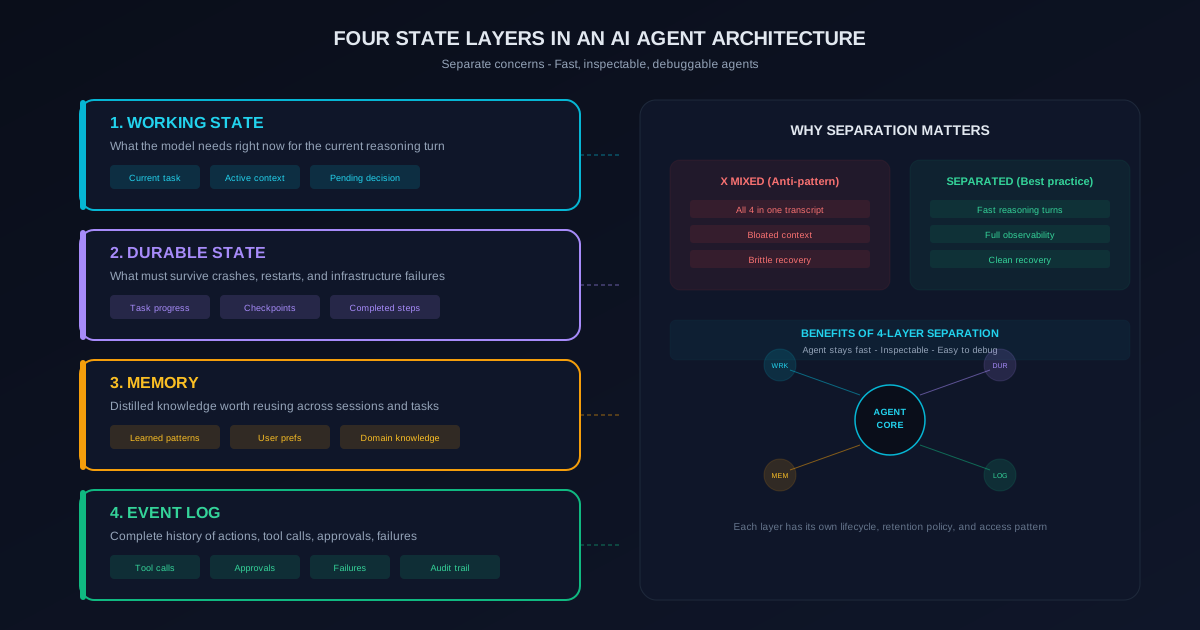
The cleanest way to avoid agent chaos is to separate four things: working state, durable state, memory, and event log. Working state is what the model needs right now. Durable state is what must survive crashes. Memory is distilled knowledge worth reusing later. The event log is the history of actions, tool calls, approvals, and failures. Durable execution platforms explicitly distinguish persistence and resumability from the live reasoning turn, and LangGraph also frames durable execution and memory as first-class capabilities.
Most broken agents mix all four into one growing transcript. That looks simple at first, but it leads to bloated context, weak observability, and brittle recovery. A good state model keeps the agent fast, inspectable, and much easier to debug.
4. Put governance outside the model
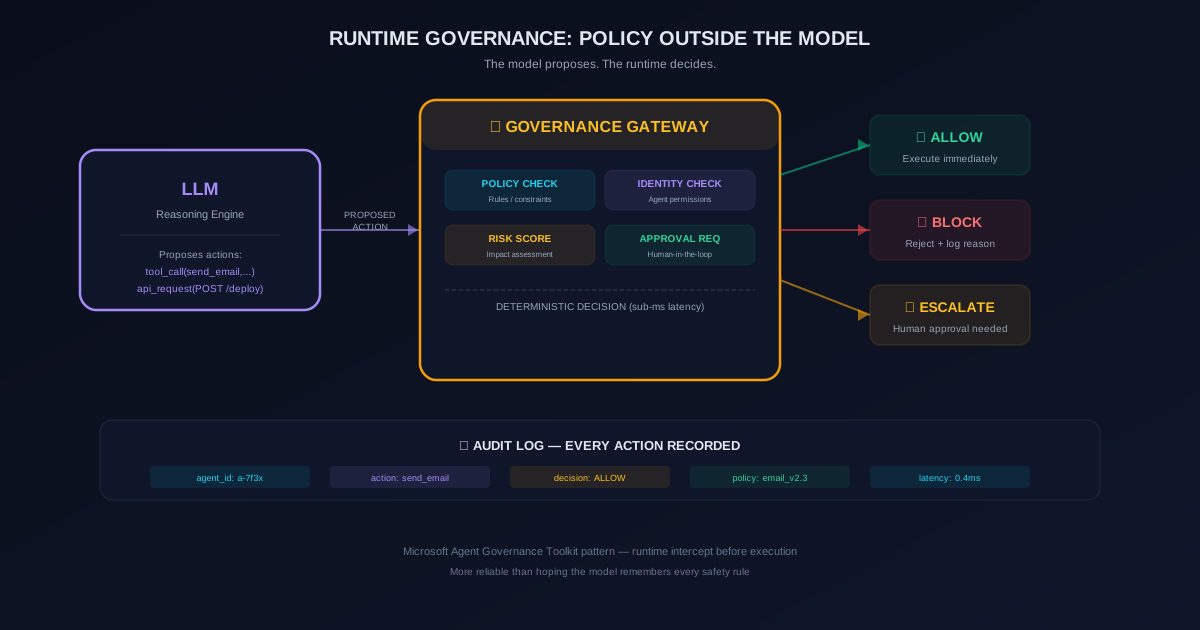
One of the most important 2026 lessons is that governance should not live only in the system prompt. Microsoft's Agent Governance Toolkit is explicitly a runtime governance layer that intercepts agent actions such as tool calls, API requests, and inter-agent messages before they execute, then applies deterministic policies at very low latency.
That changes the architecture. The model proposes an action, but the runtime decides whether to allow it, rewrite it, block it, or escalate it. This is a more reliable pattern than hoping the model will remember every safety rule in a long chain of actions.
5. Treat tool calls as contracts
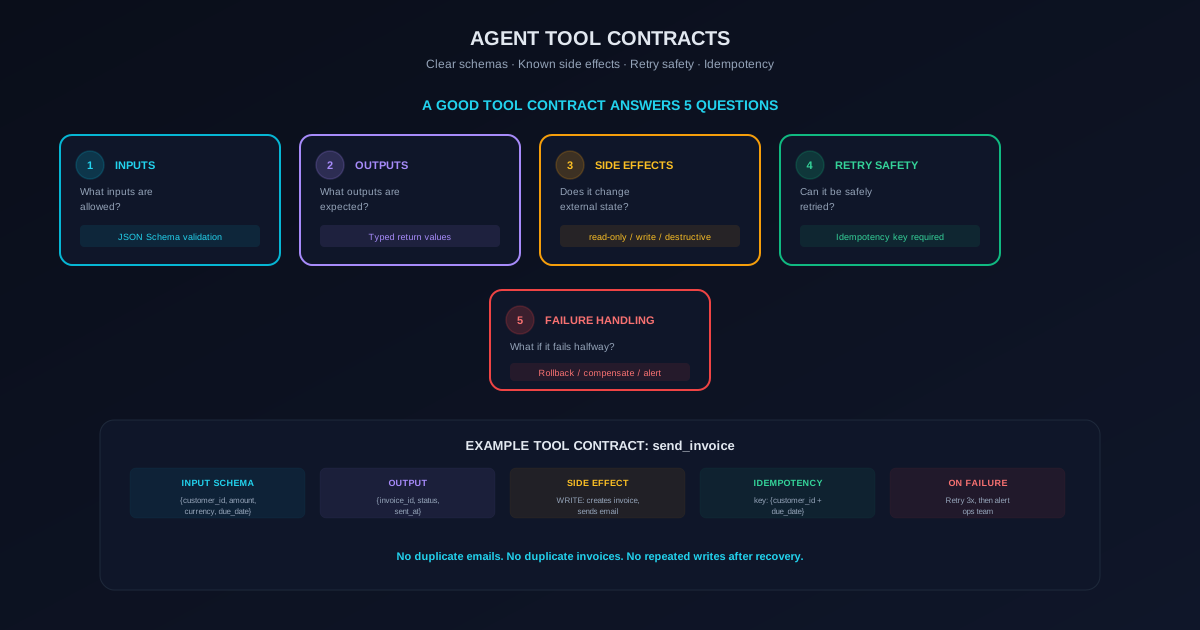
If agents are going to resume after crashes and retries, tools cannot be loose helper functions. They need clear schemas, known side effects, retry rules, and idempotency. Durable Task is built around retries, state persistence, and crash recovery, so tool safety becomes a systems concern, not just an API concern.
A good tool contract answers five questions: what inputs are allowed, what outputs are expected, whether the call changes external state, whether it can be safely retried, and what should happen if it fails halfway through. This is how an agent avoids duplicate emails, duplicate invoices, or repeated writes after recovery.
6. Add checkpoints after meaningful steps
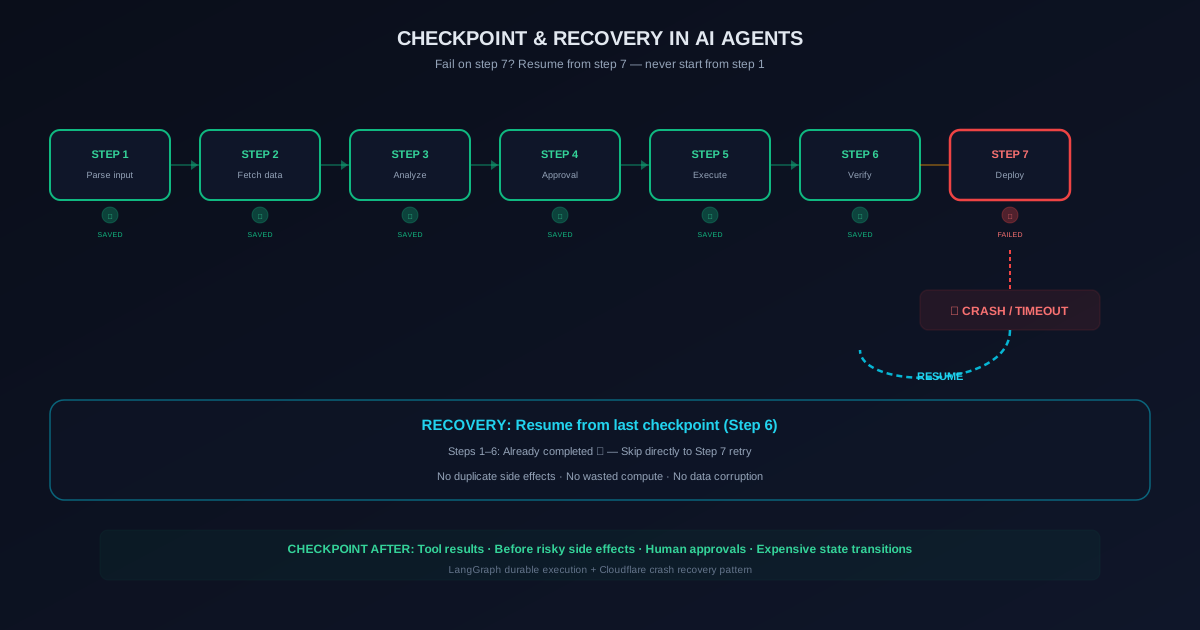
Checkpointing is the line between a demo and a production agent. LangGraph's durable execution saves step state to a durable store so workflows can resume later without repeating completed work. Cloudflare's durable execution model similarly supports crash recovery and intermediate state checkpointing during long-running tasks.
In practice, that means checkpointing after tool results, before risky side effects, after human approvals, and after any state transition that would be expensive or dangerous to repeat. The goal is simple: if the system fails on step seven, it should resume from step seven, not start again from step one.
7. Use sub-agents only when roles are clean
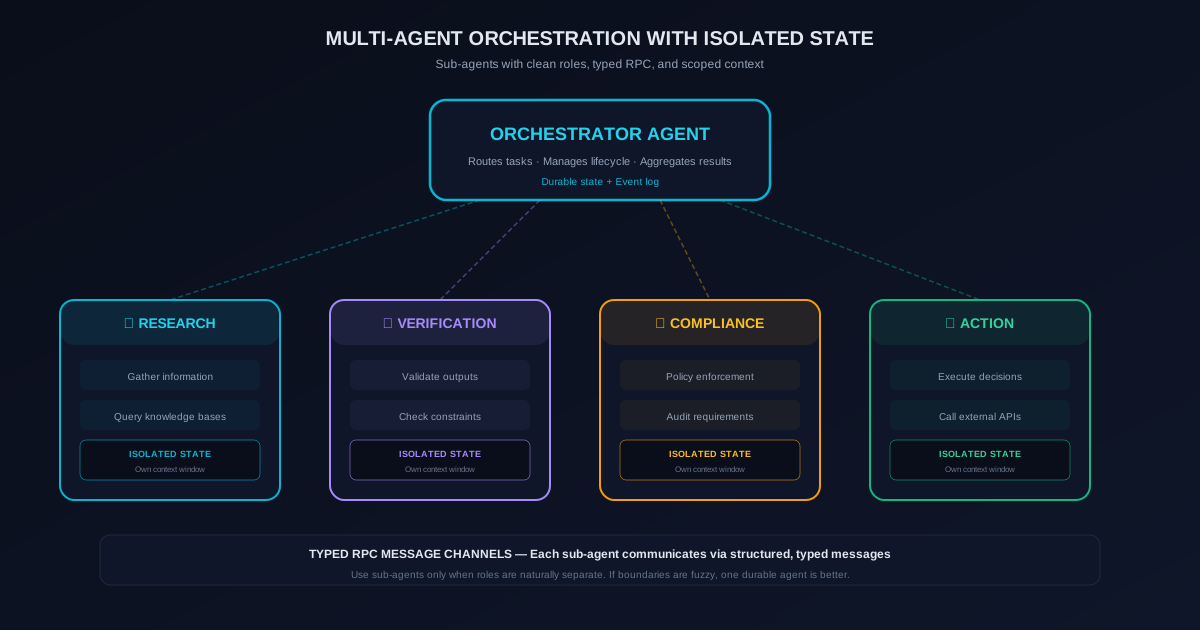
2026 also pushed multi-agent design forward, but the best lesson is restraint. Cloudflare's new primitives include sub-agents with isolated state and typed RPC, while Microsoft is also highlighting multi-agent orchestration and composable agent capabilities.
That does not mean every product needs a swarm. Sub-agents are useful only when roles are naturally separate, such as triage, research, verification, and action. If the boundary is fuzzy, a single durable agent with better state design is usually the better system.
8. A practical implementation blueprint
A strong first version does not need to be massive. Start with one durable agent, one state schema, one event loop, three to five tools, a policy layer, and an event log. Then add approvals, retries, memory compaction, and only later bring in sub-agents. This sequence matches where the current infrastructure is strongest: persistence, resumability, and controlled execution first; complexity second.
The stack can vary, but the pattern stays the same: reasoning layer, runtime layer, governance layer, and state layer. LangGraph already exposes durable execution, memory, and human-in-the-loop patterns. Microsoft's durable stack exposes persistence and distributed coordination. Cloudflare's agent stack pushes long-running internet-native agents with persistent sessions and recovery.
9. What comes next
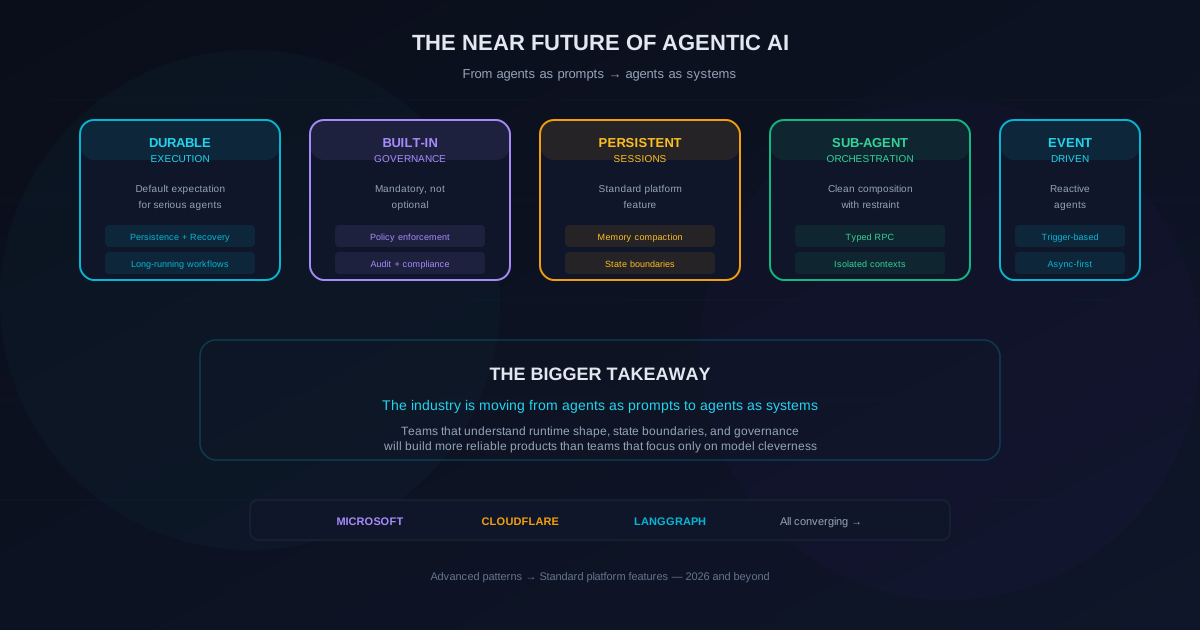
The near future is becoming clearer. Durable execution will likely become the default expectation for serious agents. Governance will become built-in rather than optional. Persistent sessions, memory compaction, and sub-agent orchestration will move from advanced patterns to standard platform features. The current releases from Microsoft, Cloudflare, and LangGraph all point in that direction.
The bigger takeaway is simple: the industry is moving from agents as prompts to agents as systems. Teams that understand runtime shape, state boundaries, and governance now will build more reliable products than teams that focus only on model cleverness.
Final takeaway
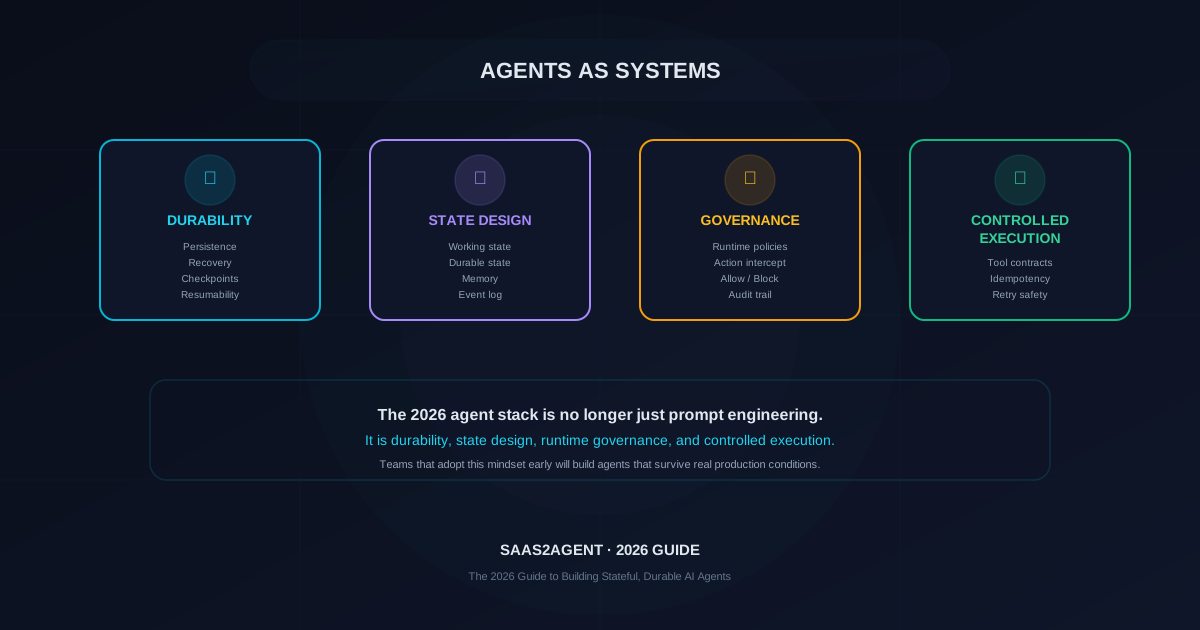
The 2026 agent stack is no longer just prompt engineering. It is durability, state design, runtime governance, and controlled execution. The teams that adopt that mindset early will build agents that survive real production conditions instead of collapsing outside demos.