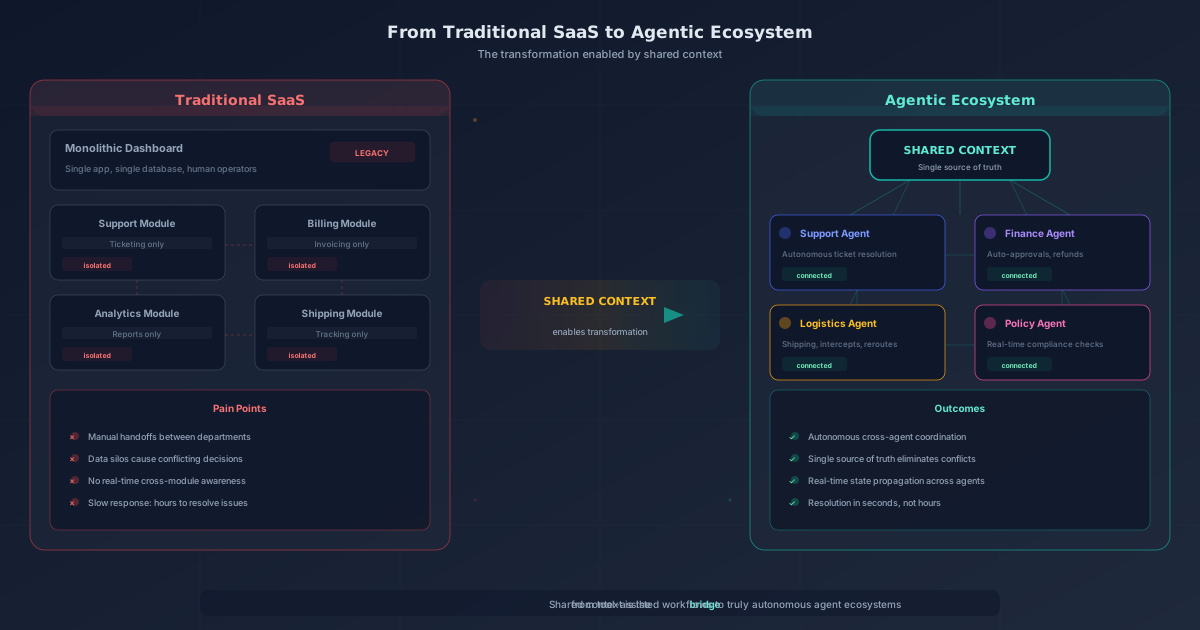
Recent launches from Snowflake and Microsoft point to the same conclusion: the next wave of enterprise AI is not just about stronger models. It is about giving agents access to a shared, governed business context they can actually act on.
The market spent the last two years asking which model is smartest. That was an important question, but it was never the whole question. A powerful model can write, summarize, classify, and reason. But once you ask an agent to work across support, billing, operations, CRM, logistics, or compliance, raw intelligence stops being the main bottleneck. The real bottleneck becomes whether every part of the system is operating from the same reality.
Why better models alone do not solve the real problem
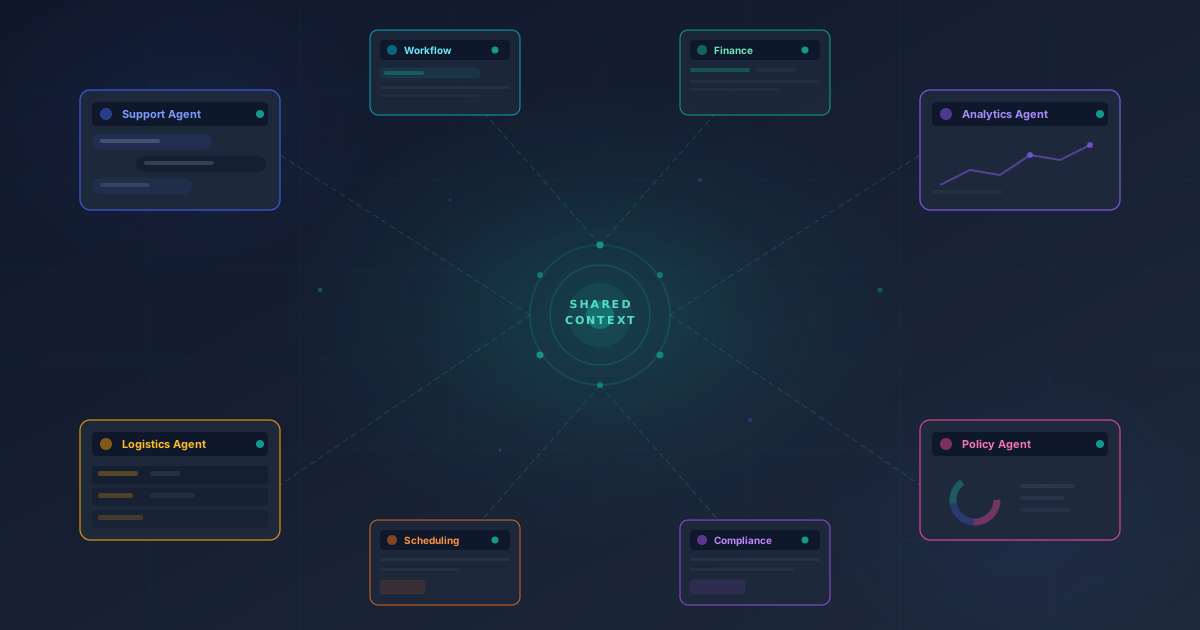
A better model can improve answers. It can make plans more coherent. It can reduce obvious mistakes. But it still cannot fix fragmented business context on its own.
If one agent sees an order as "pending review," another sees it as "approved," and a third sees stale refund policy data from last month, the problem is not intelligence. The problem is coordination. You do not have one business reality. You have several partial ones.
That is where many AI implementations break. The demo looks smooth because the agent responds well in a single thread. The failure appears later, when the system has to hand work across departments, tools, sessions, and approval boundaries. The model may still be strong, but the operating environment is weak.
In practical terms, this is the difference between an assistant that sounds smart and a system that behaves reliably. A true agentic system cannot depend only on model quality. It needs shared state, explicit context, usable tool state, and clear boundaries for action. That is also why we distinguish between a simple agent, a multi-agent system, and a multi-agentic system. The more the software behaves like a coordinated digital workforce, the more shared context becomes a foundational requirement rather than an enhancement.
What shared context actually means
Shared context is not just chat history. It is not just vector search. It is not just memory in the abstract.
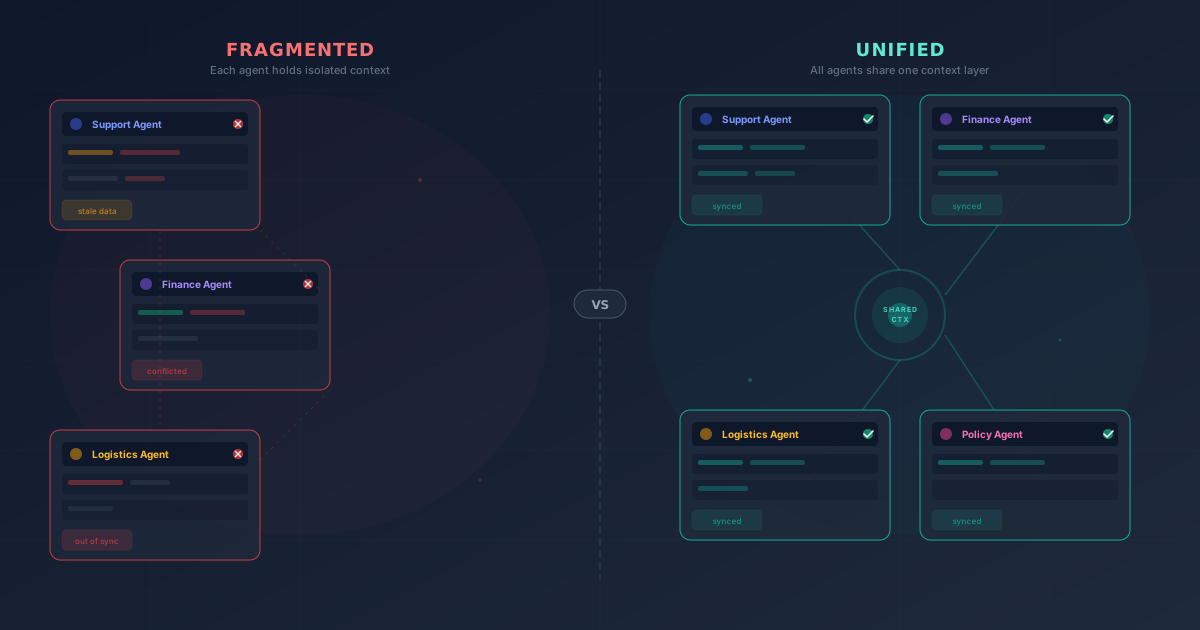
Shared context means the entire agentic environment can access the right business truth at the right moment with the right permissions.
That includes current session state, such as what the user is doing right now. It includes tool state, such as object IDs, authentication context, references, and execution details. It includes long-term knowledge, such as policies, product information, and account history. It includes episodic traces, such as what happened in the last workflow run. And it includes safety or policy memory, which tells the system what should never happen automatically.
Our own methodology explicitly treats memory as intentional design across short-term task context, long-term knowledge, episodic traces, and safety memory rather than as a side effect of prompting.
When teams skip that design work, agents begin to guess. They guess what item the user meant. They guess which object is the correct one. They guess whether a previous step already happened. They guess who has authority to approve the next action. In low-stakes use cases, that creates a messy user experience. In high-stakes use cases, that creates operational risk.
Shared context is what turns agent behavior from plausible to dependable.
How systems fail without shared context
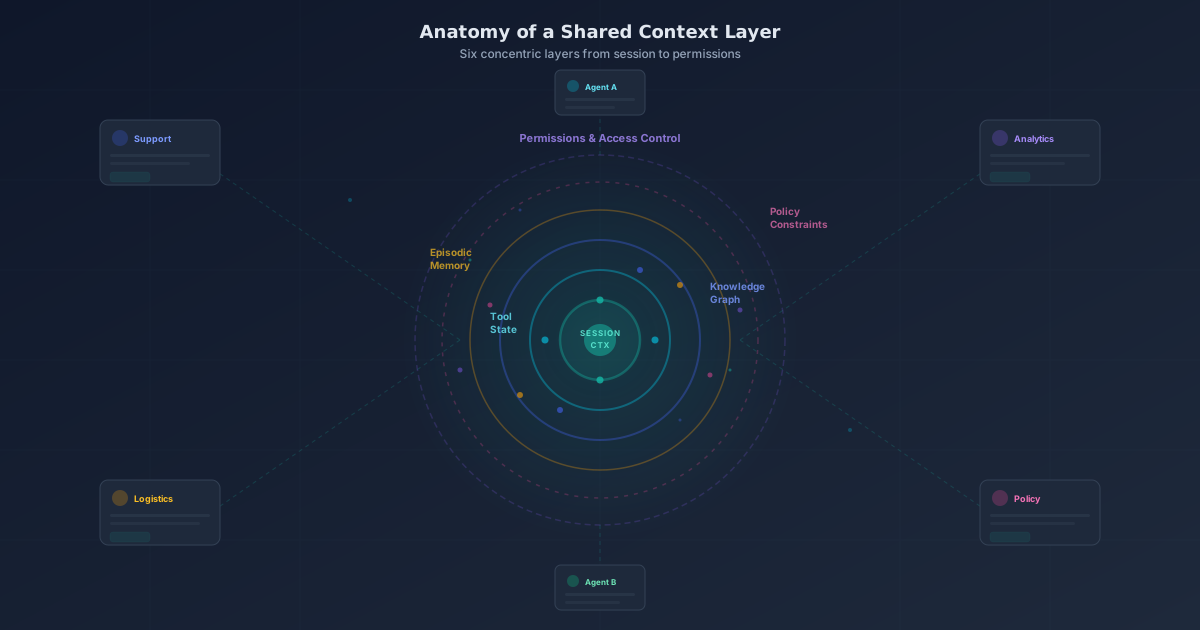
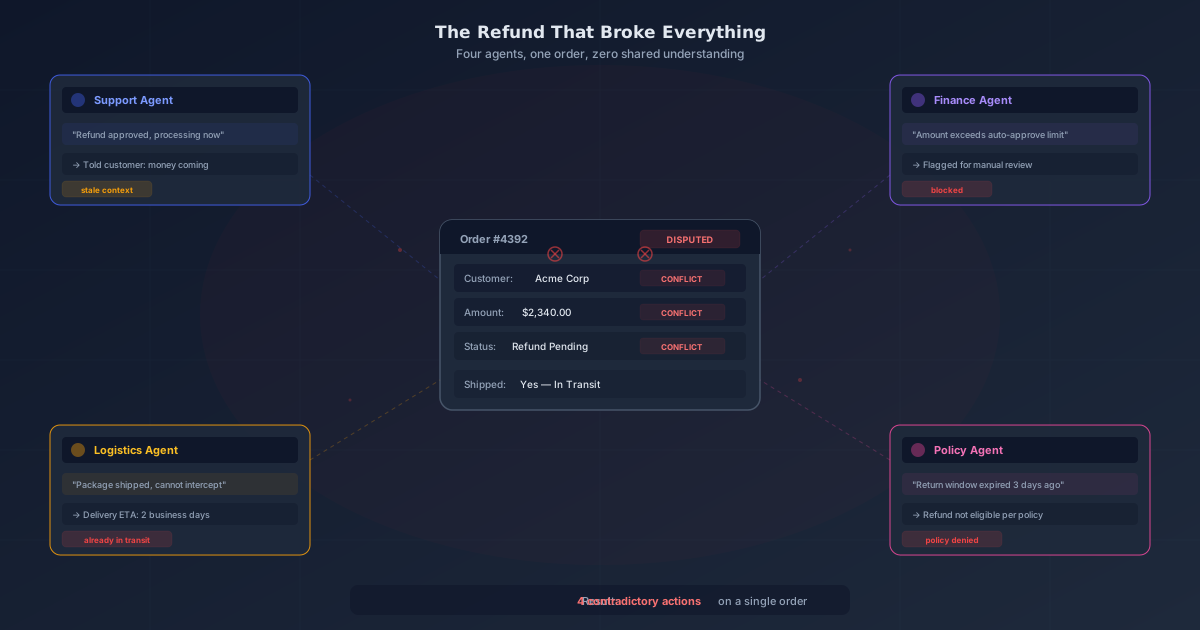
Imagine a customer asking for a refund after a delayed shipment.
The support agent reads the complaint and decides a refund may be appropriate. The finance agent checks a payment system and sees an earlier status snapshot. The logistics agent sees a newer delivery exception. The policy agent references a cached refund rule that was updated two weeks ago but never refreshed in the retrieval layer.
Each part of the system appears intelligent. None of them are operating from the same truth.
The result is familiar. The customer gets conflicting messages. A refund is approved and then reversed.
This is why shared context is not a luxury feature for mature systems. It is a precondition for coordinated execution. In our own terminology, a multi-agentic system works because specialized agents and workflows operate over shared state, permissions, approvals, and organizational rules. Without that, you do not have an operating environment. You have disconnected intelligence.
How the best results are actually achieved
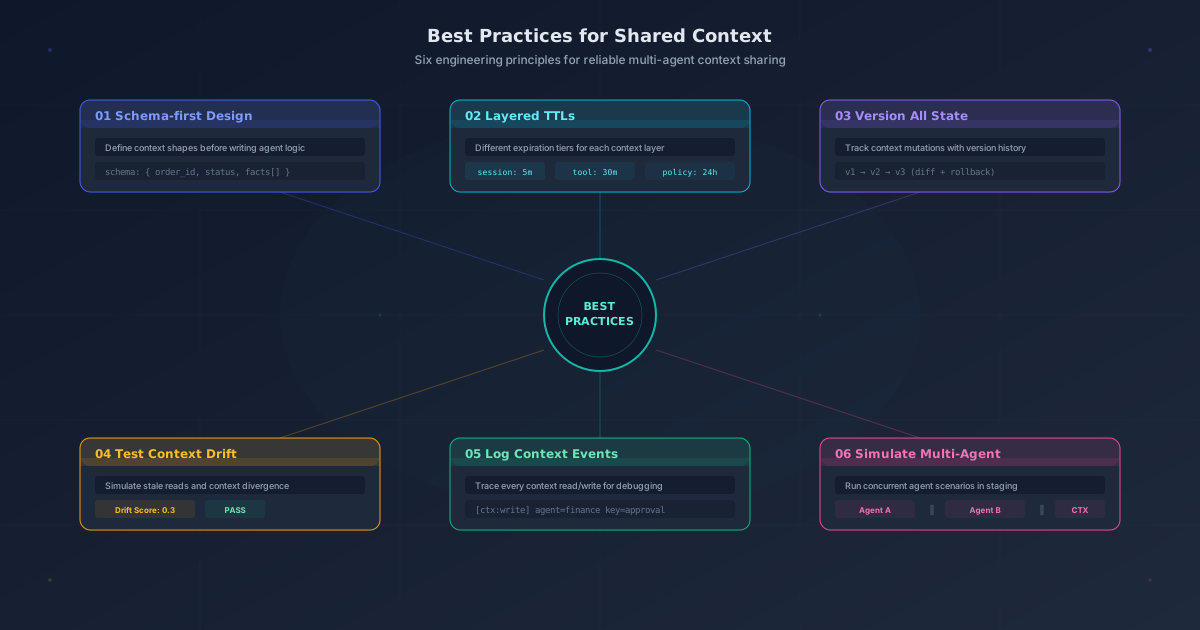
The first best practice is to define a shared business reality before building the agent behavior. That means agreeing on core entities, states, permissions, thresholds, and rules. If support, billing, and operations do not share the same definitions, the agent layer will inherit that confusion.
The second best practice is to separate memory types on purpose. Current task context should not be treated the same way as durable business knowledge. Past workflow traces should not be mixed blindly with policy constraints. When teams distinguish short-term context, long-term memory, episodic history, and safety controls, the system becomes much easier to reason about and much harder to corrupt.
The third best practice is to expose tools through typed actions instead of vague instructions. If an agent can issue a refund, update a ticket, or trigger a shipment change, those actions should have explicit schemas, validation rules, and guardrails. In our model, APIs and services are translated into action schemas and exposed through governed tool layers so agent behavior remains reliable and auditable.
The fourth best practice is to make approvals and role boundaries part of the system design. Not every action should be autonomous. Some decisions should require human confirmation, some should require policy checks, and some should be blocked unless the right authority is present.
The fifth best practice is to log decisions, traces, and outcomes at the workflow level. Teams often evaluate only the model response. That is too narrow. What matters is whether the whole workflow was accurate, contained, explainable, and cost-effective.
The sixth best practice is to start with one high-value journey, not an entire platform rewrite. Pick a workflow where fragmented context is already painful, such as support resolution, order exceptions, sales qualification, or approvals. Build the shared context layer there first. Prove reliability. Then expand.
What a strong shared-context architecture looks like
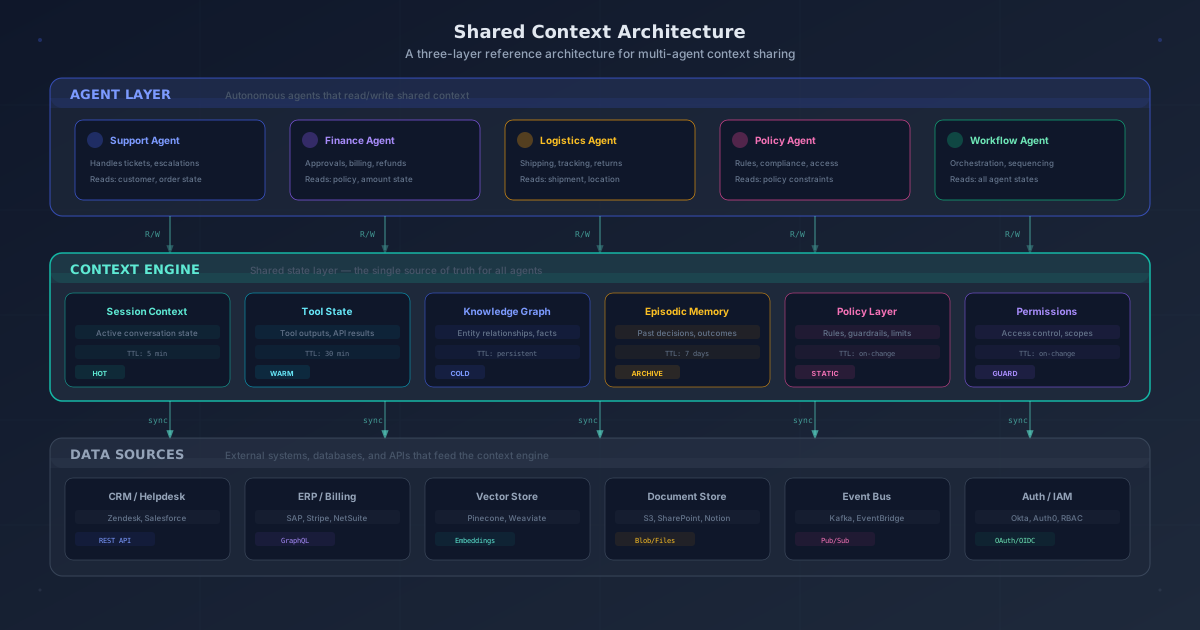
A strong architecture usually starts with a context layer that sits between the model and the business systems.
Below that layer are the systems of record: CRM, ERP, billing, support, analytics, product data, documents, and event streams. Above that layer are the agents, planners, validators, and user-facing interfaces. The context layer is what keeps the agents grounded in current state instead of letting each one improvise from partial retrieval.
This layer often includes retrieval pipelines, structured state stores, event history, policy memory, permissioning, and a governed tool registry. It also needs freshness rules so old information does not silently override new operational facts. In our process, this is why data and memory systems come before production rollout, and why tool design and governed access are treated as first-class architecture work rather than implementation details.
When teams get this right, the model becomes more useful with less drama. Not because the model changed, but because the system gave it the right ground to stand on.
What this means for SaaS teams right now
The old question was, "Which model should we use?"
The better question now is, "What shared reality will our agents operate on?"
That shift matters because most SaaS companies are no longer exploring AI only as a writing layer or chatbot feature. They want systems that can resolve tickets, progress workflows, draft actions, trigger operations, and coordinate across the stack. That is exactly where fragmented context becomes the hidden ceiling.
At SaaSToAgent, we see the future as coordinated agentic ecosystems rather than isolated assistants. That means agents that understand context, take action, collaborate across systems, and operate with shared memory and governance across channels and tools.
The teams that win in this next phase will not be the ones that only chase smarter models. They will be the ones that build a stronger operating layer around them.
Because in production, the next AI bottleneck is not just better models.
It is shared context.