What is A2A and MCP?
If you have been building with AI agents recently, you have probably encountered two terms repeatedly: A2A and MCP. They often appear in discussions about agentic systems and are sometimes framed as competing standards. That framing is where much of the confusion begins.
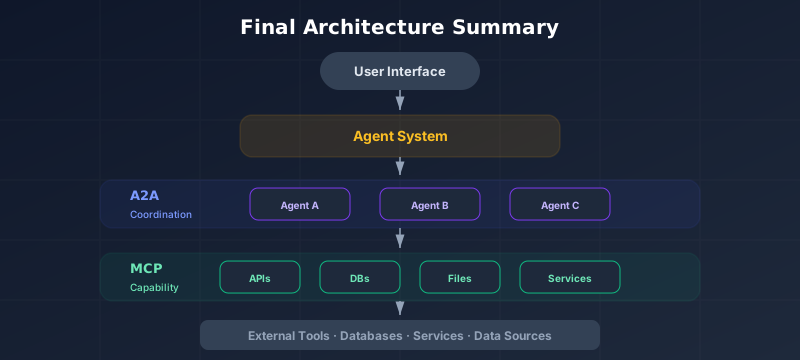
In reality, A2A and MCP address two different layers of agentic architecture.
- MCP (Model Context Protocol) connects agents to tools, data sources, and workflows.
- A2A (Agent-to-Agent Protocol) enables agents to communicate and collaborate with each other.
This distinction becomes important as teams move beyond simple chatbots toward multi-agent systems. Instead of a single AI assistant calling a few APIs, modern architectures often involve:
- a planning agent
- multiple specialist agents
- internal services and data systems
- structured workflows
In these environments, understanding the difference between how agents access capabilities and how agents coordinate with each other becomes essential.
Why A2A vs MCP Matters for Agentic AI Systems
As AI systems evolve from single assistants to distributed agent architectures, a key design question appears:
How should agents interact with the world and with each other?
Two protocols frequently appear in these discussions: A2A and MCP.
They are sometimes described as alternatives, but this interpretation misses their true role. These protocols solve different problems inside the same system.
The simplest way to understand them is this:
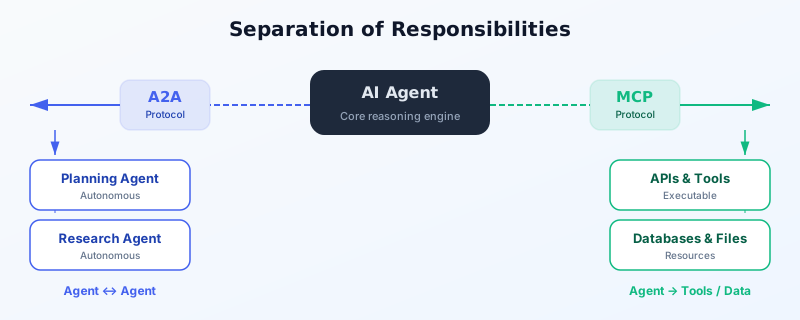
- MCP connects agents to tools and data
- A2A connects agents to other agents
When this distinction is clear, it becomes much easier to design scalable agent systems.
Modern agentic architectures often involve layers such as planning agents, specialist agents, and operational tools. Each layer requires different forms of interaction. MCP and A2A address those needs at different points in the architecture.
What Is MCP (Model Context Protocol)?
Model Context Protocol (MCP) is an open standard designed to connect AI systems to external capabilities in a structured and secure way.
In practical terms, MCP allows agents to interact with:
- APIs
- databases
- files and documents
- internal services
- operational workflows
Instead of every team writing custom integrations, MCP introduces a consistent way to expose capabilities to AI systems.
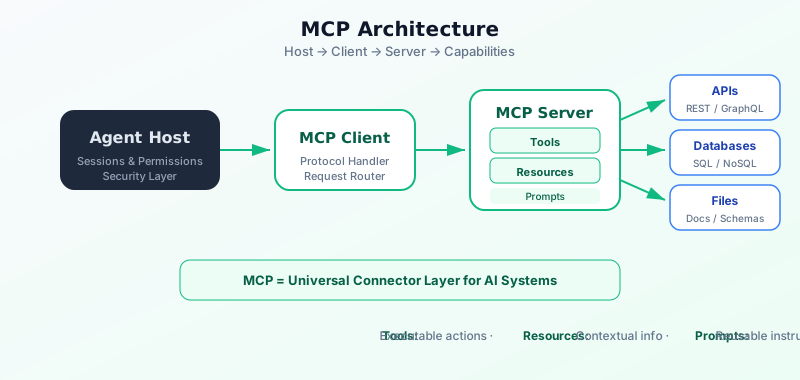
The protocol typically defines several key components:
- Tools — Executable actions that an agent can call.
- Resources — Contextual information such as files, schemas, or documents.
- Prompts — Reusable instructions or structured workflows.
MCP implementations commonly follow a host–client–server architecture, where the host manages sessions and permissions while MCP servers expose capabilities the agent can access.
A helpful mental model is to think of MCP as a universal connector layer for AI systems.
What Is A2A (Agent-to-Agent Protocol)?
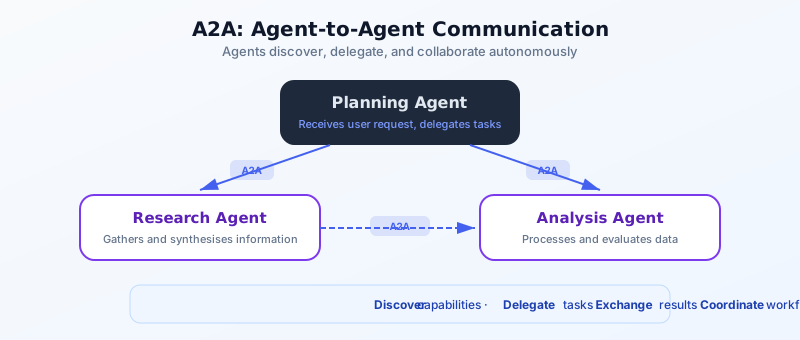
While MCP focuses on connecting agents to external systems, A2A (Agent-to-Agent Protocol) focuses on communication between independent agents.
Instead of directly calling tools, an agent can delegate tasks to another agent that specializes in a particular capability.
Examples include:
- a planning agent delegating research to a research agent
- a support agent consulting a billing agent
- an operations agent coordinating with compliance or procurement agents
A2A protocols enable agents to:
- discover capabilities of other agents
- delegate tasks
- exchange structured results
- coordinate long-running workflows
The key assumption behind A2A is that the receiving system is another autonomous agent, not simply a tool or API.
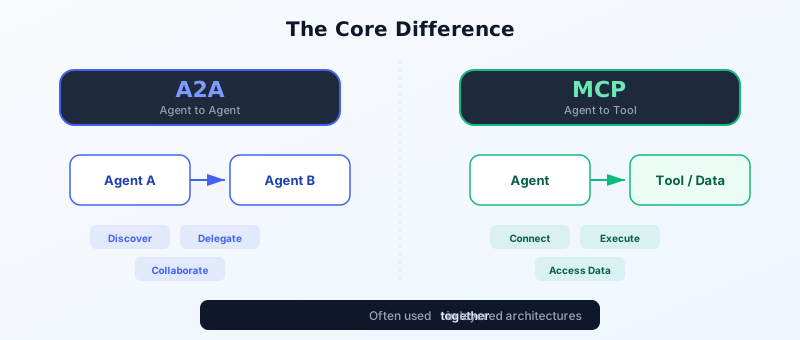
The Core Difference: A2A vs MCP
A simple rule clarifies the relationship between the two protocols.
- MCP → Agent to Tool
- A2A → Agent to Agent
MCP standardizes how agents interact with external capabilities such as APIs, files, or databases.
A2A standardizes how agents discover, delegate work to, and collaborate with other agents.
Because they operate at different architectural layers, the two protocols are often used together rather than independently.
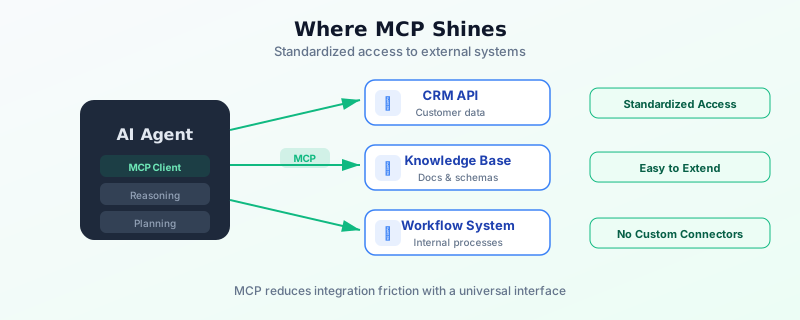
Where MCP Is Most Useful
MCP becomes particularly valuable when AI systems need reliable access to external systems.
Common use cases include:
- querying internal databases
- accessing knowledge bases
- interacting with APIs
- triggering operational workflows
- integrating developer tools
Without MCP, teams typically end up building custom connectors for every integration.
MCP reduces this friction by providing a standardized interface for exposing capabilities to AI systems.
This makes systems easier to extend as new tools and services are introduced.
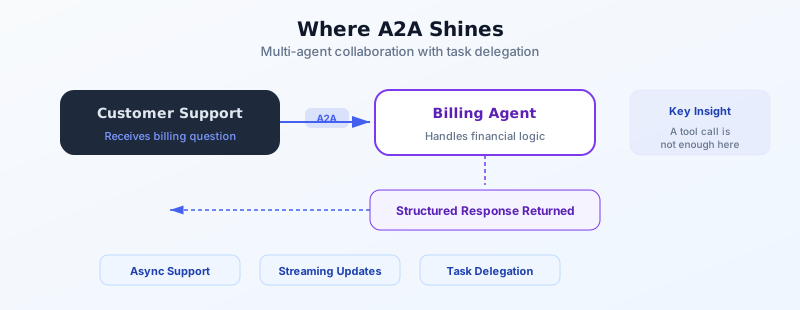
Where A2A Is Most Useful
A2A becomes important when multiple specialized agents must collaborate.
Examples include:
- a customer-facing agent delegating billing questions to a finance agent
- a research agent requesting analysis from a data science agent
- an operations agent coordinating procurement and compliance tasks
In these situations, a simple tool call is not enough.
Instead, agents must exchange structured information and manage task delegation across multiple systems.
A2A protocols often support asynchronous communication, allowing agents to handle long-running tasks and streaming updates.
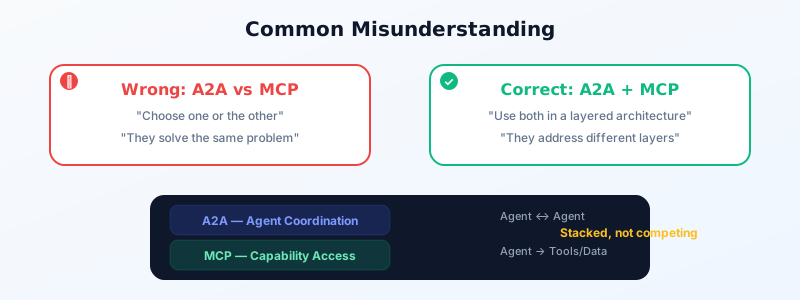
The Common Misunderstanding
A common mistake is treating A2A vs MCP as a decision between competing standards.
In reality, they address different layers of the architecture.
- MCP manages access to tools and resources.
- A2A manages collaboration between agents.
Most real-world agent systems eventually use both protocols. As the architecture grows more sophisticated, each protocol naturally fits into its respective layer.
Rather than choosing one protocol over the other, teams typically adopt both within a layered architecture.
How A2A and MCP Work Together in an Application
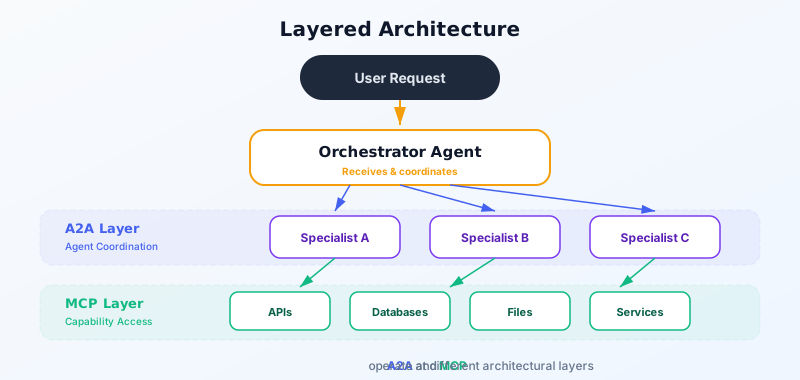
A practical architecture often follows this pattern:
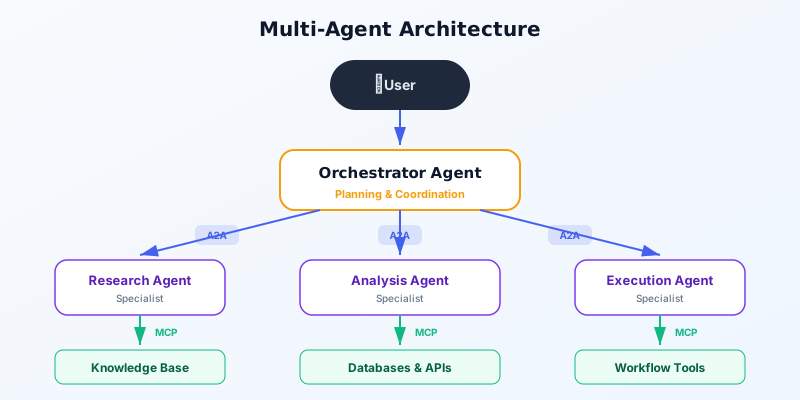
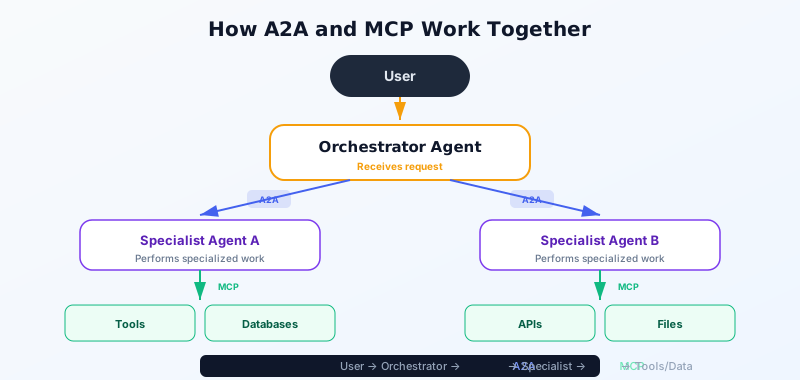
User → Orchestrator Agent → A2A → Specialist Agent → MCP → Tools / Data
In this design:
- The orchestrator agent receives the user request.
- If specialized work is required, it delegates tasks to other agents using A2A.
- The specialist agents perform their tasks.
- Those agents use MCP to access tools, databases, and documents.
This layered design keeps systems modular and scalable.
How A2A and MCP Work Together
Example: Agent Collaboration in a SaaS Workspace
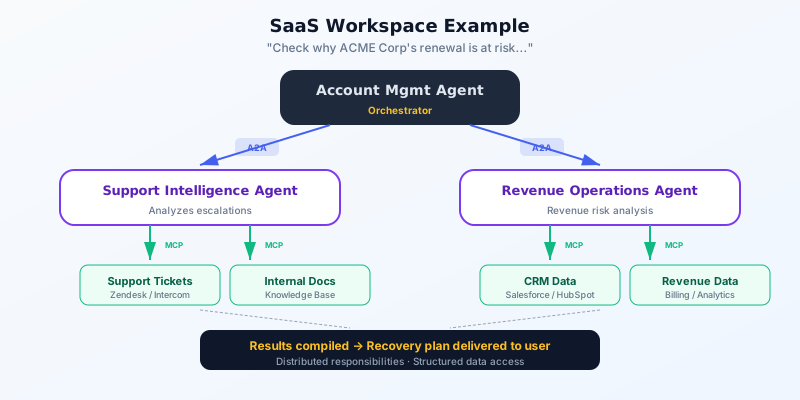
Consider an AI workspace used by a B2B SaaS company.
A user asks the system:
"Check why ACME Corp's renewal is at risk, summarize the last three support escalations, and draft a recovery plan."
A possible workflow might look like this:
- An account management agent receives the request.
- It delegates tasks to a support intelligence agent and a revenue operations agent using A2A.
- Each agent retrieves information from CRM systems, support tickets, and internal documents through MCP connections.
- The results are returned to the orchestrator agent.
- The orchestrator compiles the final analysis and response.
This architecture distributes responsibilities across specialized agents while maintaining structured access to underlying systems.
A Practical Implementation Approach
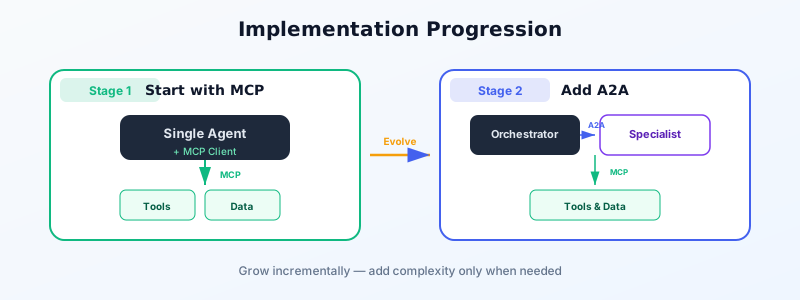
For many teams, the most practical starting point is MCP.
If the current system consists of a single assistant or orchestration layer, MCP provides a structured way to connect tools and data sources.
As the system evolves and specialized agents emerge, A2A becomes the coordination layer that enables agents to collaborate.
This progression allows teams to grow their architecture gradually without introducing unnecessary complexity too early.
Architectural Pitfalls to Avoid
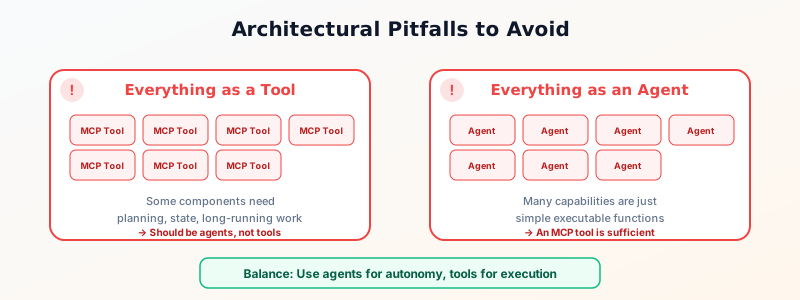
Two implementation mistakes appear frequently in early agent systems.
- Treating every capability as a tool. Some components behave more like agents because they perform planning, maintain state, or manage long-running workflows. These components are often better represented as A2A participants.
- Turning every capability into a separate agent. In many cases, a simple tool exposed through MCP is sufficient.
Even with standardized protocols, governance remains critical. Teams must implement proper authentication, access control, and execution safeguards to prevent unsafe operations.
Final Perspective
The key takeaway is straightforward.
A2A and MCP are not competing protocols. They solve different architectural problems.
- MCP answers the question: How does an agent access tools, data, and workflows?
- A2A answers a different question: How do agents collaborate with other agents?
When used together, these protocols create a layered foundation for scalable agentic systems.
As agent-based software continues to evolve, this model is likely to become a common architectural pattern for building reliable multi-agent AI applications.