
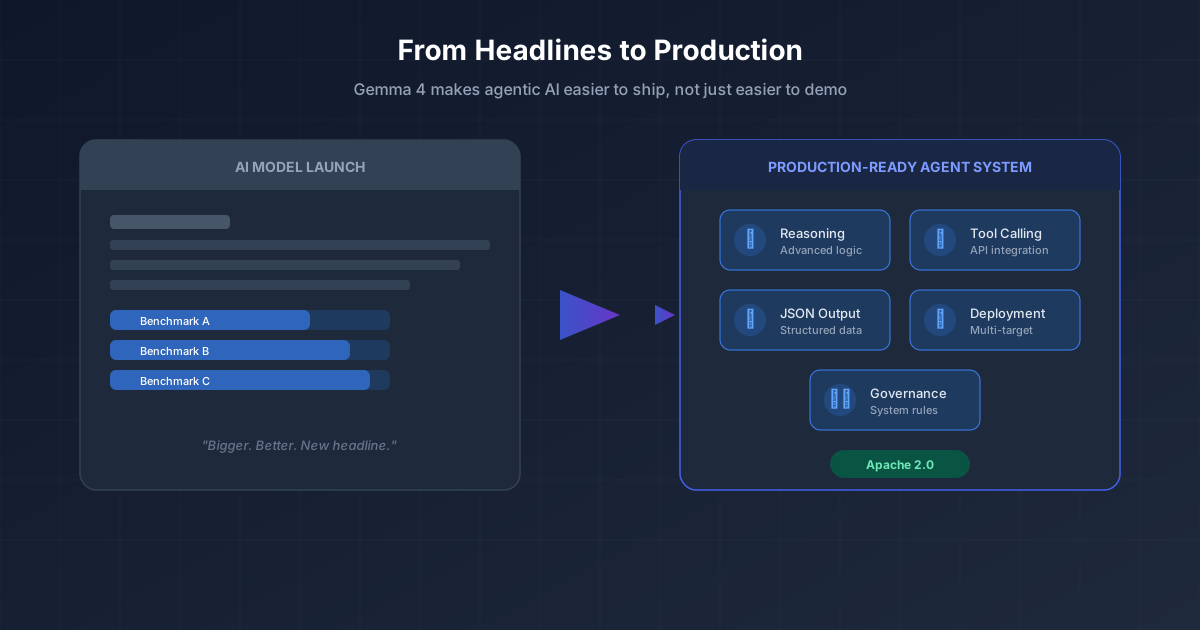
Most model launches are covered like sports results. Bigger model. Better benchmark. New headline.
That is not the useful question.
The useful question is this: does this make real AI products easier to build, control, and deploy? Gemma 4 is worth paying attention to because Google is positioning it as an open model family for advanced reasoning and agentic workflows, with function calling, structured JSON output, and native system instructions built in. It is also released under Apache 2.0, which makes it more practical for teams that want real deployment flexibility.
1) Why this matters to product teams
If you are building a SaaS product, you usually do not need "more AI" in the abstract. You need AI that can do a few practical things well: follow instructions, return clean outputs, connect to tools, and fit inside your product without turning the stack into a science project.
That is where Gemma 4 becomes interesting. Google is not only talking about model intelligence. It is explicitly talking about agentic workflows. That means the launch is relevant to teams building assistants that need to call APIs, move through steps, and return machine-readable responses instead of just writing nice paragraphs.
2) The real value is structure
A lot of AI products fail for a very simple reason: the model is clever, but the system around it is messy.
You can live with that in a demo. You cannot live with it in a product.
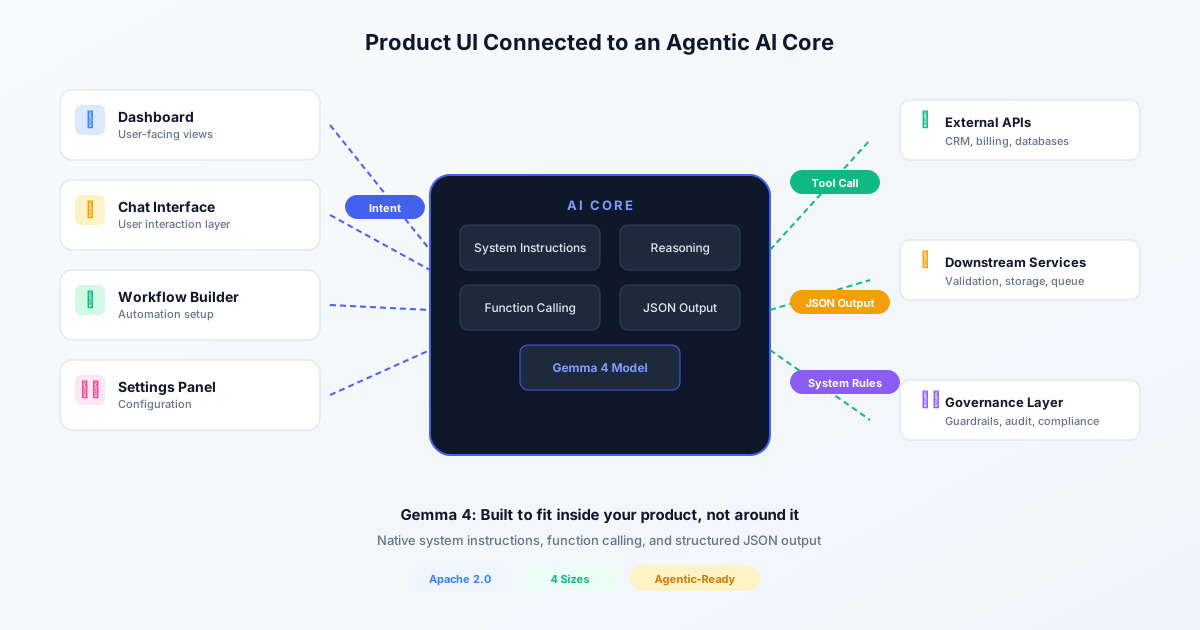
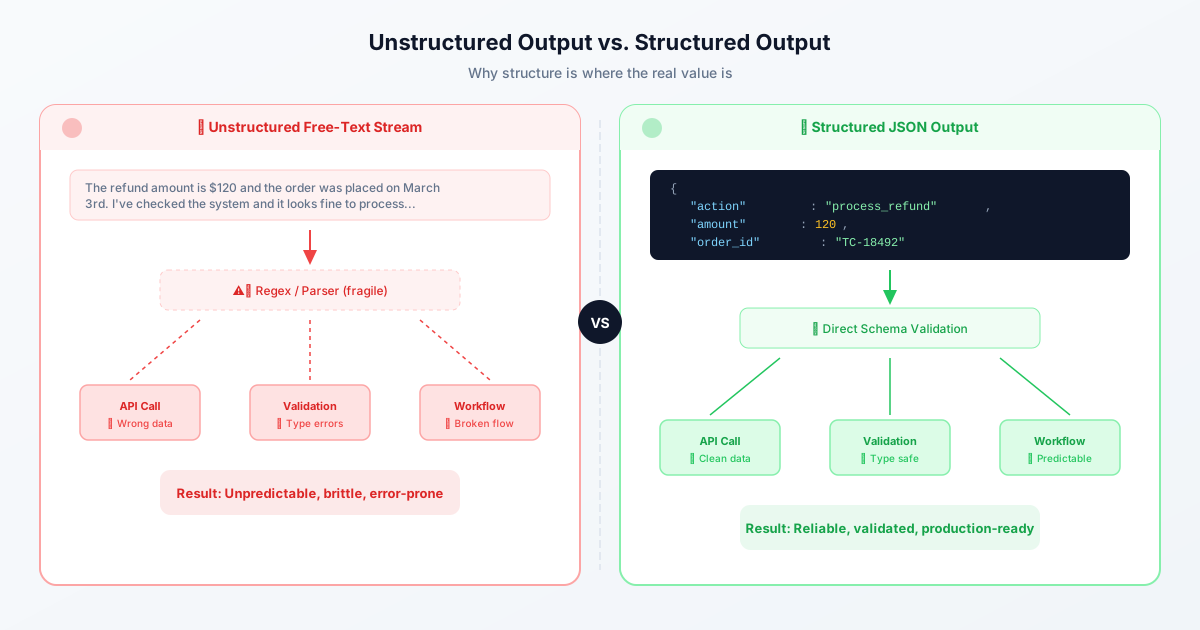
Gemma 4's support for function calling, structured JSON output, and native system instructions matters because those are the pieces that help an AI system behave like software, not just like a chatbot. They make it easier to turn model output into actions, validations, and predictable flows. That is where the value is for users. Users do not benefit from "a stronger model" as much as they benefit from fewer broken flows and cleaner outcomes.
3) Gemma 4 supports a more practical agent stack
The broader signal here is that the market is moving away from AI that only responds and toward AI that can operate.
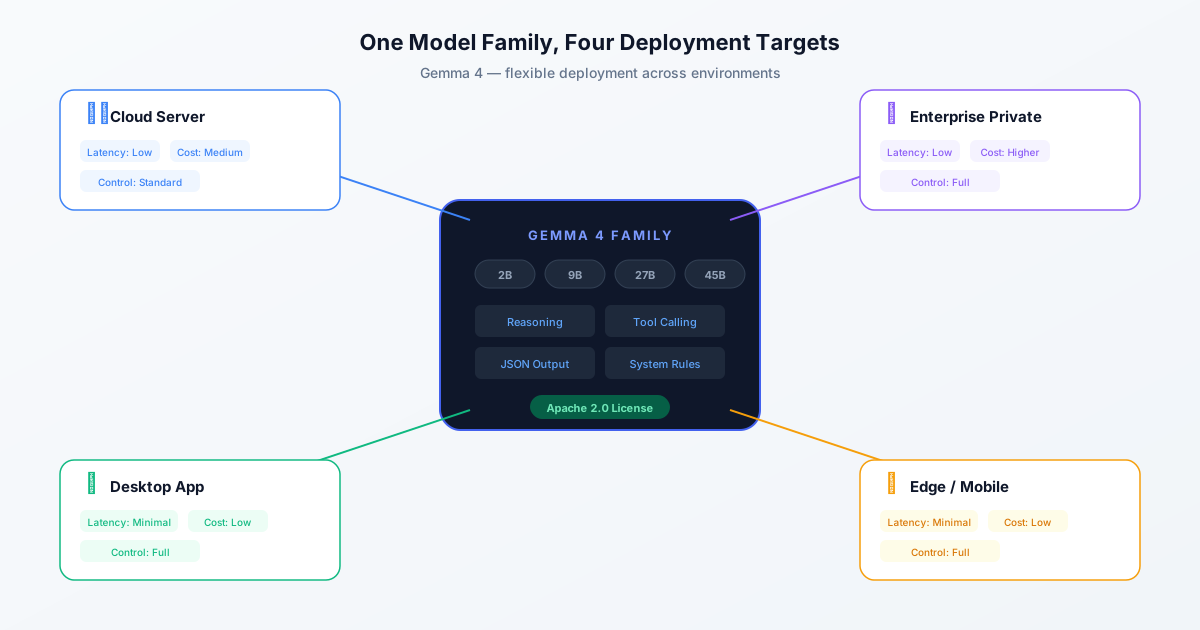
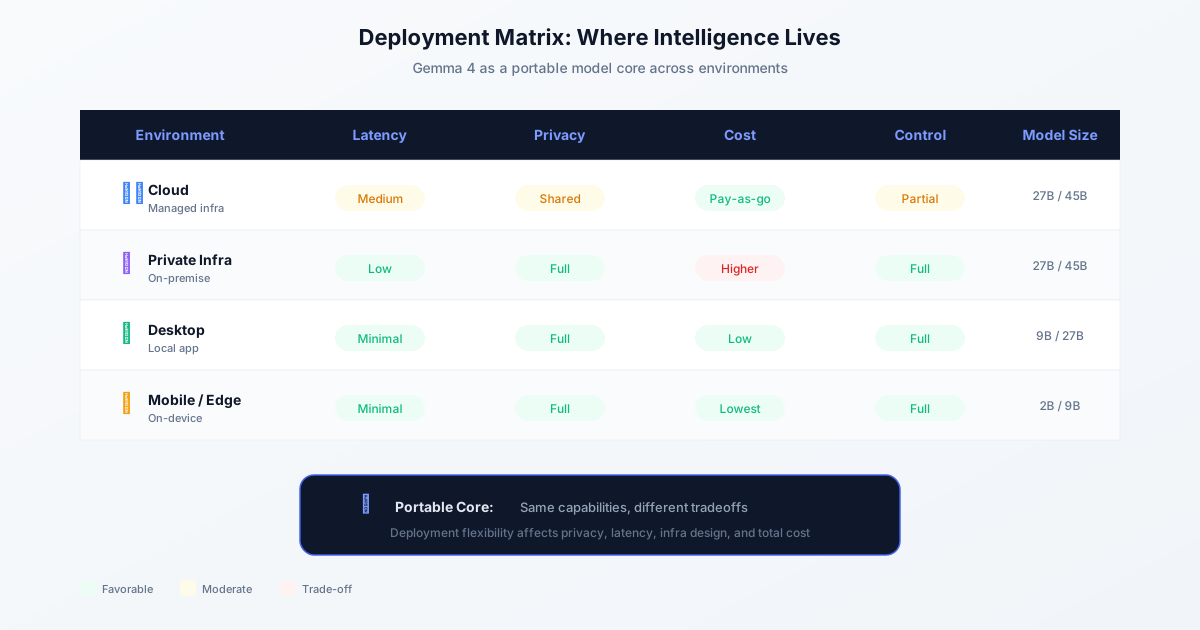
Google describes Gemma 4 as built for advanced reasoning and agentic workflows, and separately highlights it for on-device agentic workflows as well. It also says the models can run on your own hardware and are available in four sizes, which is useful because not every company wants the same tradeoff between power, latency, and cost.
For teams building agentic products, that is valuable in three ways. You get more freedom in deployment. You get more room to design around cost and latency. And you are less forced into one oversized model strategy for every workflow.
4) This is especially useful for workflow-first SaaS
The most useful AI products are not the ones that talk the most. They are the ones that remove friction from work.
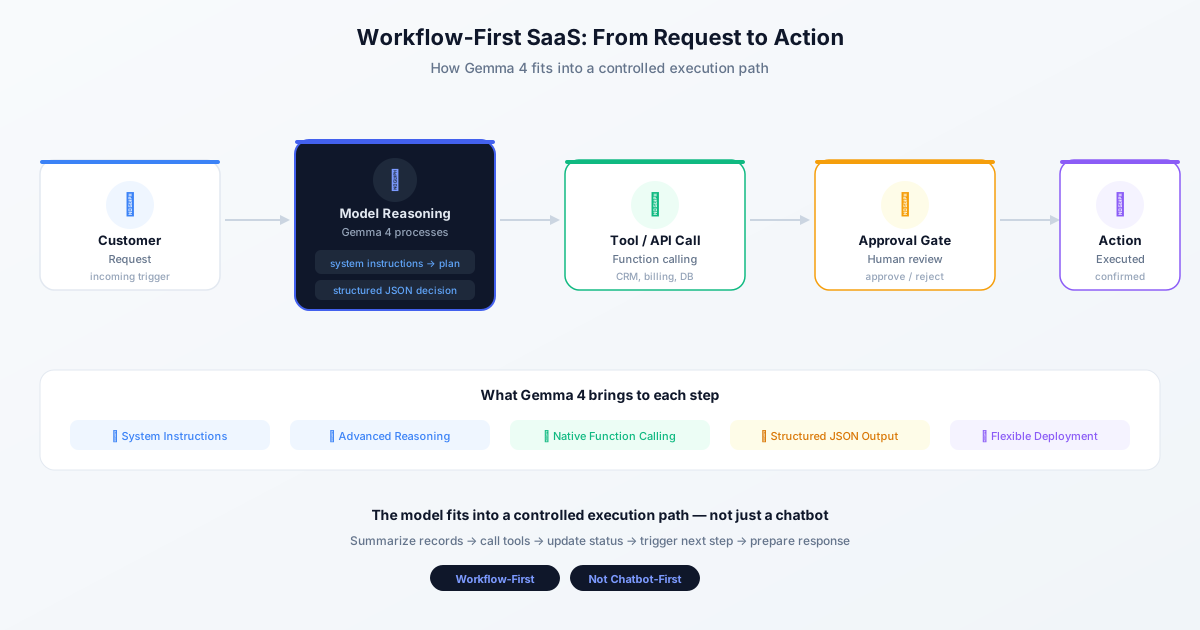
That is why Gemma 4 fits a workflow-first view of AI. If your product needs an agent to summarize records, call an internal tool, update a status, trigger a next step, or prepare a clean response for approval, the important thing is not just language quality. The important thing is whether the model can fit into a controlled execution path. Gemma 4's built-in support for structured outputs and tool-oriented behavior makes it more relevant to those use cases than a generic "smart chatbot" story would suggest.
5) Open deployment is part of the value
One of the biggest practical issues in AI today is not whether a model is capable. It is whether you can deploy it where your business actually needs it.
Google says Gemma 4 is available under Apache 2.0 and highlights usage on your own hardware as well as on-device scenarios. It also notes broad language support and hardware compatibility. That matters because deployment flexibility affects privacy, latency, infra design, and total cost more than many teams realize at the start.
This does not mean every company should self-host everything. It does mean companies now have another serious option when they want more control over where intelligence lives.
6) What teams should do with this, right now
The wrong response to Gemma 4 is: "Great, let's swap models."
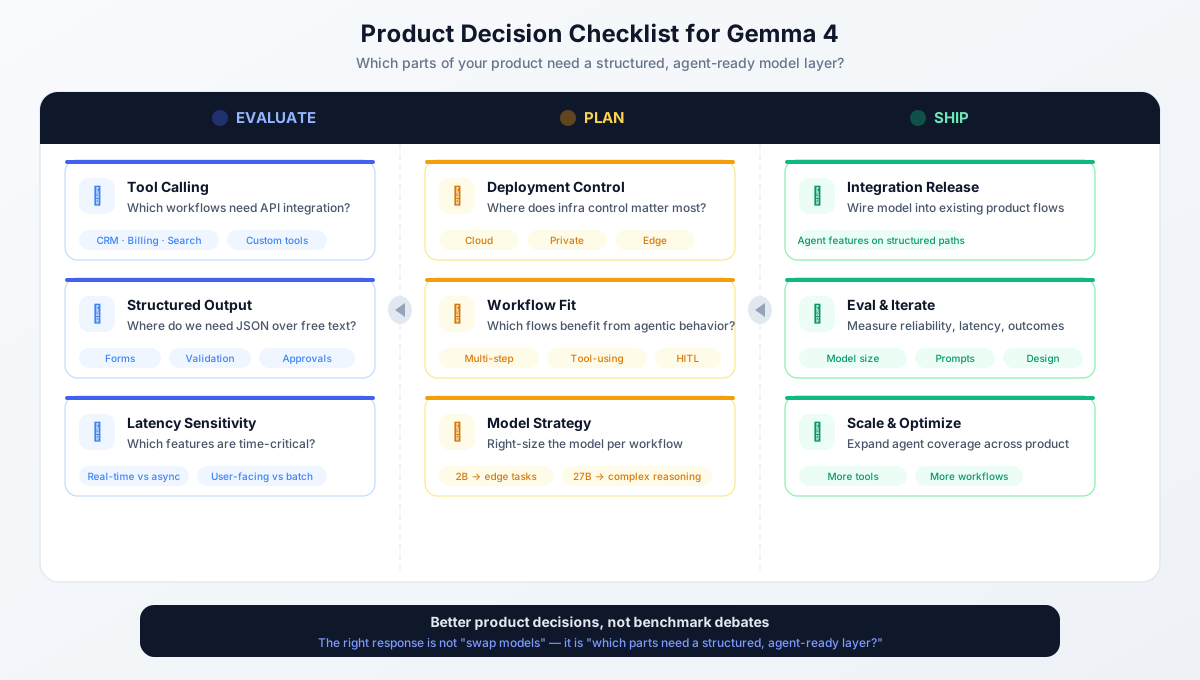
The better response is: "Which parts of our product need a more structured, agent-ready, deployable model layer?"
That usually leads to better questions:
- Which workflows need tool calling?
- Where do we need structured outputs instead of free text?
- Which features are latency-sensitive?
- Where does deployment control matter?
- Which flows need a smaller, more portable model strategy?
That is the practical value of launches like this. They should help teams make better product decisions, not just start new benchmark debates.
7) The bigger takeaway
Gemma 4 is not just interesting because it is new.
It is interesting because it reflects a more useful direction for AI: models that are easier to wire into real systems. Google's own framing around reasoning, agentic workflows, structured outputs, and on-device use makes that clear.
That is where the real value is for users. Not in another news cycle. In better products.

Building agentic AI into your product? SaaSToAgent helps teams design, build, and deploy agent-ready systems — from structured output pipelines to multi-model deployment strategies. Talk to us.