
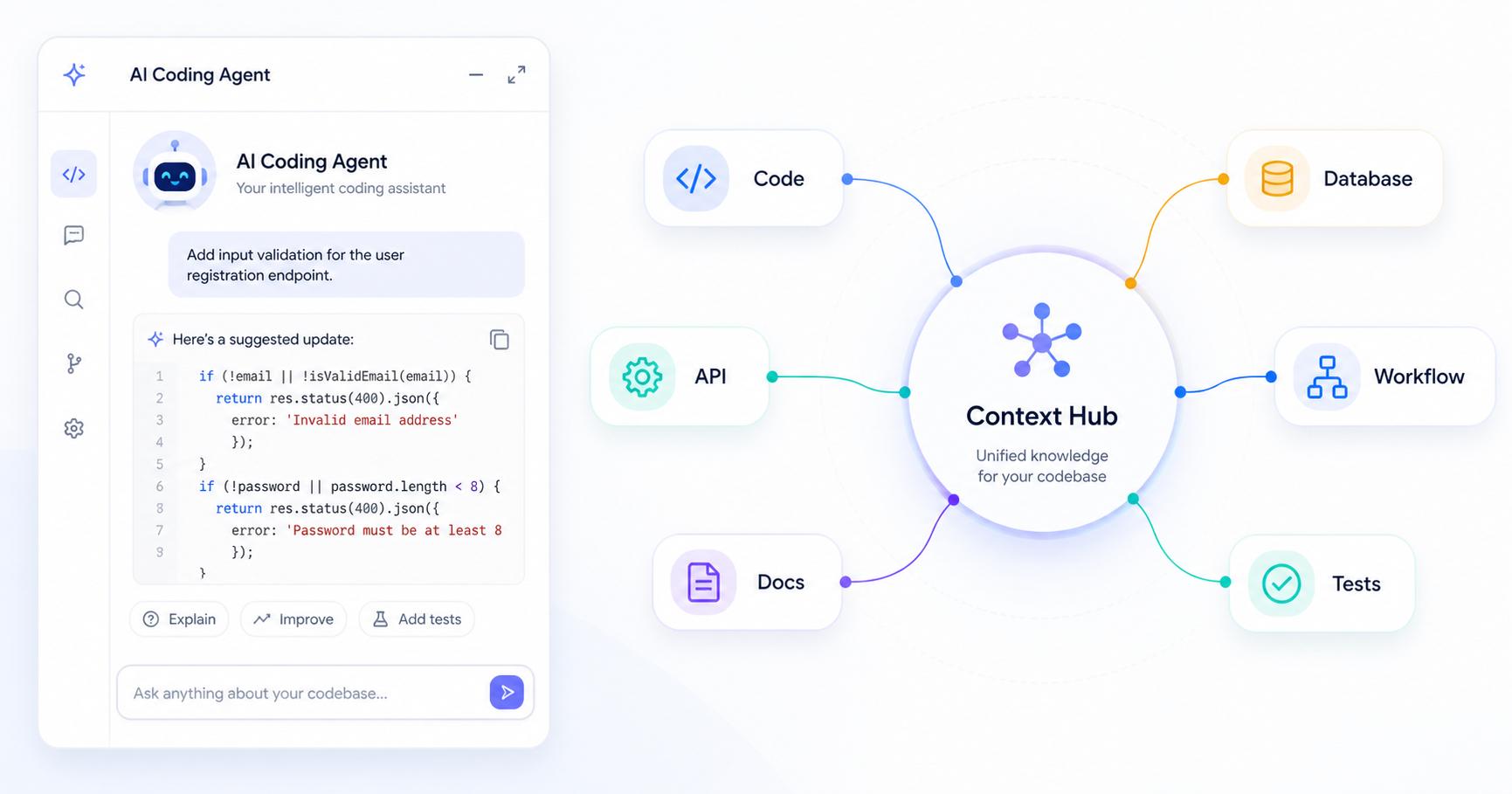
AI coding agents are getting better at writing code, but for business teams, the real question is not whether an AI agent can generate code.
The better question is whether it can understand the product well enough to make safe, useful changes.
That is where tools like Graphify become interesting.
Graphify is an open-source knowledge graph builder that turns a codebase, documentation, papers, diagrams, and technical notes into an interactive graph. That graph can then be used by AI coding tools like Claude Code, OpenAI Codex, Cursor, Gemini CLI, GitHub Copilot CLI, and similar systems.
In simple terms, it helps AI agents understand a software system before they start changing it.
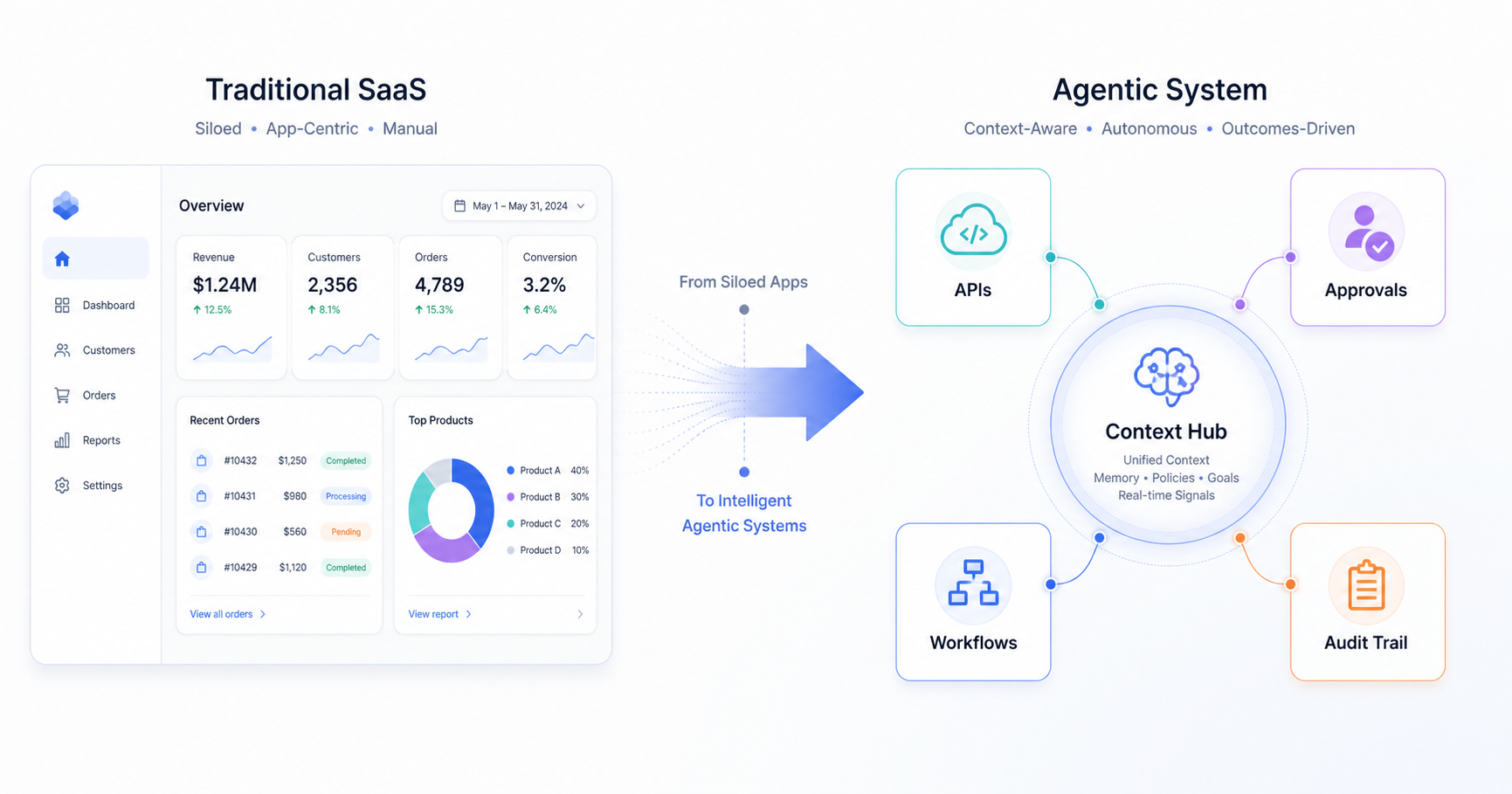
For companies moving from traditional SaaS products to agentic systems, this matters because agents need more than access to files. They need context, structure, and an understanding of how the product actually works.
The real problem with AI coding agents
Most AI coding agents are powerful, but they often work with limited context.
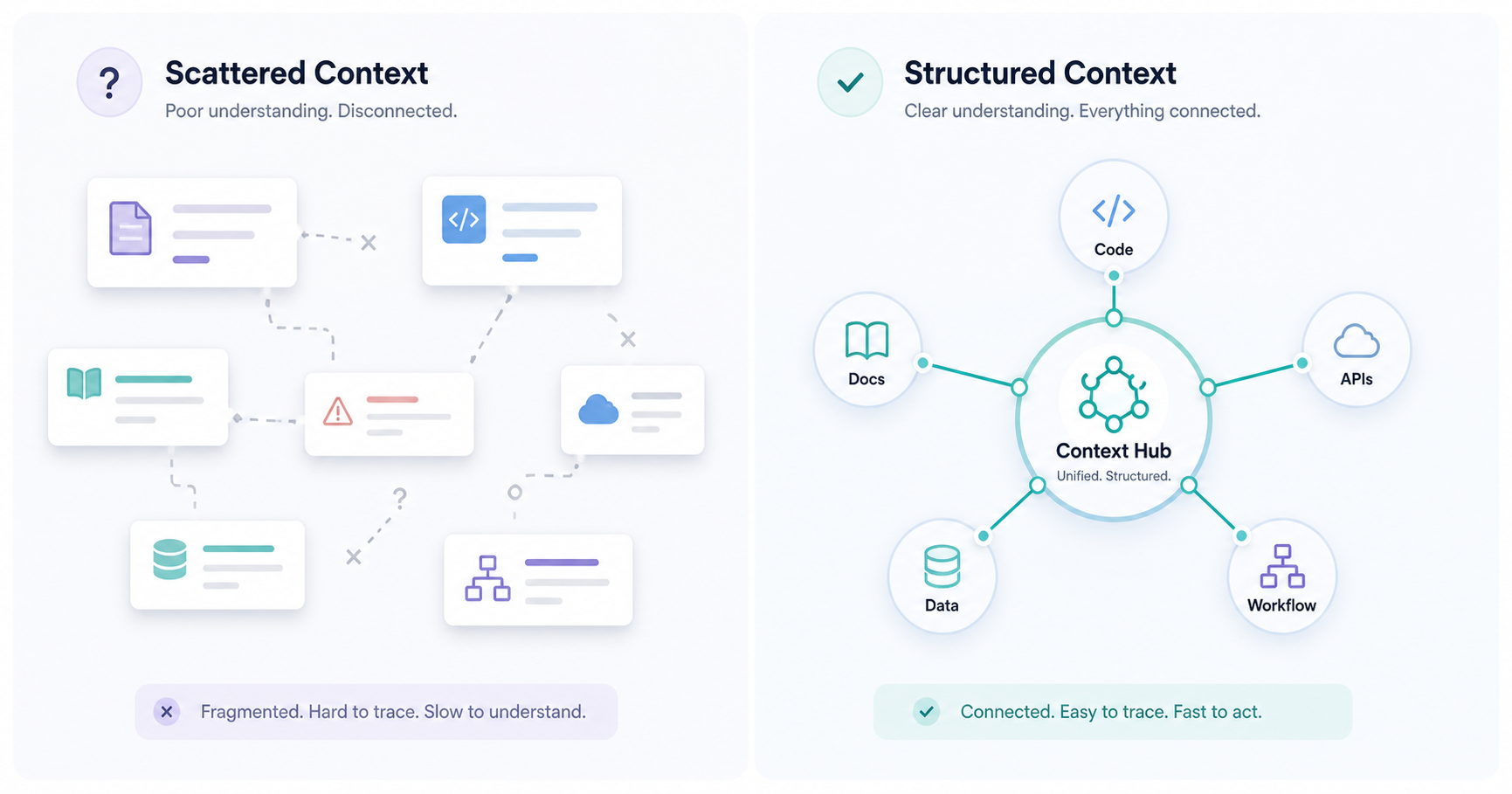
In many development workflows, an agent starts by searching the repository, opening a few files, reading scattered snippets, and then trying to infer how everything is connected. This may be enough for small fixes, but it becomes risky when the product has multiple services, API integrations, database dependencies, user permissions, frontend flows, and business logic spread across many files.
A human engineer usually understands that changing one small part of the system can affect several other areas. An AI agent does not automatically know that unless the system context is made visible to it.
That is the gap Graphify helps reduce.
Why knowledge graphs matter in agentic development
Agentic development is not just about adding chatbots to software.
It is about building systems where AI agents can understand user intent, use tools, call APIs, retrieve data, make decisions, ask for approval when needed, and complete workflows across systems.
That means the AI agent needs more than prompts.
It needs system context.
A knowledge graph gives the agent a structured view of the product. It shows how different parts of the system are connected, from frontend components and API routes to orchestration layers, databases, approval flows, and documentation.
For example, in a modern SaaS workflow, a user action may start from the frontend, move through an API route, trigger an agent orchestration layer, call a tool, update the database, pass through an approval flow, and then return a response to the user. Without a map of these relationships, an AI coding agent may only edit the most obvious file and miss the wider impact.
With a graph, the agent can understand the full workflow before it acts.
This is the difference between code generation and system-aware development. A knowledge graph makes architecture visible enough for the agent to plan before it writes.
How Graphify helps business teams
For decision makers, the value is not the graph itself.
The value is what the graph makes possible.
1. Faster product understanding
When a team brings AI agents into an existing SaaS product, the first challenge is understanding the current product architecture.
The team needs to know where the business logic lives, which APIs are connected, which services depend on each other, and how user data moves through the system. Graphify can help create a living map of the product. This makes it easier for developers, architects, and AI coding agents to understand the system faster.
That means less time spent reading scattered files and more time spent improving the product.
2. Safer AI-assisted development
AI coding agents can move fast, but speed without system understanding creates risk.
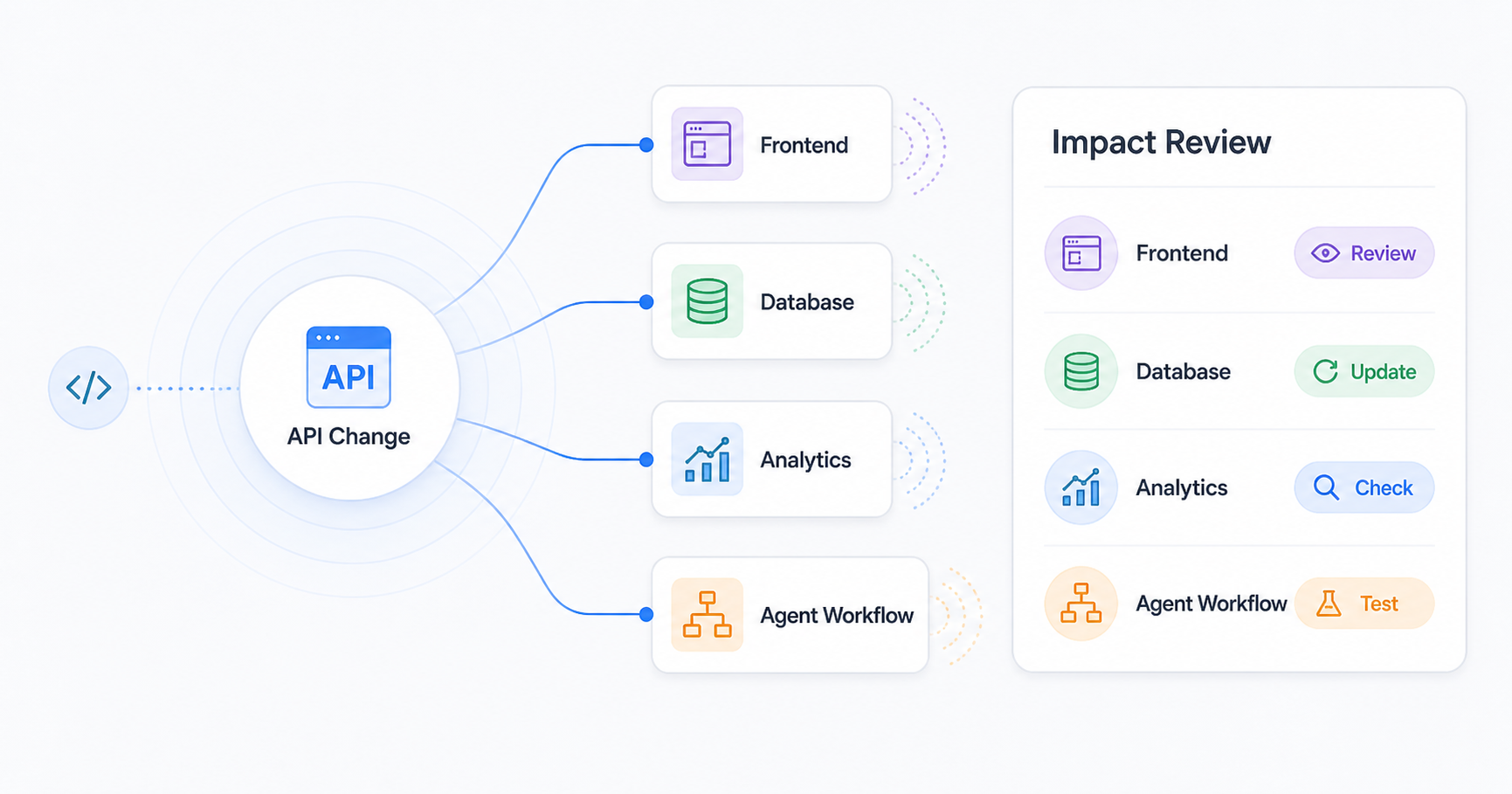
A small backend change may break the frontend. A database field change may affect reporting. A tool update may create an issue in an agent workflow. A pricing logic change may affect billing, onboarding, and sales flows.
Graphify helps by showing related files, dependencies, and workflows before changes are made. This is useful for teams that want AI assistance but cannot afford careless automation.
3. Better planning before implementation
One of the biggest benefits is impact analysis.
Before a coding agent changes anything, it can use the graph to identify the relevant files, connected modules, possible side effects, tests that may need updates, and documentation that should be changed.
This makes the AI agent more useful as an engineering assistant. It does not just write code. It helps plan the implementation.
For businesses, this means AI can support engineering teams without turning the development process into guesswork.
4. Stronger foundation for agentic workflows
At SaaSToAgent, the core belief is simple: the next generation of SaaS products will not only have interfaces; they will have intelligent agents that understand workflows and act inside them.
But these agents cannot work well if they do not understand the systems they operate in.
A customer support agent needs to understand tickets, users, subscriptions, permissions, and internal actions. A healthcare workflow agent needs to understand intake, records, provider matching, safety checks, approvals, and audit trails. A finance operations agent needs to understand invoices, approvals, ledgers, exceptions, and compliance steps.
In every case, the agent needs context.
Graph-based understanding can become part of that context layer. It can help teams build agentic systems that are more structured, traceable, and easier to maintain.
Simple guidelines for using Graphify
Let us take an imaginary project called ClinicFlow, a SaaS platform used by clinics to manage patient appointments, billing, and internal staff workflows.
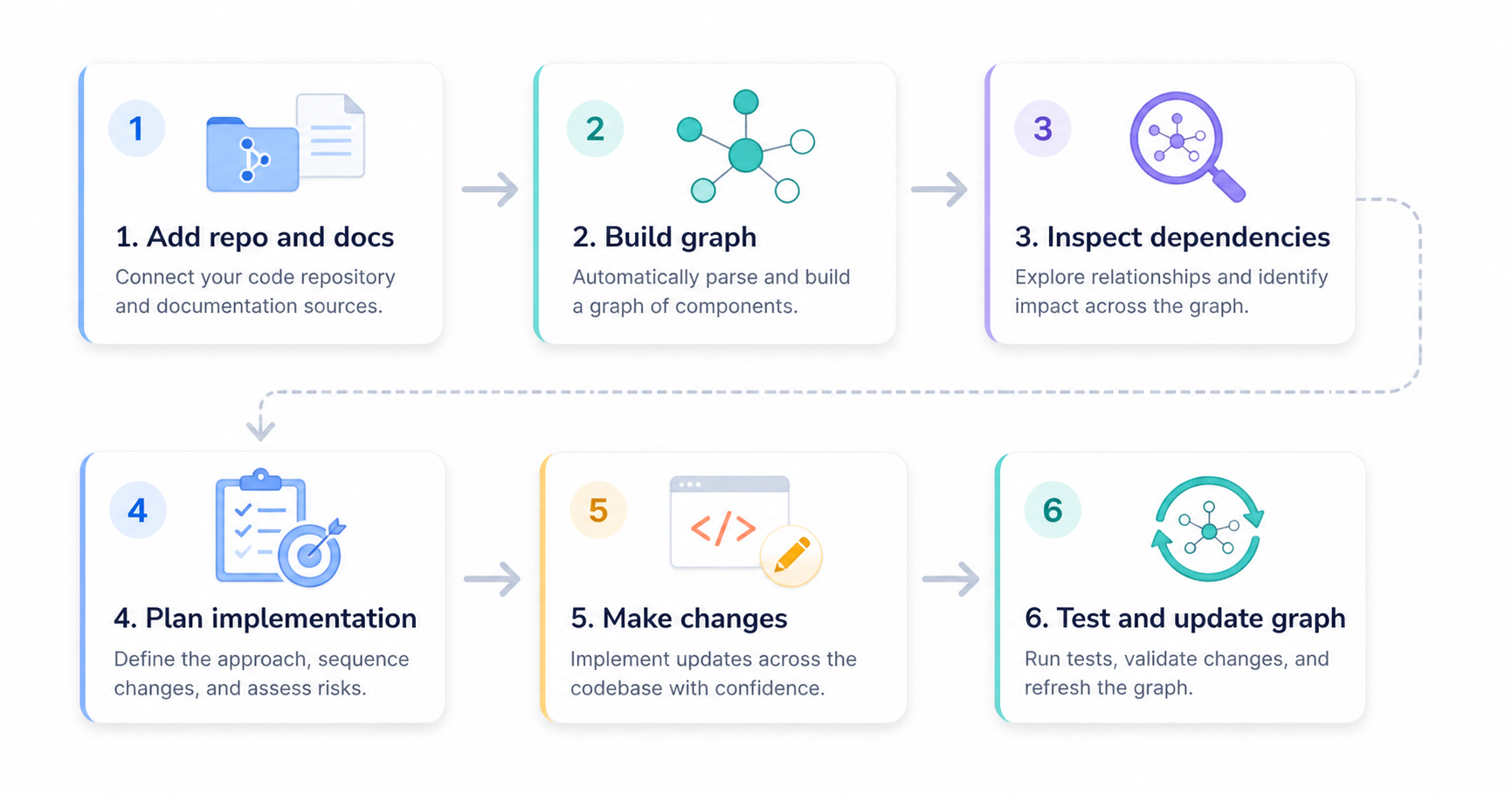
A simple way to use Graphify would look like this.
- Start with one important project. Do not connect every company repo on day one. Start with one project where better AI understanding would create real value. For ClinicFlow, that could be the appointment booking module because it connects patients, doctors, availability, approvals, notifications, and billing.
- Add code and supporting documents. Include the backend code, frontend code, API documentation, database schema, architecture notes, workflow diagrams, and README files. The goal is not only to show the agent what the code contains. The goal is to show how the system works.
- Build the knowledge graph. Let Graphify create relationships between files, functions, APIs, database models, docs, and workflows. This gives both developers and AI assistants a system map.
- Ask understanding questions first. Before asking the AI coding agent to make changes, ask questions like how the appointment booking flow works, which files are connected to appointment approval, where patient availability is checked, what happens after an appointment is confirmed, and which modules may be affected if booking rules change.
- Use it before major changes. Before changing the booking flow, ask the AI assistant to inspect the graph and identify the relevant files, connected services, possible risks, required tests, and documentation updates. Only after this should the coding agent start implementation.
- Update the graph regularly. The graph should stay close to the actual system. Update it when the team changes API routes, database schema, agent tools, business workflows, frontend flows, or technical documentation. An outdated graph can create the same problem as outdated documentation.
Where this becomes valuable
Graphify is most useful when the product is complex enough that context matters.
It is useful for SaaS platforms with multiple modules, AI agent products, multi-agent systems, backend-heavy applications, API-driven products, regulated workflows, enterprise SaaS platforms, and products with old or unclear documentation.
It is less useful for very small landing pages or simple static websites.
The value increases as the system becomes more connected.
What decision makers should understand
The future of software development will not be only about faster code generation.
It will be about controlled execution.
AI agents need to understand the product before they can improve it. They need to know what exists, what depends on what, and what should not be touched without review.
Graphify helps create that understanding layer.
For businesses planning to adopt agentic AI inside their workflows, this is important because the real opportunity is not just using AI to write more code.
The real opportunity is building software systems where AI can safely understand, assist, and act across real business workflows.
Final thought
AI coding agents are becoming part of modern software teams, but without context, they remain limited.
A knowledge graph gives them a better starting point. It helps them understand the system before they act.
For companies moving toward agentic workflows, that can become a serious advantage.
Not because the graph looks impressive, but because it helps AI agents make better decisions inside real software systems.