
1. Why this launch matters now
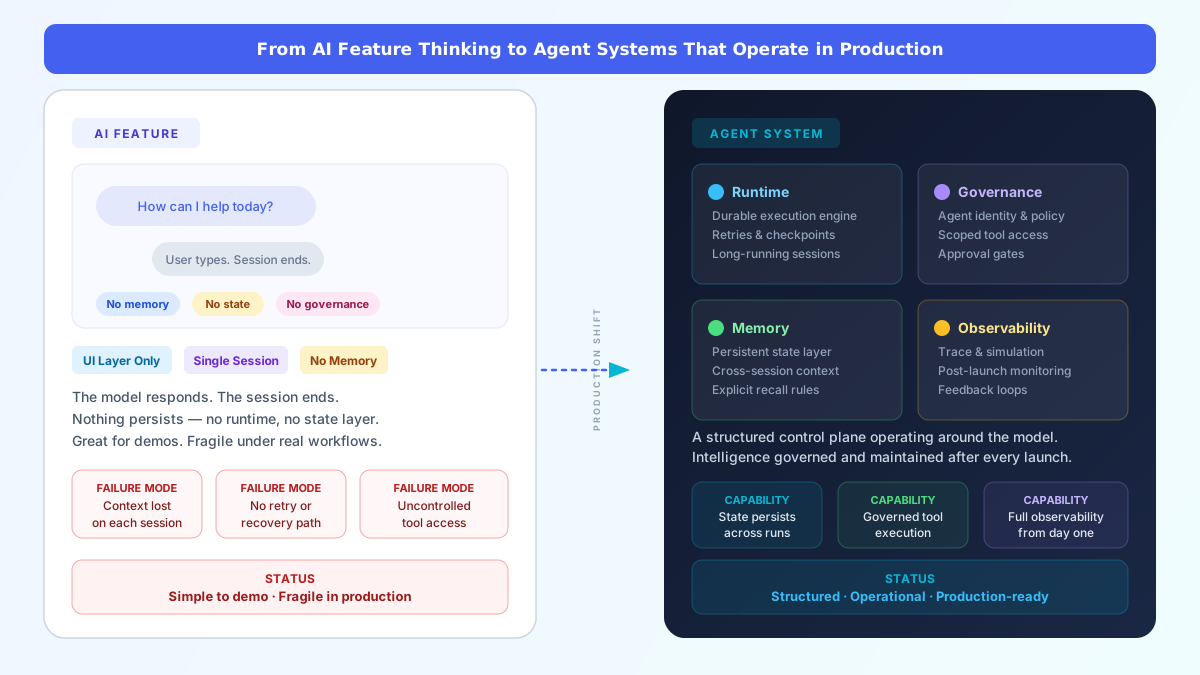
Most SaaS teams still think about AI as something that sits on top of the product. A chatbot, a copilot, maybe a workflow assistant. Google's Gemini Enterprise Agent Platform suggests the industry is moving past that stage. The emphasis is no longer just on building agents, but on building them in a way that lets teams scale, govern, and operate them with more control.
That matters because the hard part of agent adoption is rarely the first demo. The harder part is what happens after that: long-running work, memory, approvals, visibility, identity, and failure recovery. Google's launch makes it clear that these are becoming part of the default conversation, not edge concerns for large teams only.
The signal: the market is starting to treat agent infrastructure as a first-class platform layer, not just a prompt layer attached to a UI.
2. What Google actually launched
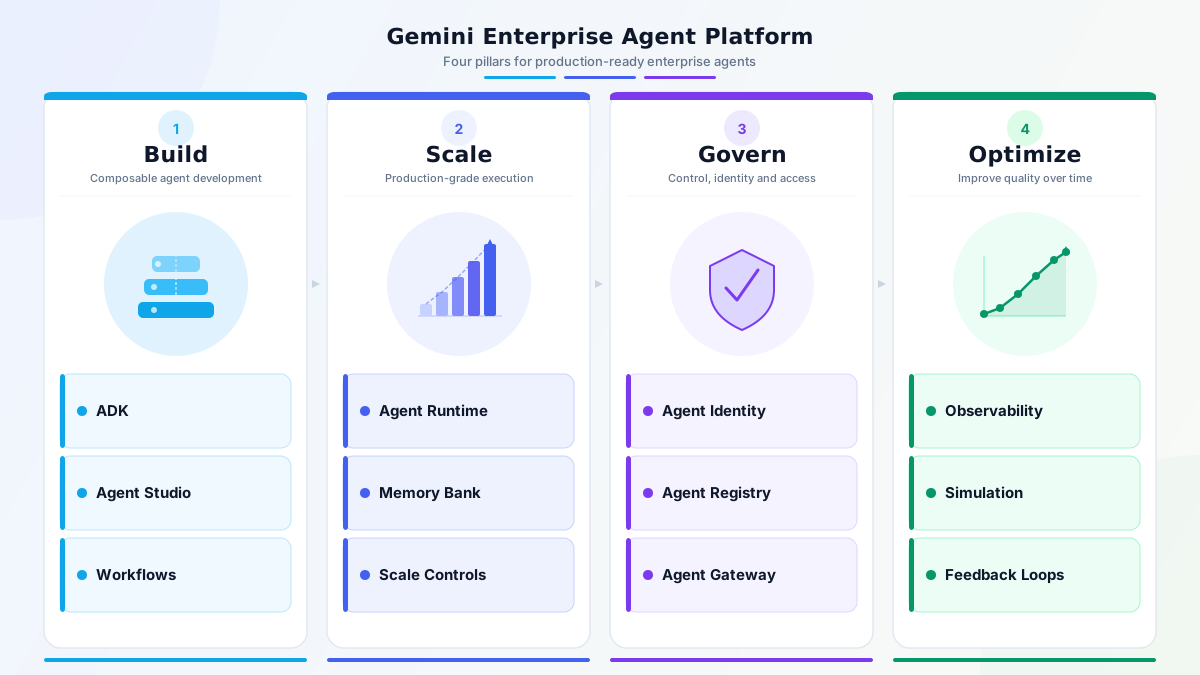
Google is positioning Gemini Enterprise Agent Platform as a single environment to build, scale, govern, and optimize agents. It also describes the platform as the evolution of Vertex AI, which is a meaningful signal by itself. This is not being framed as a side product. It is being framed as the platform layer for enterprise agent development going forward.
The pieces Google is highlighting are also telling. On the build side, there is the Agent Development Kit and tooling for agent creation. On the scale side, there is Agent Runtime and Memory Bank. On the governance side, Google is pointing to Agent Identity, Agent Registry, and Agent Gateway. On the optimization side, it is emphasizing simulation and observability. Taken together, the release feels less like a model story and more like a systems story.
When platform language shifts from model capability to runtime, memory, identity, and observability, teams should assume the implementation bar is moving with it.
3. Why this matters beyond Google
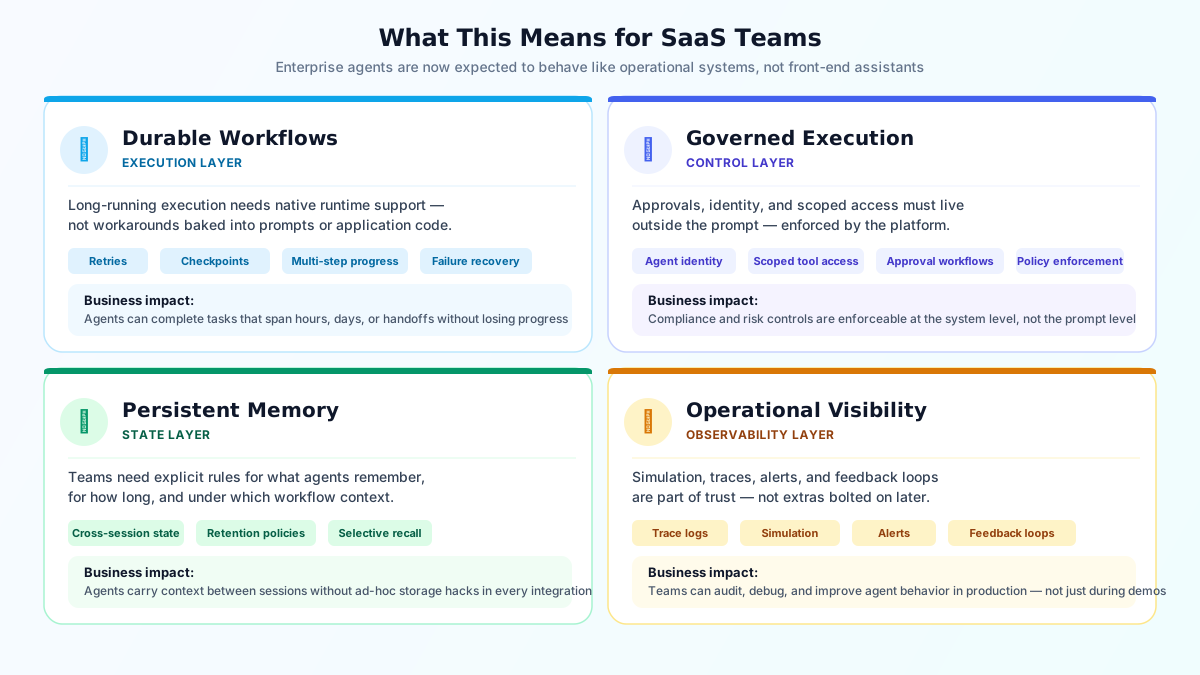
Even if a team does not use Google's stack directly, the release is still useful because it shows where the market is heading. The direction is clear: agents are being treated less like UI helpers and more like operational systems. They need a runtime. They need identity. They need governed access to tools and data. They need visibility once they are live.
For SaaS products, that changes the implementation question. The question is no longer just, Where do we add AI? It becomes, Which workflow should become agent-driven, and what runtime, state, and control layers does it need to work reliably? That is a more useful question because it forces teams to think in product terms, not just feature terms.
4. The mistake teams are likely to make
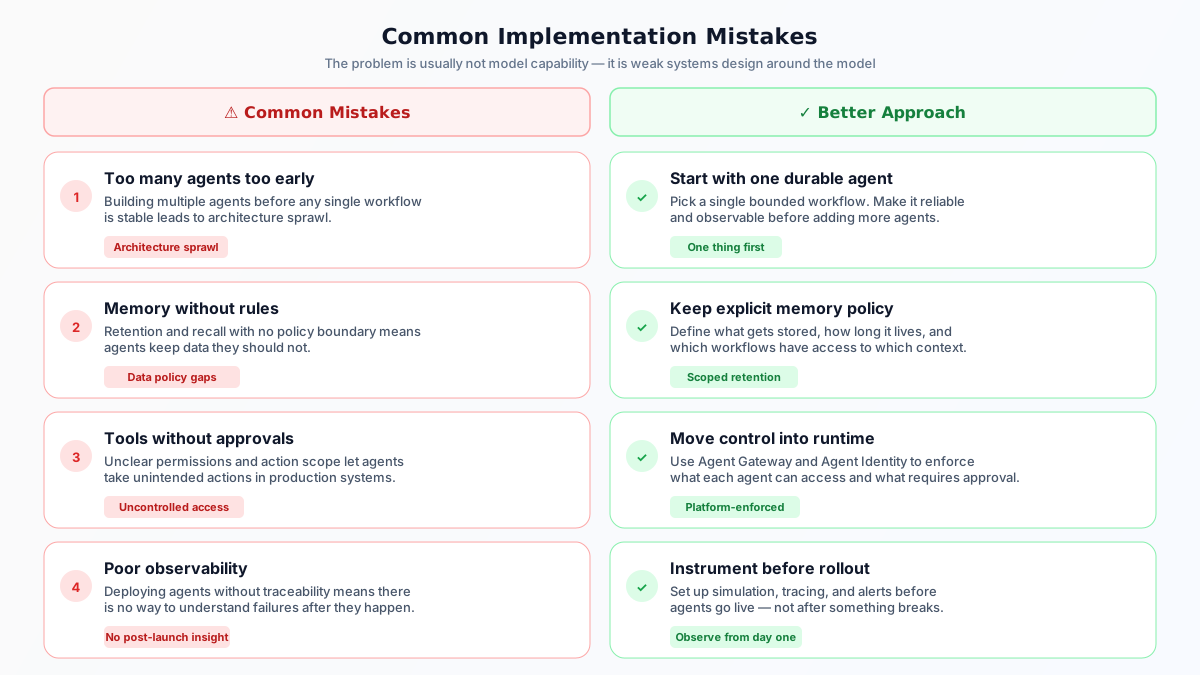
The easiest mistake here is to copy the vocabulary without changing the implementation model. A team can say it is building agents with memory and governance, but still end up with a thin prompt layer on top of fragile workflows. That usually shows up in predictable ways: too many agents too early, memory with no clear retention logic, tools with unclear boundaries, and no real way to observe what the agent is doing once it is live. The reason this matters is that Google's own platform design keeps pointing back to runtime, memory, identity, and optimization as separate concerns.
Another common mistake is assuming that one capable model solves the operational side. It does not. If an agent needs to run across sessions, interact with tools, maintain context, or hand work across steps, then the surrounding system starts to matter just as much as the model itself. That is really the deeper message behind this release.
5. A practical implementation path for SaaS teams
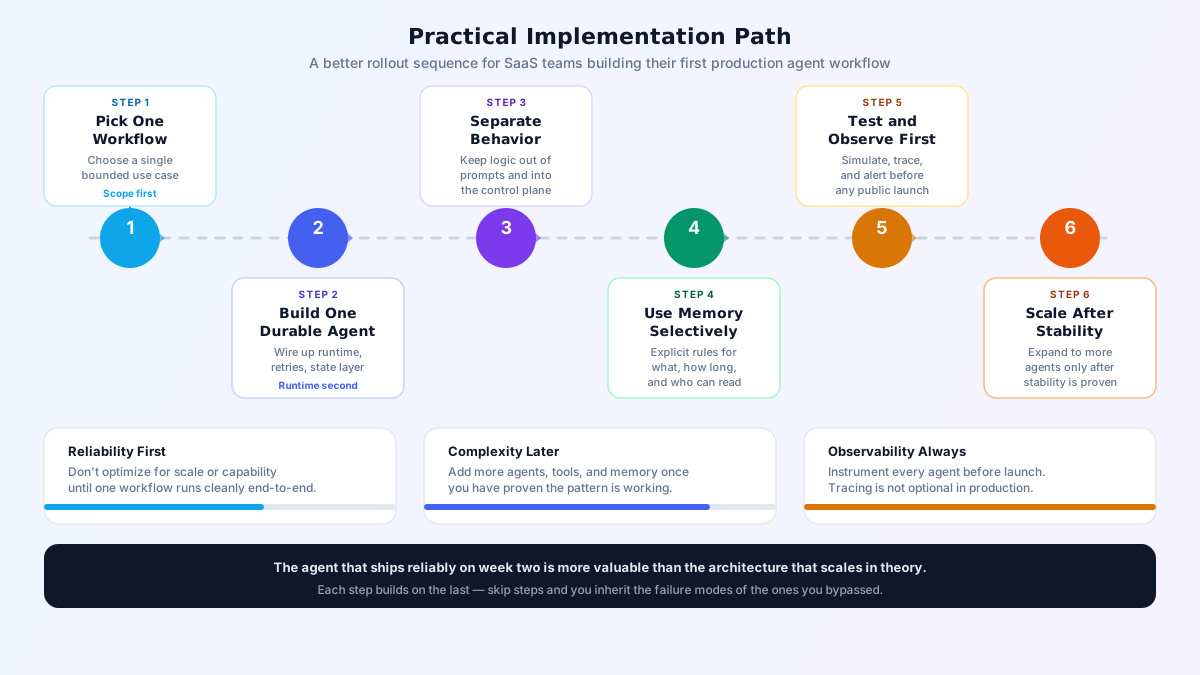
A better way to approach this is to keep the first implementation narrow.
Step 1: Pick one bounded workflow.
Start with a workflow that has a clear input, a clear outcome, and a clear business owner. Support triage, contract intake, account research, or internal routing are better starting points than a broad company agent.
Step 2: Build one durable agent first.
Use one clear runtime and one state model before expanding into multiple agents. Google's platform puts real emphasis on Agent Runtime and managed sessions, which is a good reminder that persistence and execution need to be thought through early.
Step 3: Separate agent behavior from control.
Let the model decide what it wants to do, but do not let the prompt be the only guardrail. Keep approvals, identity, access, and policy at the runtime layer. Google's platform structure around Agent Identity and Agent Gateway points strongly in that direction.
Step 4: Use memory selectively.
Persistent memory is useful, but not everything should be remembered. Decide what deserves long-term value and what belongs only to the current task. Google's Memory Bank approach makes that distinction feel more intentional than just saving the whole transcript.
Step 5: Test and observe before rollout.
If a workflow matters enough to automate, it matters enough to simulate and monitor. Observability and simulation are not just nice additions. They are part of what makes a system trustworthy after launch.
Step 6: Expand only after the first workflow is stable.
Once one agent is working well, only then decide whether the next step is broader memory, more tools, or a multi-agent design. The sequence matters. Reliability first. Complexity later.
6. Final takeaway
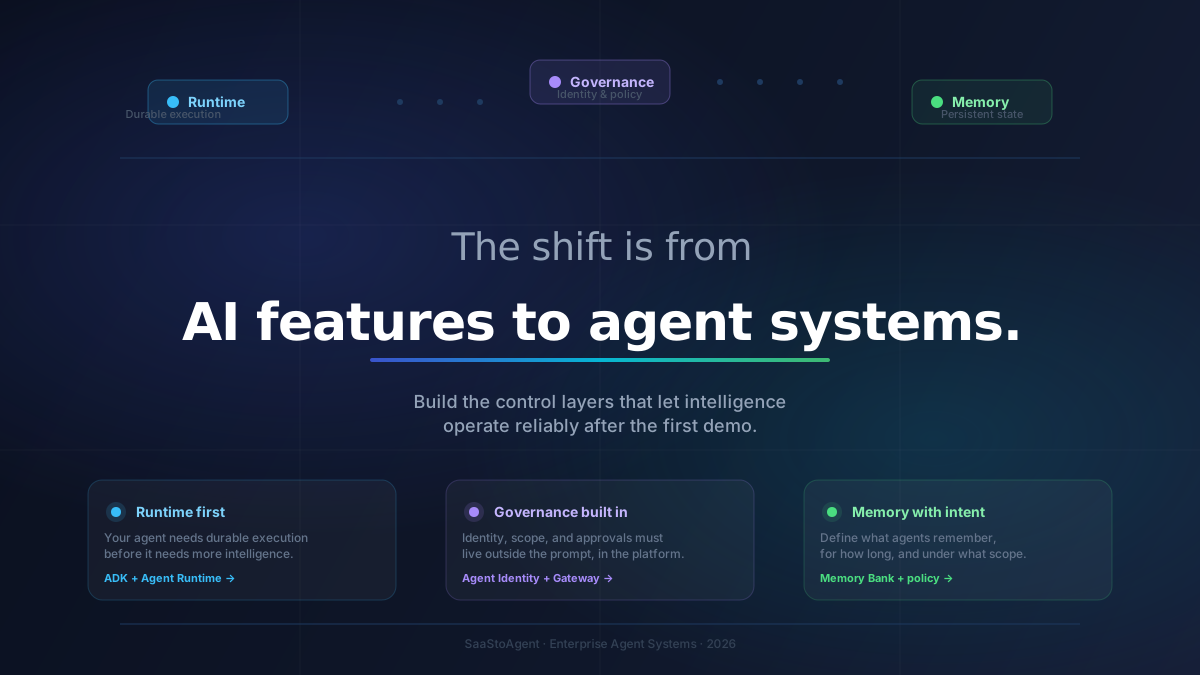
Google's Gemini Enterprise Agent Platform matters because it reflects a broader shift already underway. Agents are being treated less like isolated assistants and more like software systems that need runtime structure, governance, and visibility. That is the real takeaway.
For SaaS teams, the useful response is not to chase platform language or rush into agent sprawl. It is to start with one meaningful workflow and build it with enough structure that it can actually hold up in production. That is where the gap begins to open between AI as a feature and AI as part of the product itself.
Planning an enterprise agent pilot? SaaSToAgent helps teams design the runtime, governance, memory, and evaluation layers that turn an agent demo into a production workflow. Talk to us.