Key Takeaways
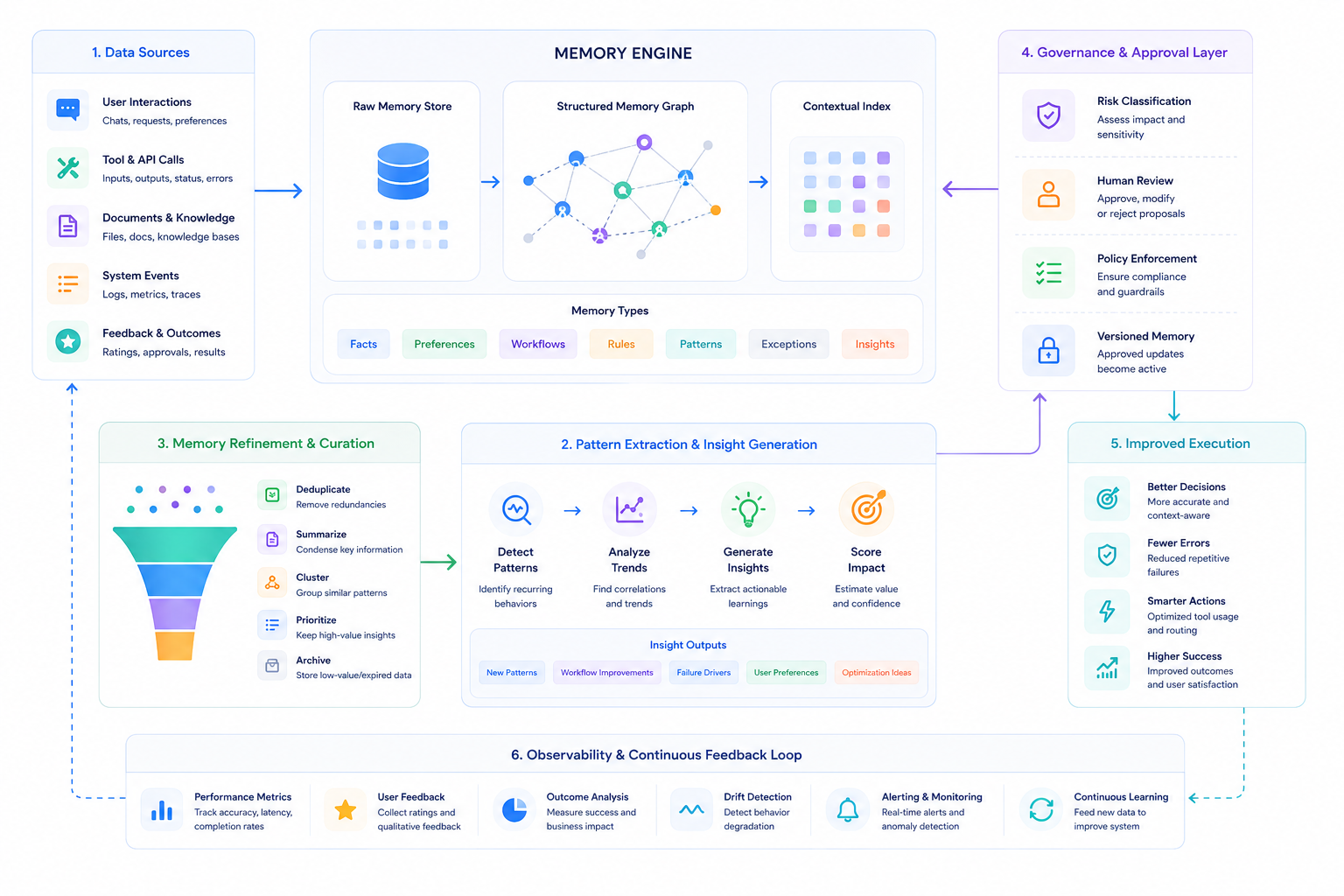
- Anthropic's dreaming feature points to an offline review layer where agents refine memory between live tasks.
- Self-improving systems need governance, outcome rubrics, and approval gates rather than uncontrolled self-learning.
- Memory only becomes valuable when the system can distinguish durable operating knowledge from temporary context.
- SaaS teams can start small with one high-volume workflow, one review loop, and measurable business outcomes.
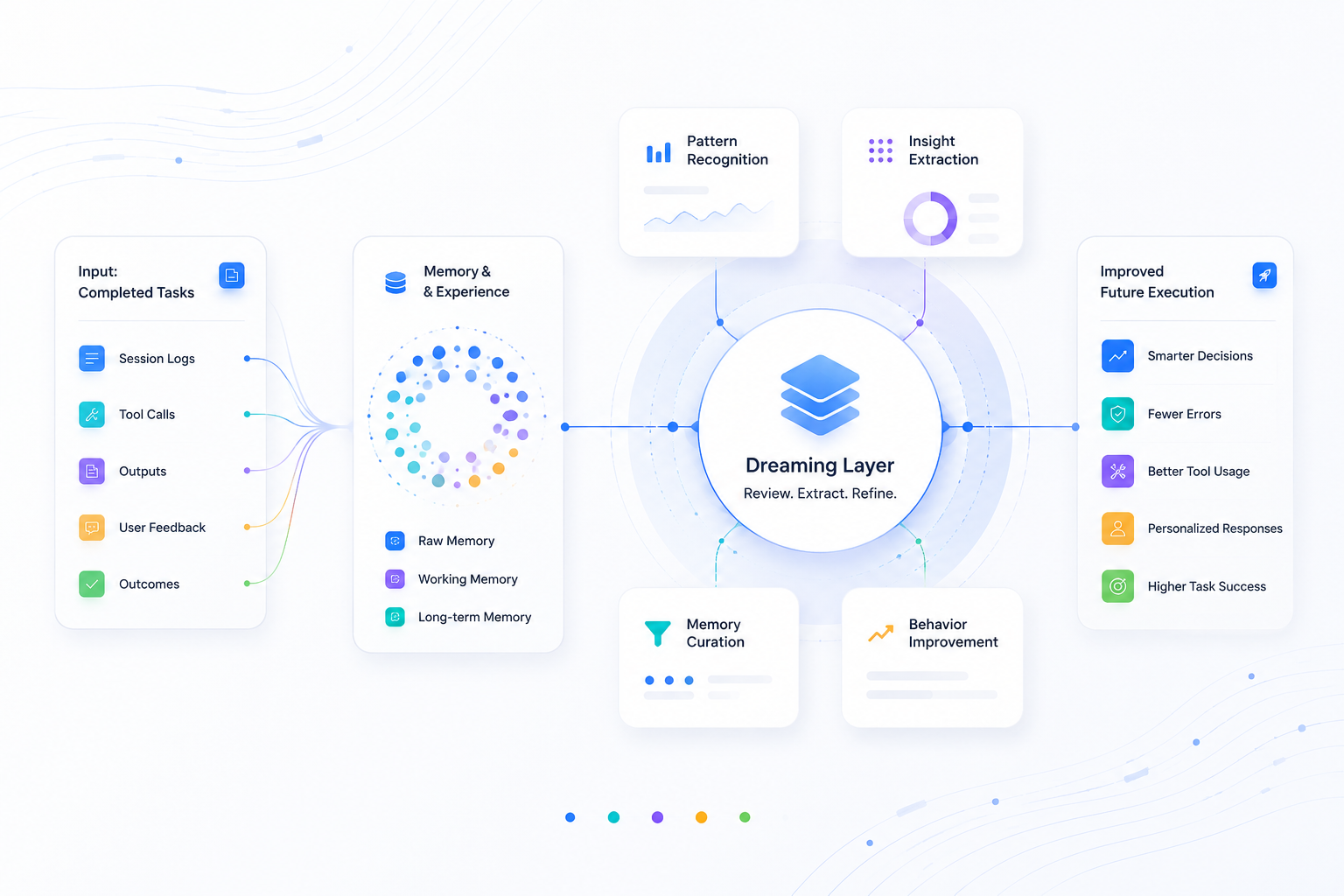
AI agents are moving beyond task execution. The first wave focused on tool calling, retrieval, code generation, workflow automation, and multi-step reasoning. The next layer is different: agents that review their own operating history and improve how they work between sessions.
Anthropic's Claude Managed Agents update, announced on May 6, 2026, is an early signal of this shift. The company introduced dreaming as a research-preview feature that reviews past sessions and memory stores, extracts patterns, and curates memory so agents can improve over time. The same update also brought outcomes, multiagent orchestration, and webhooks to developers building with Managed Agents.
The important point is not the word dreaming. The important point is that agentic systems are beginning to include an offline learning and memory-refinement layer. Instead of treating every task as isolated, the system can study what happened earlier and convert repeated experience into cleaner future behavior.
The architectural shift: execution is no longer the whole product surface. Production agents now need a second loop that reviews traces, improves memory, and routes higher-risk changes through governance before those changes shape future behavior.
Why this matters for agentic AI
Most production agents today are reactive. They receive a user request, retrieve context, call tools, complete the task, and end the session. If the same friction appears repeatedly, such as bad tool usage, weak escalation logic, or poor memory selection, the improvement usually depends on a developer reviewing logs and updating prompts or workflows.
A self-improving memory layer changes the operating model. The agent system can identify recurring failure patterns, summarize useful workflows, remove low-value memory, and surface changes for review. Anthropic describes dreaming as a scheduled process that can either update memory automatically or allow developers to review changes before they land.
This is especially relevant because memory can become a liability when it grows without structure. A large memory store may contain stale preferences, outdated instructions, duplicated facts, and session-specific details that should not influence future work. A refined memory store is different because it keeps the signal and reduces the noise.
For enterprise agents, that distinction is critical. The value of memory is not in storing everything. The value is in deciding what becomes durable operating knowledge and what remains temporary context.
The practical use case: a SaaS support and onboarding agent
Consider a SaaS company with an AI agent that handles onboarding, integration support, troubleshooting, and account setup. The agent helps users configure API keys, validate webhooks, understand billing rules, troubleshoot failed syncs, and escalate sensitive cases to the internal team.
Without a review layer, the agent may handle each conversation independently. It may solve some cases well, fail on others, and leave the product team dependent on manual log reviews. Patterns may exist in the data, but they remain buried across thousands of sessions.
With a dreaming-style layer, the system can review completed sessions after active work is finished. It can detect that users repeatedly fail at the same webhook verification step, that refund-related cases need faster human escalation, or that a specific integration guide is producing confusion. It can also identify tool-call failures, outdated help content, or repeated user preferences that should be stored as structured memory.
The next day, the agent does not simply have more history. It has a better operating context. It can route predictable cases faster, retrieve cleaner troubleshooting steps, and avoid repeating known mistakes.
This creates a stronger product experience because the agent becomes aligned with real usage patterns. The system learns from what users actually do inside the product rather than relying only on static documentation, initial prompts, or manually designed flows.
How teams should implement this in their own work
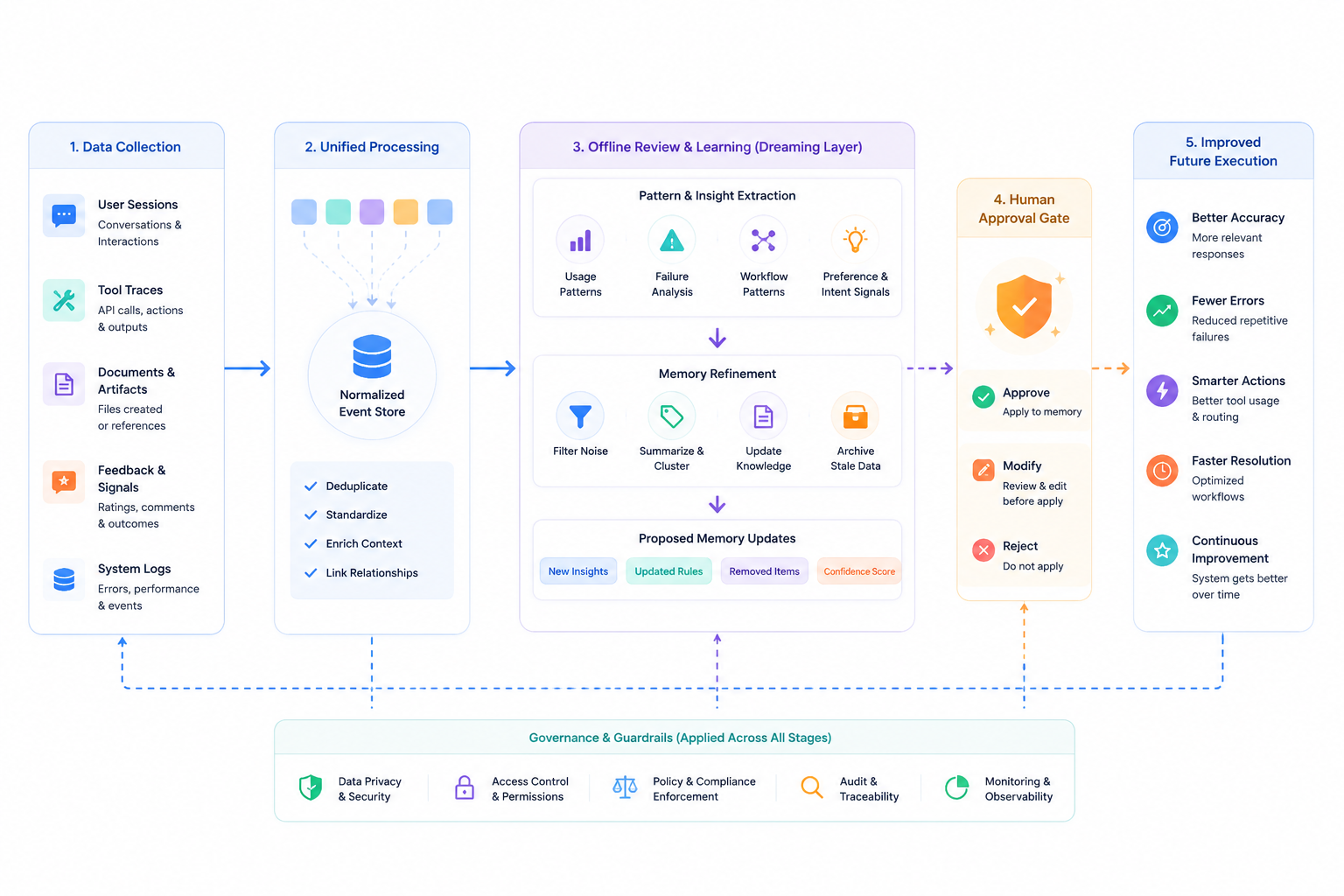
A self-improving agent should not be implemented as uncontrolled self-learning. The safer approach is to treat memory refinement as a governed backend process, similar to analytics, quality review, or workflow optimization.
1. Start with high-quality observability
Teams need session logs, tool traces, final outputs, user feedback, escalation outcomes, and error states. Without this operating data, the agent has nothing reliable to learn from.
2. Classify memory by type
Not every insight belongs in the same place. User preferences, team-level patterns, workflow rules, tool issues, product gaps, and policy-sensitive observations should be separated. This prevents the system from turning casual session details into long-term instructions.
3. Put approval control in the loop
Low-risk memory updates, such as preferred formatting or repeated navigation shortcuts, may be accepted automatically. Higher-risk changes, such as pricing logic, compliance behavior, medical advice, security permissions, or payment rules, should require human review before they affect future execution.
4. Measure outcomes, not just activity
Anthropic's outcomes feature allows developers to define a rubric for success and use a separate grader to evaluate whether the agent's output meets that standard. If the output falls short, the agent can revise its work against the defined criteria.
This is important because self-improvement needs a target. An agent should not optimize only for faster completion or repeated behavior. It should optimize for the outcomes the business actually values, such as correct resolution, lower escalation leakage, safer tool usage, better source grounding, and fewer repeated failures.
Why outcomes and dreaming belong together
Memory refinement helps an agent learn from the past. Outcomes define what good performance means. The two layers solve different problems and become more useful when designed together.
A support agent may discover that users prefer short answers, but the outcome rubric may require complete troubleshooting steps, clear escalation criteria, and source-backed instructions. A document analysis agent may learn that teams prefer concise summaries, but the rubric may require that legal, financial, or operational assumptions remain traceable to source material.
Without outcome criteria, memory refinement can preserve bad habits. A pattern that appears often is not automatically a good pattern. Users may repeatedly ask for unsafe shortcuts, teams may normalize inefficient workflows, or an agent may learn to avoid difficult tasks because simpler answers receive fewer corrections.
A strong implementation should connect memory updates to measured results. If a new memory improves resolution quality, reduces repeated errors, and passes evaluation, it becomes more trustworthy. If it improves speed but increases unsupported claims, it should be rejected or revised.
This is where production agent design becomes different from prompt experimentation. The agent is no longer judged only by a single answer. It is judged by whether the system improves over time without losing control.
Why multiagent systems need this layer even more
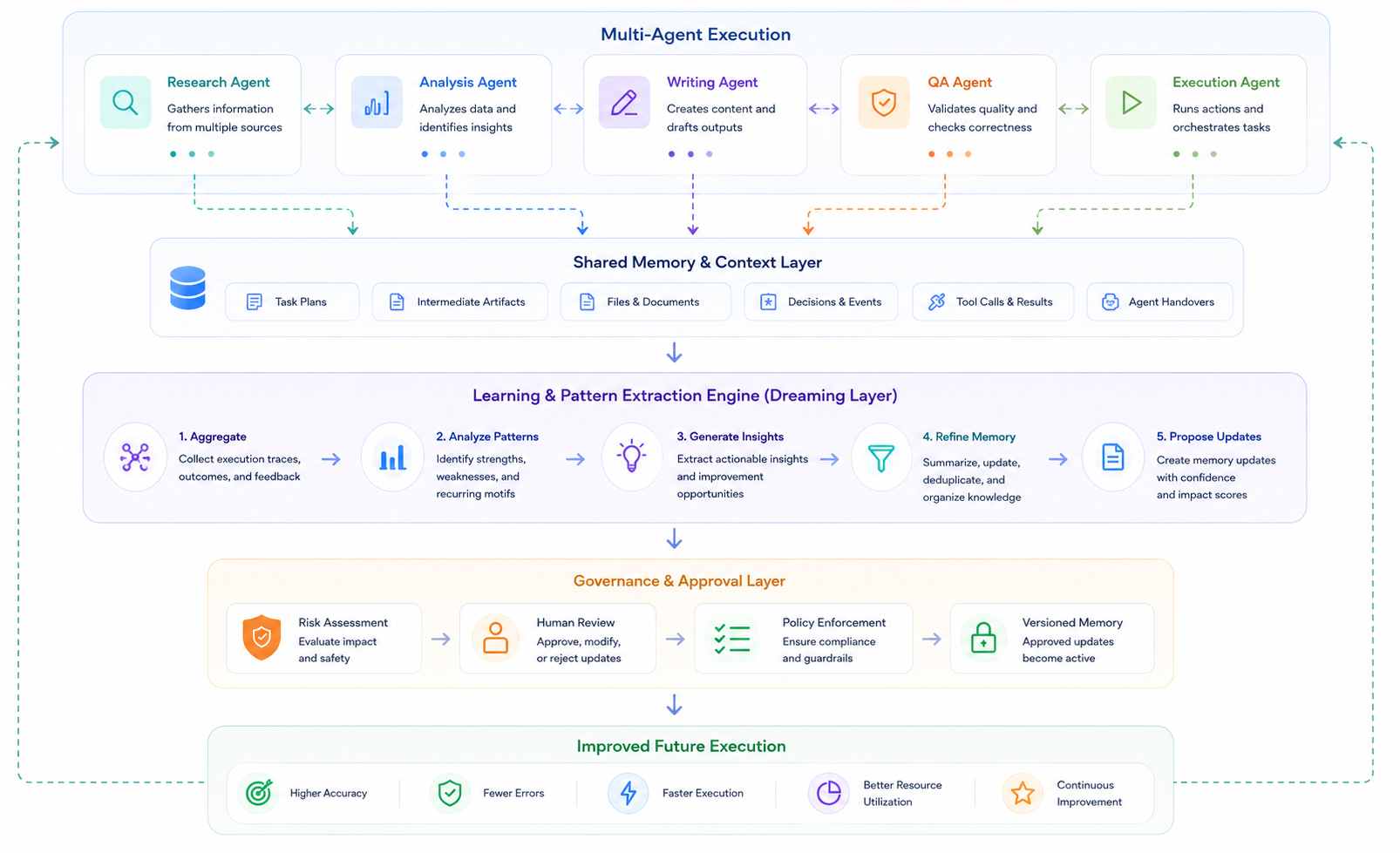
Anthropic's update also includes multiagent orchestration, where a lead agent can break work into smaller tasks and delegate them to specialist agents with their own prompts, tools, and models. These agents can work in parallel, contribute to shared context, and preserve events so developers can trace what happened.
In a multiagent system, memory refinement becomes more valuable because failures are distributed. A research agent may gather strong material, a writing agent may miss constraints, and a QA agent may catch only surface-level issues. A review layer can study the full workflow and identify which part of the system needs adjustment.
This is useful for enterprise workflows such as legal drafting, financial analysis, DevOps incident review, healthcare intake, and customer onboarding. The agent system can detect where delegation works, where handoffs fail, and where specialist agents need better instructions or tools.
The implementation practice here is to preserve the full execution trail. Teams should not only store final answers. They should store task plans, agent handoffs, tool calls, intermediate files, reviewer feedback, and final outcomes. The review layer becomes more useful when it can inspect how work was produced, not just what was produced.
The business implication for SaaS companies
For SaaS companies, this development points to a more durable form of AI differentiation. Many products can add a chatbot or a workflow assistant. Fewer products can build agents that become better at the company's specific workflows over time.
A CRM agent should learn how a sales team qualifies leads. A DevOps agent should learn which incidents repeat across services. A healthcare navigation agent should improve routing patterns while keeping clinical and compliance boundaries intact. A finance operations agent should learn common reconciliation failures without changing policy on its own.
The commercial value is not only automation. The value is institutional learning inside the product. The agent becomes a way to capture repeated operational knowledge and turn it into better execution.
This also changes the role of product teams. Instead of only designing static flows, teams will need to design learning loops. They will decide what the agent can remember, what it can refine, what requires review, how success is measured, and how memory changes are audited.
What to build first
The most practical starting point is not a fully autonomous learning system. The better first step is a controlled memory-review pipeline for one high-volume workflow.
A SaaS company could start with support escalations, onboarding failures, repeated integration errors, or document review quality. The system would collect sessions, identify patterns, propose memory updates, route sensitive updates to humans, and measure whether approved changes improve future results.
This keeps the project grounded. It avoids the risk of building an abstract self-learning architecture without a clear business outcome. It also gives teams enough data to evaluate whether the review layer is improving the agent or simply generating more operational noise.
The strongest use cases will have repeated tasks, measurable outcomes, clear error signals, and manageable risk. Support, QA, onboarding, sales operations, internal knowledge work, and DevOps analysis are natural starting points.
The takeaway
Anthropic's dreaming feature is not important because agents are becoming human-like. It is important because agentic systems are beginning to adopt a missing production layer: post-task review, memory refinement, and governed improvement.
The next generation of agent architecture will not stop at models, tools, retrieval, and orchestration. It will include memory governance, outcome evaluation, traceable learning, and human approval for high-risk changes.
For companies building agentic products, the question is no longer only what an agent can execute. The stronger question is what the system should learn after execution, how that learning is controlled, and whether future performance actually improves.